


Fin dalla sua nascita, ad Internet è stato associato il simbolo di una nuvola. Leggerissime gocce cariche di informazioni restano sospese nell’atmosfera virtuale: foto, testi, video, musica viaggiano come un fluido intorno al mondo, senza mai toccare terra. Plastiche, semiconduttori e cristalli liquidi dei nostri personal computer sono la finestra che affaccia sul cielo della rete. E’ da quest’immagine che prende il suo nome il “cloud computing”
Letteralmente l’espressione si traduce con “elaborazione su nuvola” e sta ad indicare un nuova tecnologia grazie alla quale la rete non viene più sfruttata in modo “statico”, ma così dinamico da permettere all’utente di utilizzare direttamente sul web sia un software, senza dover installare nulla sul proprio PC, che un database in cui conservare i propri file di qualsivoglia natura.
La Fig.1 è esplicativa in tale senso. 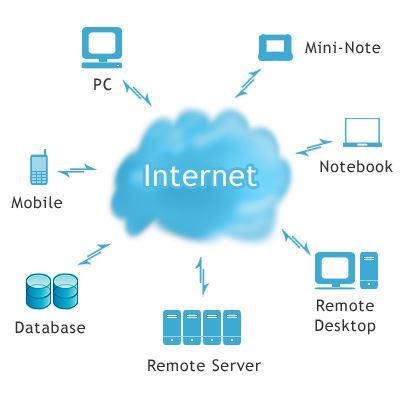
I suoi vantaggi appaiono evidenti. Pensiamo all’enorme risparmio di CPU, nel caso di utilizzo di software in cloud computing, e di memoria di massa, nel caso di immagazzinamento dati online. Inoltre il cloud permette un importante abbattimento delle spese per le aziende, le quali possono abbonarsi mensilmente o annualmente alla particolare piattaforma di cui necessitano, in una sorta di pay-per-use. Da non sottovalutare anche il vantaggio del liberarsi di tutte le responsabilità riguardanti la manutenzione e l’aggiornamento dei programmi. Inoltre le peculiarità delle applicazioni in cloud computing consentono l’uso delle stesse anche sul proprio smartphone o tablet.
Ma non è tutto oro quel che luccica. I contro del cloud computing fanno nascere non poche perplessità riguardo la tendenza sempre più forte a delegare tutto alla rete e, quindi, a società terze. Perché la rete è sì rappresentata da una magnifica, evanescente, irreale, candida nuvola virtuale, ma, nel dettaglio, software, siti e database sono di proprietà di persone ed aziende che sono ben lontani dall’esserlo!
Facciamo un esempio. Dopo gli attentati dell’11 settembre, nel sistema giuridico degli Stati Uniti è stata introdotta la USA PATRIOT Act, una legge che, per combattere il terrorismo, di fatto limita enormemente la privacy dei cittadini. La norma in questione concede ad FBI, CIA, NSA il diritto di frugare nei database, intercettare traffico Internet e quant’altro ogni volta che i dati si trovino su territorio americano. E a noi che importa, vi starete chiedendo (anche se forse un po’ avrete capito dove si va a parare). La maggior parte delle società di informatica a cui noi affidiamo le nostre informazioni, private e di lavoro, ha sede negli States (Microsoft ed Apple solo per citarne due) e questo, legalmente parlando, è sufficiente a renderci dei cittadini virtuali americani. Il cloud computing combinato con il Patriot Act può facilmente dare come risultato indagini di mercato non autorizzate, spionaggio industriale e chi sa quale altra forma di violazione della privacy!
(Fig. 2)
 E’ evidente che sarebbe molto interessante studiare cosa è accaduto e accadrà in tutti i settori con la nascita del cloud computing. Noi però ci occuperemo esclusivamente dell’ambito che ci riguarda in questa sede: quello musicale. Lo faremo iniziando con l’analizzare, nel prossimo articolo, quali strumenti il cloud mette a disposizione degli utenti “musicalmente attivi”, cioè coloro i quali non vogliono solamente ascoltare la musica, ma vogliono creare i propri brani, editarli e pubblicizzarli in rete. Che voi siate dei musicisti professionisti interessati alle novità del settore, o dei semplici amatori che vogliano avvicinarsi a questo mondo per la prima volta, l’appuntamento è sempre su Age of Audio per la seconda parte di “Un futuro nuvoloso”.
Since its beginning, Internet has been represented by a cloud symbol. Tiny drops of information dangling in virtual space: images, text, video, music travelling like a fluid around the world, never touching the ground. Plastic materials, semiconductors and liquid crystals of our personal computers are the windows on the web-based sky. Here is the image which “cloud computing” is named after.
Basically this expression (cloud computing) means that a new technology which allows the net not to be used in a “static” way, but letting users run both a software directly on the web in a dynamic way -with no need to install anything on their PC- and a database where they can save whatever type of files they want.
To that end, Pic.1 is explanatory.
This way, the opportunities that come with it seem clear. Think about the incredible amount of CPU saving, when using software in cloud computing, and mass memory saving, when storing data on line. Moreover cloud allows companies to reduce costs considerably, as they can subscribe monthly or yearly to the specific platform they need, like some sort of pay-per-use service. Not underestimating the chance to get rid of all the responsibilities in maintaining and updating softwares. Also, the peculiarities of the applications allow the latter to be used even on your own smartphone or tablet.
But all that glitters is not gold. The cons of cloud computing make not a few doubts arise about the increasing habit of delivering it all on the web and, therefore, on third parties. For the web is indeed represented by an amazing, vanishing, unreal, snow-white virtual cloud, but, in detail, softwares, sites and data bases are property of natural persons and companies which are far from being it!
Let’s give an example. After the September 11 attacks, the U.S. Legal System enacted the USA PATRIOT ACT in order to fight terrorism; a law which in reality places strict limits to the citizens’ privacy. This act gives FBI, CIA and NSA the right to access databases, to track internet traffic and anything else surfing the American territory at any given moment. You might be asking “who cares?”, (though you might as well have understood what we’re dealing with). Most of the information technology companies which we entrust our data to, both private and business one, is U.S. based (Microsoft and Apple for instance) and, legally speaking, this virtually makes us U.S. citizens. Cloud Computing combined with the Patriot Act can easily turn into non-authorized market investigation, corporate espionage and who knows what other privacy violation form! (Pic.2)
It’s plain to see that it would be very interesting studying what happened and what will happen in any field since the advent of cloud computing. All the same, we’ll only direct our attention exclusively to the field we are considering here: the musical aspect. We’ll start by analyzing, in the next article, which instruments the cloud puts at the “musically-active” users’ disposal, that is to say at those who are not only listeners but in need of creating songs, editing and promoting them through the internet. Whether you are some professional musicians interested in the news from the field, or simply some amateurs who’d wish to get closer to this world for the first time, we’ll meet you next time always on Age of Audio for the second part of “A cloudy future”.
Italian to English translation: Umberto del Giudice