

Realizzare una comparazione fra prodotti è sempre un’impresa snervante, le variabili in gioco sono molte, e il giudizio è influenzato sia dal gusto personale che dalle precedenti esperienze con apparecchi similari. Quando, come nel nostro caso, il test coinvolge un PRE a stadio solido e uno valvolare, le cose si complicano, si finisce per scontrarsi con due differenti correnti di pensiero, indipendentemente dal tipo di sorgente immessa. Potrà mai esistere un vincitore tra due prodotti che sebbene siano geneticamente eterogenei appartengono pur sempre alla stessa casa produttrice e alla stessa fascia di prezzo? Armatevi di un sacchetto di popcorn, di una buona bibita fresca e affrontiamo questa giungla di opinioni diverse.
L’argomento riguardante la preamplificazione è sicuramente di notevole importanza. Il preamplificatore occupa per definizione il secondo “anello” della catena audio, non per questo però può reputarsi meno importante del microfono, la sua funzione è determinante, spetta a questi infatti il delicatissimo compito di dare corpo e volume al segnale di una qualsiasi sorgente, sia questa microfonica o di linea ; il risultato di questa elaborazione viene poi dato in pasto ai vostri apparecchi, mixer, sistemi di registrazione (analogici o digitali), oppure amplificatori finali. È giusto precisare, almeno in teoria, che il termine preamplificatore non sarebbe del tutto corretto, si tratta a tutti gli effetti, per le funzioni descritte, di un amplificatore. Viene anteposto “PRE” ad amplificatore solo per comodità, per evitare la confusione con una eventuale fase successiva di amplificazione finale. Va da sé, proprio per il suo delicato e sensibile compito nella catena audio, che non bisognerebbe affatto lesinare nel suo acquisto. E’ ammissibile una ricerca timbrica, interfacciando magari determinati tipi di microfoni con determinati tipi di preamplificatori, al fine di ottenere uno specifico “carattere” sonoro, ma in ogni caso deve trattarsi di apparecchiature “serie”; serio non è necessario sinonimo di estremamente costoso, l’importante è poter disporre di una timbrica gradevole, di quel “sound” che non si discosti eccessivamente dalla nostra maniera di ascoltare e produrre musica. I prodotti presi in considerazione dal test riguardano la nuova serie SOLO della Universal Audio, il modello 110 e quello 610.
Quale migliore occasione per provare i 2 nuovi figlioletti della Universal Audio e farli battezzare da una produzione per una fiction televisiva?
Catena audio
Ho utilizzato per questo test 2 computer: Il primo è un portatile Toshiba M40-232 con 2 Gb ram DDR, chipset Intel, HD 80Gb, corredato di un ulteriore H.D. esterno da 300 giga con 16 mega di cache; il portatile in questione è gestito da Cubase SX 3 su cui alloggia l’hardware Kore. Per Il secondo PC trattasi di una DAW Mate M1 (Processore Pentium 4, 3.4 Ghz e 2Gb di Ram) su cui è installata una scheda audio MOTU 896 HD. Il test è stato effettuato collegando le sorgenti sonore mediante un cavo Klotz direttamente sui due preamplificatori, il segnale è stato poi inviato ad un ingresso analogico della scheda audio di turno; il tutto monitorato da due coppie di diffusori, le Dynaudio BM6A e dalle Yamaha NS 10M. La rosa di microfoni a disposizione dello studio era notevole, ma ho preferito comunque affidarmi a modelli di ottima qualità: Neumann U 87 e TLM 103, Akg C414 etc… Per quanto riguarda gli strumenti a corda e a percussione è inutile fare un elenco, ho usato tutto quello che si presentava in studio; ogni qual volta capitava poi un esecutore di strumento timbricamente interessante, gli è stato puntualmente chiesto di prestarsi ad una prova di registrazione.
Descrizione SOLO 610
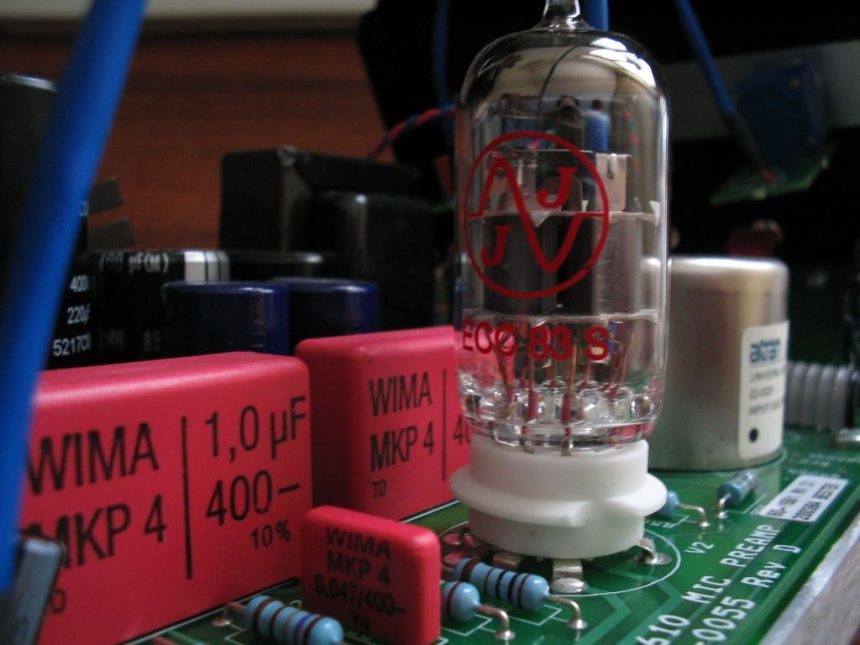
Il PRE si presenta come una piccola e solida valigetta da viaggio molto bene curata e pesante con una maniglia in alto (Fig.1). Sul pannello frontale troviamo due generose manopole GAIN e LEVEL separate da due led Power e Signal. In basso da destra verso sinistra troviamo cinque switch a leva, il primo è il selettore d’ingresso MIC/DI seguito dal commutatore d’impedenza LO-Z/HI-Z, al centro troviamo la levetta per attivare o disattivare l’alimentazione phantom 48V “+48V/OFF”, continuando troviamo il selettore che permette di tagliare le basse frequenze o di lavorare in flat, LO CUT/FLAT ed infine il controllo per l’inversione di fase sia in ingresso che in uscita OUT/IN. Per la gioia dei chitarristi e bassisti che utilizzano pickup passivi, o per chi come me ama suonare il pianoforte Fender e desidera assaporarlo in tutto il suo splendore, troviamo in basso una linea monofonica DI e infine un’uscita THRU che non risente del processamento del segnale .
Sul retro (Fig.2) troviamo l’ingresso per l’alimentazione POWER IN, il selettore ON (I)/ OFF(0), un uscita in formato XLR posta fra i due selettori a switch LIFT/GND e MIC LINE e un’uscita audio in formato XLR; da notare che tutte le connessioni vantano il marchio Neutrik; questi piccoli particolari denotano la grande qualità nella progettazione dello strumento.
.gif)
Voce maschile SOLO 610
La voce di questa prova si esprime in lingua madre, (ITA) ha carattere cantautoriale con influenze blues dal timbro leggermente ruvido, che si alterna a quello pulito, si muove dal registro baritono a quello tenore. Dopo qualche “take” per ottimizzare il livello di input, iniziamo a registrare fissando il manopolone d’ingresso su una posizione intermedia (ricordiamo che il controllo (gain) è responsabile del dosaggio delle armoniche valvolari, ruotandolo in senso orario, il segnale ne viene arricchito, viceversa viene mantenuta più linearità). Il segnale generale è molto pulito, restituendo una timbrica esaltante, piena ed ariosa allo stesso tempo; di rilievo le medie centrali dai 1.500 Hz ai 2500, le frequenze non sono per niente fastidiose, perfettamente bilanciate tanto che diventa persino superfluo equalizzare (Stupendo!). Settando infine il GAIN, in maniera generosa ed ottimizzando l’uscita con la manopola LEVEL, si nota da subito un incremento della pasta timbrica intorno ai medio-bassi, precisamente dai 120 Hz ai 400. Quanto alle medio-alte, dai 3.000 ai 5.000, queste divengono eccessivamente sature. Con il tipo di voce in questione, già di per sè calda, si ottiene un risultato timbricamente eccessivo, la voce risulta troppo enfatizzata rischiando di perdere in intelligibilità ed efficacia all’interno del mix. Questo non per denigrare la bontà del prodotto ma solo per evidenziare come questo settaggio tornerà utilissimo per voci sottili, flebili o femminili convenzionali. In ultimo analizziamo anche il comportamento del filtro LO CUT fissato dalla casa a 100 HZ. Una cosa che sento il dovere di dire è che, in questo caso, l’utilizzo del filtro suddetto si è rivelato indispensabile; trattandosi di un microfono Neumann TLM 103, sprovvisto di taglia basso, tutti gli opportuni accorgimenti anti-popping (ho fissato a testa in giù il microfono con il centro della membrana verso la punta del naso per sfruttare il più possibile l’effetto prossimità) non sono bastati, con questo tipo di voce le BUMP sulle consonanti restavano comunque avvertibili (Fig.3). Con l’inserimento del filtro del 610 il problema viene egregiamente risolto senza perdita del valore timbrico generale, nessun sacrificio alla naturale morbidezza timbrica.
.gif)
Violoncello SOLO 61o
.gif)
Per questo test, ho avuto il piacere di registrare un bravissimo musicista; sfortunatamente non possedeva, per l’occasione, uno strumento eccellente. Il microfono utilizzato è il Neumann KM 184 (condensatore) (Fig.4) posto a 40 cm dal ponticello. Il suono, passando per il 610, ha acquistato tantissimo “calore”, termine che spesso noi tecnici usiamo quando captiamo una bella sensazione regalata da una buona pasta sonora, una miscela equilibrata di dinamica, presenza e veridicità del suono. Sono del parere che solo una macchina “professionale” sia in grado di fornire questi risultati senza rendere troppo artificiose le “manipolazioni” di un fonico. Capita spesso di agire su uno strumento, con un outboard dedicato alla compressione o alla preamplificazione, per poi accorgersi di avere reso il suono simile a quello di un comune “plug-in” o, peggio, a quello di un preset di una buona tastiera. Spesso la causa è rinvenibile nello scarso contenuto “umano” dell’outboard oppure nella continua ricerca del fonico a voler tirare fuori dalla macchina qualcosa che non ha. Il 610 a mio parere è molto “vivo”, quasi “umano”. Riesce ad evidenziare tutto ciò che di bello c’è nella sorgente sonora senza rendere plasticoso e confezionato il risultato finale.
Violino e Viola SOLO 610
Per quanto riguarda la ripresa del violino e della viola (Fig.5), strumenti che si muovono su registri quasi simili, ho utilizzato un microfono AKG C414 con figura polare omnidirezionale, al fine di esaminare il comportamento del pre anche in riprese di ambiente. Posto ad una distanza di 70/80 cm dal ponticello, anche in questo caso il risultato è stato molto gradevole. Giocando sul controllo di GAIN e di LEVEL sono riuscito a riprodurre in maniera piacevole il suono di questi due bellissimi strumenti, senza snaturare o enfatizzare il segnale originale. In questo specifico caso (la regola vale in generale per la ripresa di tutti gli strumenti acustici) per fare una buona ripresa ho dovuto scegliere dapprima l’ambiente giusto e poi successivamente posizionare il microfono nel preciso punto in cui le orecchie percepivano le sfumature timbriche più gradevoli.
Chitarra classica e spagnola SOLO 610
Gestire il suono di una chitarra classica mi è sempre stato difficile, in quanto, per definizione, il chitarrista di turno è sempre assalito da estemporanee perplessità. Nel nostro caso, il chitarrista aveva sotto mano una bellissima chitarra classica artigianale, avrei preferito adottare per questo tipo di ripresa una tecnica bi-microfonica mediante AKG 414 ULS posizionati in maniera standard, uno a destra e l’ altro a sinistra della chitarra, ma potendo disporre di un solo pre, ho optato per una microfonatura con NEUMANN TLM 103. E’ stata eseguita una performance in stile classico, il risultato finale è stato molto gradevole, ma non eccezionale, leggermente sporche le fasi un cui si i eseguivano degli armonici. Stesso trattamento per una chitarra spagnola, dosando in maniera equilibrata la sezione GAIN con l’OUTPUT, sono riuscito ad ottenere una buona timbrica anche sugli arpeggi (Fig.6); all’aumentare però della velocità di esecuzione (tipo l’assolo di Innuendo dei Queen per intenderci) il segnale dava la sensazione di peccare di intelligibilità e di definizione a causa di un eccessivo arricchimento armonico, pertanto sono stato costretto a diminuire ulteriormente la sezione GAIN per ristabilire il giusto equilibrio.
.gif)
Flautino artigianale SOLO 610
Uno dei test ha coinvolto un “Flautino Artigianale” di quelli antichi, costruiti dai pastori calabresi. Il suono del flauto era bellissimo ed originale, ma lo strumento, per quanto rurale e genuino, dinamicamente risultava poco rilevabile: bassissimo. Per la ripresa di questo strumento ho optato per il microfono AKG 414.
Sfortunatamente non ho ottenuto il risultato sperato, sufficiente presenza ma suono leggermente snaturato. Questo non è il pre adatto quando ci troviamo a cospetto di segnali troppo deboli che hanno bisogno di una capacità di preamplificazione maggiore e più trasparente.
Over Head SOLO610
Utilizzare questo piccolo gioiellino come preamplificatore microfonico di una batteria è stata un’esperienza davvero interessante. Per questa prova ho dovuto accontentarmi di una ripresa mono anzichè stereo. Il batterista di turno è un jazzista, e gentilmente mi ha regalato un pò del suo tempo per suonare solo i piatti, sia in stile jazz standard, molto sobrio, sia in stile fusion. Per catturare al meglio il suono dei piatti ho posizionato giusto al centro il microfono AKG 414 ad una distanza di circa 50 cm dai piatti (Fig.7): il risultato si è rivelato molto interessante. Devo dire che il SOLO 610 ha svolto questo compito in maniera eccellente, come pochi PRE professionali sanno dare. Ha preamplificato il segnale con grandissima dignità senza snaturare l’attacco, tipico beneficio delle macchine con circuiteria valvolare, e senza mai perdere il contenuto sulle alte; solo quando il batterista ha incalzato con ritmi più serrati il segnale ha iniziato a perdere la sua acutezza transitoria, a nulla è servito cambiare la posizione della ripresa microfonica.
.gif)
Conclusioni SOLO 610
Tirando le somme, possiamo affermare che ci troviamo a cospetto di un outboard professionale, ottimo per chi non ha grossi budget a disposizione. La circuiteria del PRE è estremamente pulita, il fruscio è inesistente, non si avverte nessun tipo di soffio o di rumore di fondo, sia quando si tende ad esagerare con la preamplificazione, sia quando si cerca di irrobustire un segnale troppo debole. La macchina è molto semplice ed intuitiva, facilmente utilizzabile anche da un fonico non molto esperto, magari alle prime prese con uno strumento professionale. Sono rimasto molto colpito dalla qualità del suono, sinceramente mi aspettavo qualcosa di diverso, una sonorità più “sporca”, che di solito affascina un pubblico con un orecchio non ben educato; spesso ad ingannare un ascoltatore poco esperto è un segnale molto ricco di armoniche ma molto snaturato, infatti un suono molto saturo, in special modo sulle medie e basse frequenze, aiuta a dare corpo anche a voci deboli o “vuote”. Devo dire che il 610 ha proprio un bellissimo suono, un perfetto sodalizio tra dinamica ,”calore” e “pulizia di fondo”, inoltre riesce a svolgere il suo compito con bravura e possiede i requisiti per portare ad un livello accettabile anche i candidati “più deboli di livello”. Mi ha dato proprio l’impressione di una macchina gentile, abbastanza accomodante, flessibile per quasi tutte le famiglie di strumenti, e quando glielo si chiede, sa tirare fuori un carattere forte e deciso ma mai prevaricatore. Il suo “sound” è molto piacevole, posso dire che è una delle poche macchine valvolari di mia conoscenza che riesce a regalare una buona risposta ai transienti veloci quali ad es. un piatto di batteria o suoni di percussioni metalliche in genere. Il grande punto di forza di questo modello è riuscire ad enfatizzare e legare in maniera moderata le basse e medie frequenze senza perdere intelligibilità nel suono, si avverte una grana setosa sulla parte alta dello spettro senza perdite di contenuto, anche tra gli 8000 e i 10000 Hz, Si tratta di una prerogativa di solito propria a macchine economicamente inavvicinabili per parecchi utenti, il vantaggio e’, come dicevo, che si rende spesso superfluo l’intervento dell’equalizzatore. Le “manopolone”, dall’aspetto vintage, sono sensibilissime ad ogni minimo movimento, anche la leva LO CUT agisce con discrezione senza creare un drastico buco sulle basse, diciamo che le addolcisce invece di tagliarle, lasciando così il suono sempre caldo e ricco di armoniche. Non dimentichiamoci infine dell’ottima sezione DI e di tutti i relativi vantaggi per gli strumentisti che utilizzano i segnali diretti senza farli passare da una sorgente microfonica (Fig. 8). Se una posizione vuole essere data al nostro SOLO 610, sento di consigliarlo a tutti coloro che hanno problemi con la voce, sia nel caso che non buchi il mix, sia nel caso in cui presenti un senso di “vuotezza” con scarsa espressività, per chi invece desidera dare “corpo” ai propri lavori, sconsiglio vivamente di abbinare a questo pre, trattandosi di un prodotto valvolare, un microfono anche esso valvolare, genererebbe un segnale impastato e grossolano. Finisce qui la prima parte dei PRE a confronto, che cosa ci aspetterà il mese prossimo? Da un lato del ring abbiamo conosciuto e apprezzato un grande campione che il nome già incute terrore “SOLO 610” e dall’altro lato abbiamo il suo fratellino mingherlino “SOLO 110”. Quali saranno i punti forza di quest’ultimo? Che tattica userà per sconfiggere e mettere a tappeto il suo avversario?
Alla prossima puntata…
.gif) Making a comparison between different products is always a nerve racking experience, the variables at stake are many, and opinions are influenced both by one’s personal taste and by previous experiences with similar devices. When, as in this case, the test is involving a solid state power Pre and a valve one, it gets even harder, you end up dealing with two different schools of thought, regardless from any type of applied source. Will there ever be a winner between two products which, although they are “genetically” heterogeneous, they still belong to the same manufacturer and at the same price range? Arm yourself with a popcorn sack, a good drink and let’s face together this jungle of different opinions.
Making a comparison between different products is always a nerve racking experience, the variables at stake are many, and opinions are influenced both by one’s personal taste and by previous experiences with similar devices. When, as in this case, the test is involving a solid state power Pre and a valve one, it gets even harder, you end up dealing with two different schools of thought, regardless from any type of applied source. Will there ever be a winner between two products which, although they are “genetically” heterogeneous, they still belong to the same manufacturer and at the same price range? Arm yourself with a popcorn sack, a good drink and let’s face together this jungle of different opinions.
The preamplification subject is indeed considerably important. The preamplifier holds by definition the second link in the audio chain, but no less important than microphone for that, its role is decisive, in fact it’s the one in charge of the delicate work of giving substance and volume to the signal of any kind of source, be it a microphonic or a line one; this processing result then feeds your devices, mixers, recording systems (both analogic and digital) or rather final amplifiers. It’s good to remind that the term “preamplifier” is not correct for it is an amplifier, to all intents and purposes and for all its functions already described. The convenient “PRE” suffix is there only to make a difference, not to confuse a potential final amplification phase. So, for this very delicate and sensible job through the audio chain, one should not skimp on buying a preamplifier. It’s justifiable to make timbre research, interfacing various kinds of microphones with specific preamplifiers, in order to achieve a specific sound “nature”, but anyways we’ll have to be dealing with “serious” equipment; serious does not necessarily mean extremely expensive, but the thing is that the timbre we can use should be pleasant, that the sound should not depart from our own way of listening and producing music. The products we have been testing are from the new SOLO series by Universal Audio, the 110 and the 610 model.
What better time to try out the two Universal Audio’s little sons and have them baptized by tv fiction production?
Audio chain
I used two computers for this test: The first one is a 2 Gb ram DDR Toshiba M40-232 laptop, intel chipset, 80Gb HD, supplied an additional external 300 Gb H.D. with 16 mb cache; the laptop in question is controlled by Cubase SX 3 which is hosting the Kore hardware. As for the second PC, it’s a Mate M1 Daw (Pentium 4 CPU, 3.4 Ghz and 2Gb Ram) on which a MOTU 896 HD soundcard is installed. The test has been made by connecting the sound sources through a Klotz cable directly to the two amplifiers, then the signal has been sent to an analogic input of the audio soundcard on call; everything through two couples of monitors, such as the Dynaudio BM6A and the Yamaha NS 10M monitors. The list of available microphones inside the studio was remarkable, but anyway I preferred to go for high quality models: Neumann U 87 and TLM 103, Akg C414 and so on… As for the string and percussion instruments there’s no need to make a list, I used everything that the studio had to offer; whenever a different timbre instrument performer came across, he was always asked to lend himself to a recording test.
Description SOLO 610
The Preamplifier is made by a small and solid travel suitcase showing a very well designed look and heavy with a handle on top of it (Pic.1). On the front panel there are two big knobs (GAIN and LEVEL) separated by two leds (Power and Signal). On the lower side, from right to left, we find five position switches, the first one is the input MIC/DI selector followed by the input LO-Z/HI-Z impedance selector, in the middle there is the switch to enable and disable the 48V phantom power (+48V/OFF), then the low cut filtering switch (LO CUT/FLAT) offering the flat option, and lastly the phase reverse impedance switch for both Mic and DI inputs (OUT/IN). For the guitar and bass players who enjoy passive pickups, or for those who love to play the Fender piano like me and wish to taste it in all its splendor, the lower side features a DI monophonic line and a THRU output which is not affected by the signal process.
On the back side (Pic.2) there is POWER IN input, the ON/OFF switch, an XLR output between the two LIFT/GND and MIC LINE switches and an XLR audio output; It is important to note that all the connections boast the Neutrik brand; these little details show the high quality design for the instrument.
Male voice SOLO 610
The voice for this test is in native language (Italian), with a singer-songwriter appeal and with blues influences featuring a slightly raw timbre which alternates to the smooth one, moving through a baritone to a tenor register area. After a few takes just to set the input levels properly, we start to record setting the big input knob on an intermediate position (remember that the gain control is in charge of the valve harmonics, turning it clockwise, the signal results richer, on the contrary, anticlockwise, a more linearity is kept). The overall signal is very clean, giving back an inspiring as well as rich and open timbre at the same time; as a result, from 1500 to 2500 Hz on the middle range, the frequencies aren’t troublesome at all, so perfectly balanced that it is not worth equalizing (Amazing!). Lastly, by setting the GAIN heavily and controlling the output through the LEVEL Knob, we can immediately notice a timbre fiber growth around the lower-mid frequencies, to be more precise, from 120 to 400 Hz. As for the upper-mid, from 3000 to 5000 Hz, they become excessively rich. Dealing with a warm voice like this, what you get is an extremely rich sound in terms of timbre, the voice results too much emphasized, risking in losing intelligibility and effectiveness within the mix. This is not said in order to belittle the quality of the product but only to highlight the fact that this setting will be very useful for thin, week or conventional female voices. Lastly let’s analyze the LO CUT filter behaviour set by default on 100Hz. One thing I ought to say is that, in this case, using the above-mentioned filter has been crucial; as the microphone used is a Neumann TLM 103, with no low-pass, all the convenient anti-pop filters (I fastened the microphone upside down with the center of the membrane facing the nose tip in order to take advantage of the proximity effect) were not enough, with this kind of voice the bumps caused by the consonants were still audible (Pic.3). By using the filter of the 610 the problem is finally settled with no general timbre loss, not wasting any natural timbre smoothness.
Cello SOLO 610
For this test, it was my pleasure to record a very good musician; unfortunately he didn’t have an excellent instrument for the occasion. The microphone involved is a Neumann KM 184 (condenser) (Pic.4) placed at a 40 cm distance from the cello bridge. The sound, through the 610, gains a lot of “warmth”, a term that we engineers use when we get a good feeling from a nice sound, a balanced mix in dynamics, presence and truthfulness about the sound. I believe that only a professional device can get this kind of results without making you feel the sound engineer’s work as too much “manipulated”. It often happens to work on an instrument with a built-in preamplification outboard, and realize that the sound you’re getting is similar to a plug-in or, even worse, to a good keyboard’s preset one. It’s usually the outboard’s fault and its lack of “human” content or rather for the engineer’s never-ending search for something that the instrument does not offer. In my opinion, the 610 is very “alive”, almost “human”. It is able to pick out all the beauty there is inside a sound signal avoiding a plastic and man-maid result.
Violin and Viola SOLO 610
As for the violin and the viola recording (Pic.5), instruments dealing with an almost similar register area, I used a AKG C414 omnidirectional microphone, in order to see how the pre would behave within environmental recordings. Placed at a 70/80 cm distance from the bridge, also in this case I got a nice result. Playing with the GAIN and LEVEL switch I was able to reproduce the sound of these two amazing instruments, without twisting or emphasizing the original signal. For this particular test (the rule is applicable for general acoustic instrument recordings), to get a good recording, I had to choose a proper environment first and then place the microphone in the exact point where the ear could get all the nicest timbre nuances.
Pic.4 – Neumann KM 184 microphone
Classical and spanish guitar SOLO 610
Dealing with a classical guitar sound has always been very hard for me, because, the guitarist on duty is, by definition, always overtaken by doubts, In this case the guitarist had a very nice hand-made classical guitar at hand, I would have preferred to choose a microphonic technique through AKG 414 ULS placed in the usual way, one on the right and the other one on the left of the guitar, but having just one pre, I went for one NEUMANN TLM 103 microphone. The performance has been in classical style with a pleasant final result, though not so excellent, with slightly unclean phases where harmonics had come in. I did the same thing for a Spanish guitar, equally balancing the GAIN section through the OUTOUT, I managed to get a rather good timbre even for the arpeggio parts (Pic.6); when increasing the performance speed (as for the solo during Queen’s Innuendo, for example) the signal gave the impression to be lacking in definition and intelligibility due to an excessive harmonic enrichment, therefore I had to reduce the GAIN section to set the appropriate balance back again.
Hand-made penny whistle SOLO 610
One of the tests has involved a hand-made penny whistle, one from the past, which have been built by the calabrian sheperds. The beautiful and unique sound of this instrument, however rural and genuine, gave a rather undetectable result in terms of dynamic: really low. To record this instrument I chose the AKG 414 microphone.
Unfortunately i didn’t get the result i expected, average presence but the sound was a little bit distort. This is not the right preamplifier when we are facing too weak signals which need a higher and clearer amplification capacity.
Over Head SOLO610
The use of this little treat as a microphonic preamplifier for drums has been a really interesting experience. I had to make do with a mono recording despite of a stereo one for this test. The drum player is a jazz one this time, and he kindly spared some time to play just cymbals, both in a very stripped-down standard jazz and in fusion style. In order to capture the cymbal sound properly, I placed the AKG 414 microphone right in the middle at a 50 cm distance from the cymbals (Pic.7): the result was very interesting. I must say that the SOLO 610 did its job flawlessly, in a way that only a few preamplifiers can do. Its work on the signal was really respectable, without distorting the attack, which is a typical valve device benefit, and with no loss at all on the higher range; Only when the drum player started to play harder and faster, the signal started to lose a bit its temporary sharpness, there was no use in changing the way the microphone was placed.
Conclusions SOLO 610
To sum it up, we can say that we are in the mere presence of a professional outboard, perfect for those who don’t have high budget at their disposal. The preamplifier circuitry is extremely neat, the noise is nonexistent, you don’t hear any type of background noise or breath, both when you manage to go hard on the preamplification and when you try to make a too weak signal stronger. The device is very simple and intuitive, easy to use even by a not-so-expert sound engineer, making his first steps with a professional instrument. I have been struck by the sound quality, honestly i was expecting something different, a “dirtier” sonority, which is something that mostly amazes the ears of an uneducated audience; a very rich-in-harmonics sound, but very distort, is what deceives listeners with little experience, in fact a very rich sound, especially on the mid and low frequencies, helps shaping weak or “empty” voices too. I must admit that the 610 sounds amazingly good, a perfect combination between dynamics, “warmth”, “background cleanliness”, moreover it does its job dexterously and it’s got the skill to bring also the “weakest in levels” candidates to an acceptable result. It gave me the impression to be a kind device, rather undemanding and easy-fitting to almost every kind of instruments, when it’s asked, it can pull out a strong and determined temper, but never overdoing it. It sounds really nice, I can affirm that it’s one of the few valve devices I know which is able to offer a good fast transient response as for example a drum cymbal or metal percussion sounds in general. The strong point about this model is in the ability to emphasize and tie the low and medium frequencies fairly without losing in sound intelligibility, you can hear a silky grain on the higher spectrum side with no content loss, even between the 8000 and 10000 Hz. It’s something that usually only high-priced devices own. The benefit stands, as I said, that it’s often unnecessary to use the equalizer. The “super knobs”, vintage looking, are very sensitive to any little movement, even the LO CUT switch acts discreetly without creating a whole on the low frequencies, let’s say that it softens them instead of cutting them, letting the sound stay warm and rich in harmonics. All told, let’s not forget of all the benefits that musicians who work with direct signals -without having them pass through a microphone- (Pic.8) can take advantage of. If I had to suggest the SOLO 610 to a specific target range, I am thinking to anyone who has got a troublesome voice, both in the case of weakness and “emptiness” about expressivity, instead, for those who wish to give “substance” to their works, my advice is not to combine this pre, being it a valve one, a valve microphone too, it would create a raw and thick signal. The first part of comparing preamplifiers has come to the end, what should we expect for the next month? On one side of the ring we’ve met and learnt to appreciate a big champion whose name is yet a threat “SOLO 610” and on the other side we have his little skinny brother “SOLO 110”. What would be the latter’s strong points?Which strategy will it carry out to defeat and knock out his opponent?
Until next time…
Italian to English translation: Umberto del Giudice