

È da un pò che cerco una loopstation per un progetto di live looping. Di cosa si tratta?
Come già sicuramente saprete, suonare con una loopstation prevede la registrazione di spezzoni musicali che verranno immediatamente riprodotti e sui quali potremo aggiungere riff, grooves, ecc…
Bene, io voglio concentrarmi su quello che suono e non diventare un ballerino, perché se avrete già notato in molti video, occorre schiacciare un bel po’ di pulsanti sparsi qua e là. Registrerò tutte le operazioni necessarie per la looper su un sequencer, che a sua volta controllerà la Boss RC 505.
5 tracce (Stereo) mi permettono una grossa versatilità!
Questa tecnica è oggi utilizzata da artisti del calibro di Zoe Keating, violoncellista e compositrice Californiana.

Ci riuscirò? seguitemi e lo scopriremo.
Unboxing
La prima impressione a loopstation spenta è quella di un oggetto un po’ plasticoso, grandi tasti e cursori, molto leggera.L’accendo e davvero mi sembra molto “cool”, tante belle luci e animazioni… Bella, ma sarà anche buona?

Mi butto sul manuale e scopro che:
- Ci sono 5 tracce stereo che possono essere usate simultaneamente, ognuna con i suoi controlli e volume
- Si può utilizzare un effetto sull’audio in ingresso.
- Ogni traccia ha un suo effetto.
- Sono disponibili 99 Memorie, ogni memoria contiene i settaggi completi delle 5 tracce
- C’è una sezione ritmica con 85 pattern
- Si può collegare un microfono con attacco XLR ed eventuale phantom
La RC 505 è una looper non pensata per essere messa a terra, per questo possiede dei grandi pulsanti che vanno usati con le mani. È però utilizzabile anche da chitarristi, in quanto possono essere collegati dei pedali esterni (vedi prossimo paragrafo)
Per una lista più esaustiva delle caratteristiche di questa loopstation, vi rinvio al precedente articolo “Roland Rc-505, loopstation per NON chitarristi”, che però considerava la Rc505 con il firmware 1.0.
Con l’ultimo firmware sono state aggiunte nuove feature, in particolare: Fino a tre effetti simultanei sia in ingresso che sulle tracce.
- Fino a tre effetti simultanei sia in ingresso che sulle tracce.
- È possibile sezionare il suono in uscita alle cuffie (loop della traccia oppure il MAIN)
- Aggiunti nuovi effetti tra cui Ring Modulator, Slow Gear e Pitch Bend
- Estesi i parametri aggiunti agli effetti precedenti
- Aggiunta la gestione di un foot controller esterno, ideale per i chitarristi e tastieristi
- Le funzioni assegnabili sono passate da 8 a 16
- Migliorate le funzioni sulle memorie con monitor individuale della traccia via cuffie, quantizzazione in registrazione del loop
Solo con la RC 505
La RC 505 permette di utilizzare i loop secondo due modalità: SINGLE mode e MULTI mode.

Se mettiamo una traccia in modalità MULTI essa potrà essere riprodotta insieme ad altre, in modalità SINGLE le tracce verranno riprodotte una alla volta.
Cosa significa?
Immaginiamo di preparare una performance con un loop ritmico ed un’altra traccia con dei Pad da far entrare non subito.
Mettiamo queste tracce in Multi mode e attiveremo l’una o l’altra a nostro piacimento, esse suoneranno da sole o insieme.
Sulle restanti tracce, che mettiamo in SINGLE, andiamo a registrare ad esempio, strofa, ritornello e bridge.
Schiacciando il tasto PLAY della traccia, quella in esecuzione metterà in STOP le altre.
Utilizzo di un pedale MIDI
Sebbene la RC 505 sia una loopstation da “tavolo”, è possibile utilizzarla con una pedaliera MIDI o un controller esterno.
Alla ricerca della documentazione MIDI e scopro che esiste una sezione “Assign”, dove sono assegnabili fino a 16 da eseguire a seguito di un messaggio MIDI, della pressione di un pedale o di altri numerosi eventi.
Per sperimentare con gli Assign, ho deciso di rispolverare la mia vecchia Behringer Fcb 1010 potenziata dall’ Uno firmware, una variante del firmware originale di terzi parti, che semplifica ed aggiunge nuove funzionalità alla pedaliera.
Per utilizzare gli Assign MIDI con la RC 505 è necessario assegnare manualmente ad ogni traccia una funzione, ossia è possibile definire un’azione da compiere quando la looper riceve un determinato input: un messaggio MIDI, la pressione di pedale o altri tipi di evento.
Per la configurazione della Fcb 1010 ho utilizzato la funzione “Stomp Mode” che offre Uno firmware.
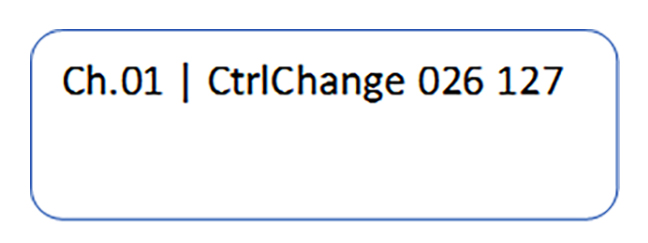
Ossia premendo i tasti da 1 a 5 vengono inviati Control Change alla RC 505, che ho assegnato alle rispettive funzioni.


Le tracce sulla RC 505 vanno settate come “Moment”, per i tasti ho scelto i control change dal 21 al 30.
Con questo tipo di impostazioni otterremo un control change con un valore che passa da 0 a 127 quando premiamo un tasto della FCB1010 e torna a zero quando lasciamo il tasto.
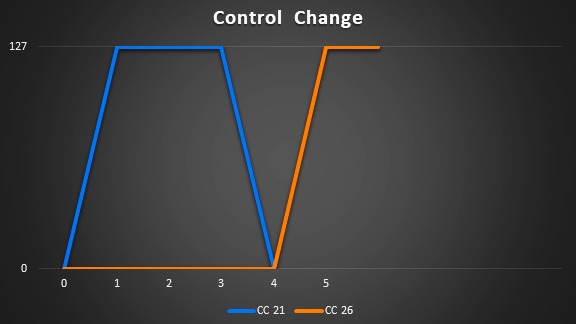
Ad esempio premendo lo switch 1 otterremo:


Premendo lo switch 6:
Il Setup di Zoe
Il primissimo setup di Zoë Keatingera basato sull’ Electrix Repeater Pro, un loop recorder, ossia un hardware che permetteva di registrare e riprodurre infinite volte la registrazione.
Era dotato di quattro tracce audio indipendenti con ingressi e uscite indipendenti, porta MIDI In, Out e Thrue.
Con questo setup Zoë dichiarava che “è come avere uno spartito vuoto, bisogna suonarlo per riempirlo di note. Sarà il computer a preoccuparsi quando registrare le parti e a metterle in riproduzione, proprio come avrebbe fatto un direttore d’orchestra!”
Evoluzione
Il setup attuale di Zoë Keating è basato principalmente su Ableton Live, quindi è di fatto software based.
Sooper Looper viene utilizzato come plugin con diverse istanze (in alcuni video ne ho viste fino a 4) ed è questo componente software ad eseguire la parte di loop station.
La pedaliera MIDI (inizialmente una FCB 1010) è una Keith McMillen SoftStep 2
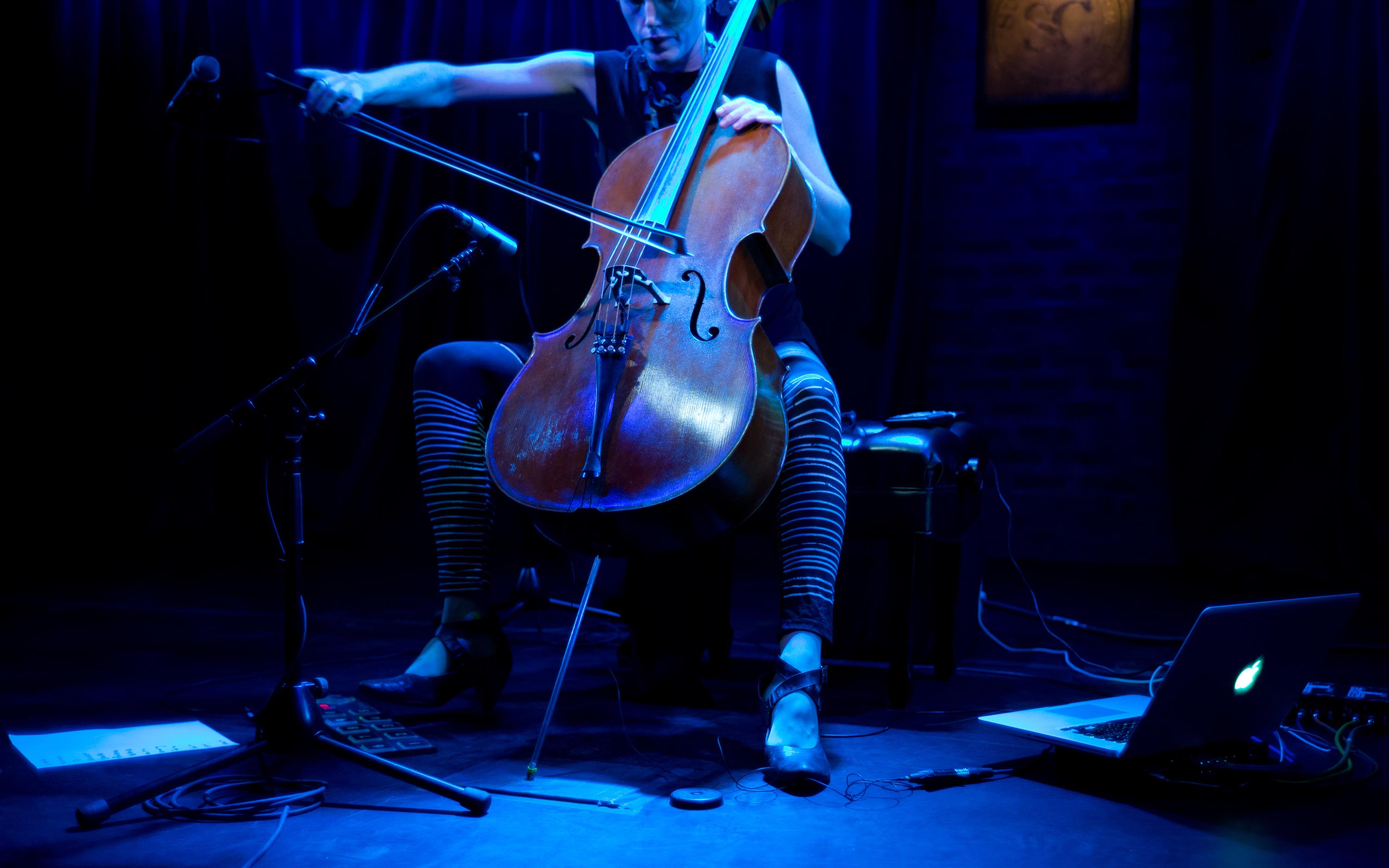
Da alcune interviste, ho capito che la pedaliera va a “triggerare” alcuni Apple Script, che vanno ad eseguire azioni complesse su Ableton Live, sequence di azioni non realizzabili con i solo messaggi MIDI.


Il mio Setup
Avrete già trovato nel primo setup di Zoe un indizio di quello che vorrei fare, ebbene corsi e ricorsi storici, utilizzerò il Boss RC 505 al posto dell’Electric Repeater.

Midifile
Per controllare la RC505 creo un midifile con i messaggi di Control Change che ho prima usato con la FCB 1010.
Per editare la traccia MIDI ho utilizzato Cakewalk BandCamp, che potrete scaricare gratuitamente.
Il midifile finale potrà essere riprodotto con un qualsiasi applicazione.
Importante sottolineare che occorre attivare il MIDI Sync, ossia stabilire che la RC 505 agirà da Slave Midi e che quindi si sincronizzerà con il lettore di midifile che andremo ad usare.
Nel caso del Cakewalk occorrerà :
- Abilitare la trasmissione del MMC con tutti i parametri

- E sulla RC 505 : System Midi Sync Auto appare Master: Tempo Midi

Conclusioni
5 tracce stereo con una grande flessibilità sono sicuramente il punto di forza di questa looper.
Per la parte MIDI avrei preferito una implementazione completa dei messaggi di controllo, ma l’approccio utilizzato con l’assign semplifica sicuramente la vita ai meno esperti del MIDI.
Sono riuscito nel mio progetto? Chi lo sa, alla fine la grande capacità di Zoë Keating è quella di immaginare un edificio sonoro e riuscire a scomporlo nelle sue minime parti per eseguirlo ogni volta live.
È forse questo lo sforzo che si dovrebbe compiere, per un uso più creativo e soprattutto musicale delle loop station.
Ringrazio la Casa Musicale Cav. Quinto Fabio (SA), per avermi dato la possibilità di utilizzare RC 505, lasciandomi la loopstation per tutto il tempo di cui ho necessitato nelle diverse prove effettuate.
Informazioni Utili
Produttore: Roland-Boss
Distributore: Roland Italy
Modello: RC505
Prezzo consigliato: 470 Euro iva inclusa
Ing. Umberto Sorbo
I’ve been looking for a loopstation for a live looping project for a while. What is it?
As you surely already know, playing with a loopstation involves recording music clips that will be immediately reproduced and on which we can add riffs, grooves, etc …
Well, I want to concentrate on what I play and not become a dancer, because if you have already noticed in many videos, you have to push a lot of buttons scattered here and there.
I will record all the operations necessary for the looper on a sequencer, which in turn will control the Boss RC 505.
5 tracks (Stereo) allow me great versatility!
This technique is now used by Zoe Keating, Californian cellist and composer.
I will succeed? follow me and we’ll find out.
Unboxing
The first impression of this loopstation is that of a slightly plastic object, large keys and sliders, very light.
I turn it on and it really seems very “cool” to me, so many beautiful lights and animations …
Beautiful, but will it be good too?

I throw myself in the manual and discover that:
- There are 5 stereo tracks that can be used simultaneously, each with its own controls and volume
- You can use an effect on the input audio.
- Each track has its effect.
- 99 memories are available, each memory contains the complete settings of the 5 tracks
- There is a rhythm section with 85 patterns
- It is possible to connect a microphone with XLR connection and possible phantom
- The RC 505 is a looper not designed to be grounded, this is why it has large buttons that must be used with the hands. However, it can also be used by guitarists, as external pedals can be connected (see next paragraph)
- For a more exhaustive list of the features of this loopstation, please refer to the previous article “Roland Rc-505, loopstation for NOT guitarists“, which however considered the Rc505 with firmware 1.0.
Firmware 2.0
With the latest firmware new features have been added, in particular:
- Up to three simultaneous effects both on input and on tracks.
- It is possible to section the sound output from the headphones (track loop or MAIN)
- Added new effects including Ring Modulator, Slow Gear and Pitch Bend
- Extended parameters added to previous effects
- Added the management of an external foot controller, ideal for guitarists and keyboardists
- The assignable functions have gone from 8 to 16
- Improved functions on memories with individual monitor of the track via headphones, quantization in loop recording
Only with the RC 505
The RC 505 allows the use of loops according to two modes: SINGLE mode and MULTI mode.
If we put a track in MULTI mode it can be reproduced along with others, in SINGLE mode the tracks will be played one at a time.
What does it mean?
Let’s imagine preparing a performance with a rhythmic loop and another track with some Pads to let in not immediately.
We put these tracks in Multi mode and we will activate one or the other at will, they will play alone or together.
On the remaining tracks, which we put in SINGLE, we go to record for example, verse, chorus and bridge.
By pressing the PLAY button of the track, the one in execution will put the others in STOP.
Using a MIDI pedal
Although the RC505 is a “desktop” loopstation, it can be used with a MIDI pedal or an external controller.
In search of MIDI documentation I discover that there is an “Assign” section, where up to 16 can be assigned to be executed following a MIDI message, the pressure of a pedal or other numerous events.
To experiment with Assign, I decided to dust off my old Behringer Fcb 1010 powered by UNO firmware, a variant of the original third-party firmware, which simplifies and adds new features to the pedal board.
To use MIDI Assigns with the RC 505 it is necessary to manually assign a function to each track, ie it is possible to define an action to be performed when the looper receives a specific input: a MIDI message, pedal pressure or other types of event.
For the configuration of the Fcb 1010 I used the “Stomp Mode” function which the UNO Firmware offers.
That is, pressing the keys 1 to 5, Control Change message is sent to the RC 505, which I assigned to the respective functions.
The tracks on the RC 505 must be set as “Moment“, for the keys I have chosen the control change from 21 to 30.
With this type of settings we will obtain a control change with a value that goes from 0 to 127 when we press a key of the FCB1010 and returns to zero when we release the key.
For example pressing the switch 1 will get:
pressing switch 6:
Zoe’s Setup
The very first Zoë Keating setup was based on the Electrix Repeater Pro, a loop recorder, that is, a hardware that allows recording and replaying recordings over and over again.
It was equipped with four independent audio tracks, MIDI In, Out and Thrue.
With this setup, Zoe said: “it’s like having an empty score, I just have to play the notes into the score, and the computer takes care of bringing the sampled parts in and out for the audience, somewhat like a conductor would do “.
Evolution
Zoe Keating’s current setup is mainly based on Ableton Live, so it’s actually based on software
Sooper Looper is provided as a plugin with several instances (in some videos I have seen up to 4) and it is this software component that performs the loop station part.
The MIDI pedalboard (used an FCB 1010) is a Keith McMillen SoftStep 2.
Zoë Keating Setup – Ph Michael Lebor
From some interviews, I realized that the pedalboard goes to “trigger” some Apple Scripts, which go to perform complex actions on Ableton Live, sequence of actions not achievable with my MIDI messages.
My Setup
Having already found in Zoe’s first setup a clue to what I would like to do, well, historical courses and appeals, I will use the Boss RC 505 instead of the Electric Repeater.
Midifile
To control the RC505 I create a midifile with the Control Change messages that I used before with the FCB 1010.
To play the MIDI track I used Cakewalk BandCamp.
The final midifile can be reproduced with any application.
It is important the activation of the MIDI Sync, ie that makes the RC505 act as a Midi Slave and that will then synchronize with the midifile player that we are going to use.
In the case of Cakewalk it will be necessary:
- Enable the transmission of the MMC with all the parameters
- And on the RC 505: Midi Sync Auto System Master Master appears: Midi Time.
Conclusions
5 stereo tracks with great flexibility are certainly the strong point of this looper.
For the MIDI part I would have preferred a complete implementation of the control messages, but the assignment approach certainly simplifies life for the less experienced of MIDI.
Did I succeed in my project? Who knows, in the end Zoe Keating’s great ability is to imagine a sound building and be able to break it down into its smallest parts, playing it again for every live show.
This is perhaps the effort that should be made, for a more creative and above all musical use of the loop stations.
Useful information
Builder: Roland-Boss
Modell: RC 505
Price: 470 Euro iva inclusa
Ing. Umberto Sorbo
Italian to English translation: Umberto Sorbo