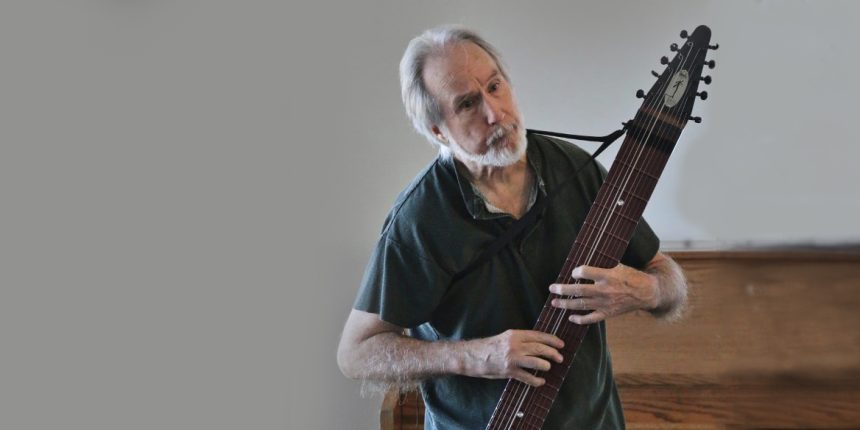
Chapman StickChapman Stick

Maurizio Zoccola


Il Chapman Stick è uno tra gli ultimi strumenti musicali ideati, in senso temporale, che ha avuto una certa diffusione. Per tale strumento è stata sviluppata una particolare tecnica esecutiva che ha risposto ad una precisa necessità di carattere tecnico-esecutivo (più ampie possibilità polifoniche per gli strumenti a pizzico tradizionali). In più le conseguenze dello sviluppo di tale tecnica hanno portato inevitabilmente a nuove articolazioni timbriche (anche per gli strumenti tradizionali).

Il vocabolario timbrico del compositore e dell’esecutore quindi si è ampliato nella direzione delle nuove esigenze compositive. Ancora una volta l’invenzione di nuovi strumenti è una risposta ad un bisogno creativo.

Emmett Chapman

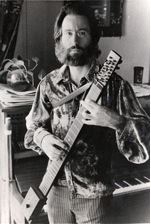
Il Chapman Stick è uno strumento a corda ideato dal chitarrista Emmett Chapman nei primi anni 1970. Egli si proponeva di creare uno strumento progettato apposta per la tecnica a due mani detta Tapping, che egli sostiene di aver inventato nel 1969; questa però è una questione che merita degli approfondimenti. In realtà la tecnica del tapping la troviamo in embrione già nella musica Niccolò Paganini (1782-1840), ma ha origini ancora più antiche.

Nella musica tradizionale turca viene eseguita su uno strumento tipico chiamato bağlama

Bağlama

In tempi più recenti la ritroviamo nelle esecuzioni e nelle composizioni del chitarrista brasiliano Paulinho Nogueira.

Paulinho Nogueira (1929-2003)

Quando negli anni novanta in un intervista gli fu chiesto se conoscesse Eddie Van Halen egli disse di non conoscere questo chitarrista ma di conoscere questa tecnica fin dagli anni ’50.

Jimmie Webster (1908-1978) effettuò delle registrazioni nel 1950 utilizzando la tecnica del tapping a due mani che descrisse nel metodo “Touch Method for Electric and Amplified Spanish Guitar” del 1952. Webster assistette ad una dimostrazione del progettista di pickup per chitarra Harry deArmond (1906-1999) che per mostrare la validità del suo prodotto si esibiva in alcune tecniche di legato a due mani. Da qui a Webster venne l’idea di questa tecnica che fu utilizzata proprio per sponsorizzare questi pickup montati sulle storiche chitarre Gretsch.

Jimmie Webster

Anche il chitarrista jazz Barney Kessel (1923-2004) ne dà una breve dimostrazione durante un video del 1964

Intanto nel 1973, quindi precedentemente alla commercializzazione del primo stick avvenuta nel 1974, Steve Hackett la utilizza nel brano Dancing With The Moonlit Knight, tratto dall’album Selling England by the Pound dei Genesis. In realtà la tecnica tapping di Hackett prevedeva che fosse il plettro a colpire la corda sulla tastiera anziché un dito della mano destra.

Il tapping divenne finalmente popolare tra gli strumentisti a corda dal 1977 in poi grazie al brano Eruption composto ed eseguito da Eddie Van Halen.

Ritornando alla diatriba sulla paternità di questa tecnica, lo stesso Chapman ammette che ci siano stati dei chitarristi che prima di lui abbiano usato quella tecnica. Ma precisa anche che lui non ne conosceva a suo tempo l’esistenza e che comunque le tecniche antecedenti obbligavano lo spostamento della mano destra dalla posizione tradizionale verso la tastiera e l’esecuzione di una sola nota alla volta. Mentre con la sua tecnica tutte e due le mani sono perpendicolari alle corde e definitivamente posizionate sulla tastiera, l’una di fronte all’altra e pronte entrambe a percuotere più corde simultaneamente. Effettivamente in questo modo la tecnica è definitivamente perfezionata.

Tecnica usata precedentemente
Tecnica sviluppata da Chapman. Artista Jeremy Nesse

Ci si è soffermati molto sulla nascita e lo sviluppo della tecnica del tapping poiché come si è gia fatto rilevare è la vera motivazione per cui è stato inventato lo stick.
Ricapitolando, l’esigenza è di estendere la polifonia dello strumento, poter suonare contemporaneamente linee di basso, armonie e melodie complesse su di un solo strumento alla stregua di uno pianoforte o di un organo. Ma anche di facilitare passaggi virtuosistici caratterizzati da intervalli molto larghi. In realtà essa è l’evoluzione della tecnica del legato estesa alle dita di entrambe le mani che suonano contemporaneamente sulla tastiera. La corda viene messa in vibrazione quindi non più pizzicandola con le dita o con un plettro ma colpendola verticalmente ed in modo netto direttamente con il dito deputato a stabilire l’altezza del suono. Questo martellare delle dita direttamente sulla corda facendola sbattere contro i frets della tastiera comporta un suono con un attacco molto più pronunciato e con una componente di rumore maggiore nei suoi transienti d’attacco. Questo timbro è una delle caratteristiche peculiari di questa tecnica assieme al suono tipico del legato; svariati compositori moderni hanno apprezzato molto questa peculiarità. Il tapping poi nella sua pratica manuale favorisce istintivamente un uso reiterato di moduli melodico-ritmici, caratteristica questa che trova largo spazio nelle tecniche compositive moderne.

Ecco quindi la necessità di creare uno strumento concepito per favorire al meglio questa tecnica.

Grand Stick a 12 corde

Nello specifico lo strumento è spartano. Esso consiste principalmente in una tastiera molto larga, un’ampia paletta per accogliere le molte meccaniche e un ponticello regolabile per fissare le corde in fondo allo strumento. Le corde sono divise in due sezioni in modo da averne una per il registro acuto e l’altra per quello grave, sono speculari tra loro ed hanno quindi entrambe le corde più gravi al centro dello strumento.
Essendo uno strumento solidbody, ossia senza cassa di risonanza, richiede di un sistema elettromagnetico o piezoelettrico che capti la vibrazione della corda. Questa circuitazione è divisa in due parti indipendenti tra loro, una per ogni sezione di corde. Di conseguenza lo stick ha bisogno di due linee amplificatrici di segnale distinte.

ponte
Paletta
pickup

Lo strumento si imbraccia grazie ad un supporto posizionato sul retro dello strumento che viene infilato nella cinta dei pantaloni (Belt hook) e ad un collarino che gira sotto l’ascella destra dell’esecutore.

Belt hook
collarino
postura

Prima della versione definitiva Chapman passò attraverso diverse sperimentazioni:
Ci volle molto tempo per settare la mia chitarra affinché potesse permettermi l’uso di questo nuovo stile. Per il primo anno suonai su una chitarra che mi costruii da solo….
…nel 1970 costruii una versione molto ridotta del mio attuale Stick…tra il 1970 ed il 1974 feci cinque prototipi, ognuno acquisiva sempre di più le sembianze di quello attuale.

1970
1971
1974

Nel 1974 fu fondata la Stick Enterprise che si occupò di commercializzare questo strumento. Tra i primi estimatori di questo strumento fu il pianista e tastierista jazz Joe Zawinul, fondatore dei Wheater Report che comprò uno dei primi Stick della neonata azienda. Dopo un poco lo si vide tra le mani dell’allora giovane e talentuoso bassista della band di Zawinul: Alphonso Johnson. Tra i primi acquirenti troviamo anche Tony Levin, probabilmente il più famoso esecutore di questo strumento. Levin come turnista lo utilizzera con tutti i maggiori artisti con cui collaborerà: Peter Gabriel, King Crimson, Laurie Anderson, Pink Floyd e molti altri.
In seguito questo strumento verrà commercializzato sempre di più grazie anche alla fama dei primi esecutori.
Lo stick tradizionalmente monta pickups di tipo humbuker prodotto specificatamente per la Stick Enterprises e protetto da brevetto. Dalla foto si può osservare la doppia estensione polare di cui una regolabile in altezza. Troviamo un humbuker per ogni una delle due sezioni di corde ed ogni singolo humbuker ha il suo controllo di volume. Ogni una delle due sezioni ha bisogno di una distinta amplificazione, l’uscita audio dello strumento è costituita da un connettore stereo e un cavo apposito si occupa dello splittaggio dei due segnali per la distinta amplificazione delle due sezioni di corde.
Nei nuovi modelli su richiesta possono essere montati degli humbuker con circuitazione attiva. Ossia il segnale prima di uscire viene preamplificato. Questo tipo di pickup consente un ulteriore abbattimento delle interferenze elettromagnetiche, un maggiore segnale in uscita ed una diversa risposta in frequenza. Ogni sezione di corde ha un potenziometro per regolarne il tono.
Infine, sempre su richiesta, può essere montato sullo strumento come ulteriore alternativa un sistema che prevede l’uso di una coppia di “single coil” per ogni sezione di corde.

Ascoltiamo il suono dello stick

La Stick Enterprise ha in catalogo svariati modelli, i più diffusi sono:

12-string
10-string
NS/Stick
Alto Stick
Stick Bass 8-string

Sono possibili svariate accordature:

Ecco adesso un elenco dei principali esecutori di questo strumento:

Emmett Chapman il suo ideatore.

Greg Howard, colui che ritengo essere forse il maggiore esecutore di questo strumento. Eccezionale per la sua tecnica e le sue capacità espressive.

Bob Culbertson è un altro eccezionale virtuoso dello stick.

Kevin Keith
leader del gruppo Ejeband

Sicuramente il più famoso stickista è Tony Levin. La sua fama è dovuta, oltre alla bravura, anche al fatto di aver suonato per molti artisti di musica pop. Una delle sue maggiori caratteristiche esecutive è l’intensivo uso di effettistica.

Altri eccellenti esecutori sono Jim Lampi e Guillermo Cides, argentino che fonda lo Stick Center in Spagna.

In Italia troviamo la compianta Virna Splendore recentemente scomparsa. Buona esecutrice, è stata colei che ha diffuso lo stick nel nostro paese.

Di sicuro ci sono tanti altri bravissimi stickisti, alcuni anche italiani. Mi sono solo limitato a citare i più famosi a livello internazionale, di conseguenza nessuno me ne voglia vedendo escluso dalla lista se stesso o uno dei suoi beniamini.

Conclusioni

In conclusione vorrei sottolineare la relativa “giovinezza” di questo strumento, il che significa che a mio modesto parere siamo ancora in una fase embrionale. La diffusione di questo strumento è ancora molto limitata, si avvicinano ad esso principalmente i bassisti grazie alla fama di Tony Levin e in misura minore i chitarristi. È necessario evidenziare quanto sia uno strumento difficile da imparare e da suonare e quanto sia limitato il numero di stili musicali in cui è stato finora impiegato. Ciò fa in modo che lo Stick sia uno strumento ancora poco conosciuto. Inoltre non esiste ancora un vasto repertorio di composizioni e in quello esistente, a dire il vero, non ne troviamo ancora molte di grande spessore.

Un altro elemento che si può cogliere analizzando il repertorio è che si è troppo legati compositivamente a un minimalismo “alla Steve Reich” per intenderci. Probabilmente, ciò è strettamente legato alla particolarissima tecnica esecutiva. Sono conscio che con queste mie affermazioni mi attirerò molte critiche da parte dei puristi di questo strumento ma la storia millenaria della musica ci ha insegnato che i virtuosi di uno strumento solo in pochi casi sono stati capaci di scrivere capolavori per esso (Paganini, Chopin ecc.); si è dovuto sempre aspettare che i grandi compositori abbiano scritto per essi, spontaneamente o su commissione.
Non saprei prevedere gli sviluppi futuri di questo strumento ma di sicuro allo stato attuale per una sua crescita è necessario trovare ancora altri grandi esecutori (quelli attuali sono ancora pochi numericamente) e ancor di più degli autori in grado di scrivere un repertorio di rilievo per esso.

Maurizio Zoccola

The Chapman Stick in one of the last invented instruments in temporal order that had a good spread.
For this instrument a particular playing technique has been developed to respond to a specific technical and executive needs (more opportunities for polyphonic instruments plucked in a traditional way).
In addition the consequences of the development of this technique led inevitably to new timbre articulations (for traditional instruments).
The timbre vocabulary of the composer and performer then has expanded in the direction of the new compositional requirements. Once again, the invention of new instruments is a response to a creative need.

The Chapman Stick is a stringed instrument invented by guitarist Emmett Chapman in the early 1970. He wanted to create an instrument designed specifically for the two-handed technique called Tapping, which he claims to have invented in 1969, but this is a matter that deserves more investigation.
Actually the tapping technique is found in embryo already in music Niccolo Paganini (1782-1840), but it has even more ancient origin.
In traditional Turkish music is performed on a typical instrument called Baglama

bağlama

In more recent times we find it in the performances and in the compositions of Brazilian guitarist
Paulinho Nogueira.

Paulinho Nogueira (1929-2003)

When in the nineties in an interview he was asked if he knew Eddie Van Halen, he said he did not know the guitarist but to know this technique since the 50’s.
Jimmie Webster (1908-1978) made recordings in 1950 using the technique of two-handed tapping method that he described in “Touch Method for Electric and Amplified Spanish Guitar” in 1952. Webster saw a demonstration of the guitar pickup designer Harry DeArmond (1906-1999) who was performing some techniques related to two hands to show the validity of his product. From here Webster had the idea of this technique that was used just to sponsor these pickups mounted on the historic Gretsch guitars.

Jimmie Webster

The jazz guitarist Barney Kessel (1923-2004) gives a brief demonstration during a video in 1964

Meanwhile, in 1973, then prior to the commercialization of the first Stick in 1974, Steve Hackett uses tapping in the song Dancing With The Moonlit Knight, from the album Selling England by the Pound Genesis. Indeed the Hackett’s technique of tapping demanded that it was the pick to strike the chord on the fretboard instead of a finger of the right hand.
Tapping finally became popular with stringed instrumentalists from 1977 onwards due to the Eruption song composed and performed by Eddie Van Halen.

Returning to the controversy about the authorship of this technique, the same Emmett Chapman admits that there have been guitarists before him that have used that technique.
But he also states that he did not know at the time the existence and that in any case the prior techniques forced displacement of the right hand from its conventional position toward the fretboard and the execution of a single note at a time. While with his technique both hands are perpendicular to the strings and permanently positioned on the fretboard, one facing the other and both ready to hit more strings simultaneously. Indeed in this way the technique is definitely improved.

Tecnica usata precedentemente
Tecnica sviluppata da Chapman

We focused a lot on the birth and development of the technique of tapping because as already pointed out this is the real reason for which the Stick was invented.
In summary, the need is to expand the polyphony of the instrument, playing both bass lines, harmonies and complex melodies on one instrument in the same way of a piano or an organ.

But also to facilitate the virtuosic passages characterized by very wide note ranges.
In fact it is the evolution of the legato technique with the fingers of both hands playing on the fretboard simultaneously.

The string is put into vibration no more pinching with your fingers or a plectrum but hitting vertically and directly with your finger deputy to determine the pitch.
Bumping the finger directly on the string against the frets of the fretboard sound involves a much more pronounced attack with a higher noise component. This timbre is one of the characteristics of this technique along with the typical sound of the legato; many modern composers have enjoyed this feature. Then tapping in his manual practice instinctively favors a repeated use of melodic and rhythmic forms, a characteristic that is widely used in modern compositional techniques.

Hence the need to create an instrument designed to better promote this technique.

Grand Stick a 12 corde

Specifically, the instrument is austere. It consists mainly of a very large fretboard, a broad headstock to accommodate the many tuning keys and an adjustable bridge to fix the strings in the bottom of the instrument.
The strings are divided into two sections, one for the upper register and the other for the bass, they are specular with each other and thus have both lower strings at the center of the instrument.

Being a solid body instrument, i.e. without sounding board, it requires an electromagnetic or piezoelectric pickup that captures the vibration of the string. This circuitry is divided into two independent parts, one for each section of the strings. Consequently the Stick needs two distinct lines to be amplified.

ponte
Paletta
pickup

The instrument can be taken up thanks to a support on the back that is inserted into the waistband of pants (Belt hook) and a collar that runs under the right armpit of the performer.

Belt hook
collarino
postura

Before the final version Chapman passed through various experiments:
“It took a long time to set my guitar so that it could allow the use of this new style. For the first year I played on a guitar that I built on my own…
… In 1970 I built a much reduced version of my current Stick.. between 1970 and 1974 I made five prototypes, each acquired more and more the appearance of the current one. “

1970
1971
1974

In 1974 he founded the Stick Enterprise that worked to sell this instrument. Among the first admirers of this instrument was the piano player and jazz keyboardist Joe Zawinul, the founder of Wheater Report that bought one of the first Sick of the newly formed company. After a time he was seen in the hands of the young and talented bassist of the Zawinul band: Alphonso Johnson. Among the first buyers are also Tony Levin, probably the most famous performer of this instrument. Levin will use him as a session musician with all the major artists to collaborate with Peter Gabriel, King Crimson, Laurie Anderson, Pink Floyd and many others.

Later this instrument will be sold more and more thanks to the fame of the first performers.
The Stick traditionally has humbuker pickups mounted, specifically produced and the Stick Enterprises protected them by patent. From the picture it can be observed the double extension polar of which is adjustable in height. We find a humbuker for each one of the two sections of strings and each humbuker has its volume control. Each one of the two sections need a distinct amplification, the audio output of the instrument is constituted by a stereo connector and a dedicated cable deals with the splitting of the two signals for the separate amplification of the two sections of the strings.

On request the new models can be mounted humbuker with active circuitry,i.e. the signal is amplified before exiting the pickup jack connectors. This type of pickup allows a further reduction of electromagnetic interference, a greater output signal and a different frequency response. Each section of strings has a potentiometer to adjust the tone.
Finally, again on request, it can be mounted on the instrument as a further alternative a system that involves the use of a pair of “single-coil” for each section of the strings.

We listen to the sound of the Stick, here are some audio clips played for us by Umberto Sorbo:

[soundcloud url=”http://api.soundcloud.com/tracks/66196571″ params=”show_comments=true&auto_play=false&color=ff7700″ width=”100%” height=”81″ iframe=”false” /]
[soundcloud url=”http://api.soundcloud.com/tracks/66196671″ params=”show_comments=true&auto_play=false&color=ff7700″ width=”100%” height=”81″ iframe=”false” /]

The Stick Enterprise catalog has many models, the most popular are:
– 12-string
– 10-string
– NS / Stick
– High Stick
– Stick Bass 8-string

Various tunings are possible:

Now here is a list of top performers of this instrument:

Emmett Chapman its creator.

Greg Howard, who I consider to be perhaps the greatest performer of this instrument. Exceptional for its technique and its expressive capabilities.

Bob Culbertson is another great virtuoso of the Stick.

Kevin Keith group leader of Ejeband

Certainly the most famous Stick player is Tony Levin. His fame is due not only to the skill, but to the fact that he played for many artists of pop music. One of its major features is the intensive use of special effects.

Other excellent performers are Jim Lampi and Guillermo Cides, Argentine who founded the Stick Center in Spain.

In Italy there is the late lamented Virna Splendore died recently. Good performer, was the one who spread the Stick in our country.

Certainly there are many other talented Stick players some Italians also. I just limited to name the most famous internationally, consequently no one feel offended seeing himself off the list or none of his favorites.

In conclusion I would like to emphasize the relative “youth” of the instrument, which means that in my humble opinion, it is still in an embryonic stage. The use of this instrument is still very limited, approach to it mainly thanks to the fame of bassists Tony Levin and guitarists to a lesser extent.
It’s necessary to highlight how difficult this instrument is to learn and to play, and how limited the number of musical styles that has been used so far. This makes sure that the Stick is an instrument still little known. Also there is still a wide repertoire of compositions and the existing one, to tell the truth, we do not still find many of great depth.

Another element that can be grasped by analyzing the repertoire is that it is too tied to a compositionally minimalism “a la Steve Reich,” to be clear. Probably, this is closely connected to the distinctive technique of the instrument.
I am aware that with my statements I will draw a lot of criticism from the purists of this instrument but the ancient history of music has taught us that the virtuous of an instrument only in a few cases have been able to write masterpieces for it (Paganini, Chopin etc. .); It always had to wait for the great composers have written for them, spontaneously or on commission.
I could not predict the future development of this instrument but for sure at present for its growth is still necessary to find other great performers (the current ones are still few in number) and even more authors that are able to write a repertoire of relief for it.

Maurizio Zoccola

Translation Umberto Sorbo

Condividi questo articolo!
Nessun commento