


Mentre i Radiohead, punto di riferimento nel panorama dell’alternative, pubblicano The King of Limbs, uno storico album breve di sole otto tracce, puntando sempre più sulla digitalizzazione, sulla computer music, su download e acquisto della musica online, gli Arcade Fire mettono insieme nel loro terzo album addirittura sedici tracce, registrando su disco di acetato prima di convertire il tutto in formato digitale, di modo che l’album suoni quanto più simile ad un vinile.
Ma l’essere in controtendenza li premia come sempre e ad agosto 2010 si impongono prepotentemente al primo posto nella Billboard 200 americana con The Suburbs, per poi continuare a conquistare classifiche e critica anche qui in Europa.
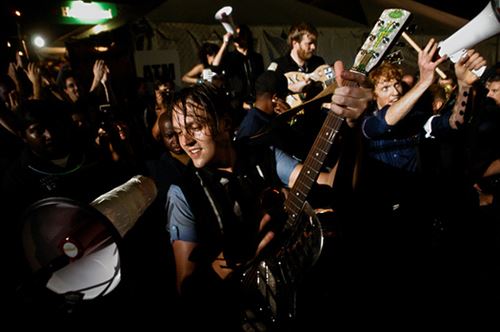
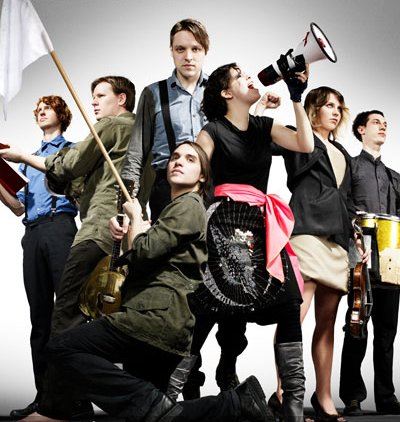
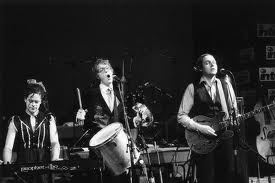
Seppur etichettati con il bollino “indie rock”, non aspettatevi da questa band canadese la classica formazione voce-chitarra-basso-batteria. Questo gruppo di 8 membri è più una sorta di piccola orchestra, definizione avvalorata dalla presenza di archi, arpa, corno francese e diversi altri strumenti “atipici” nel mondo della musica leggera, che donano una sottile raffinatezza a tutti i loro brani.
Nel 2004 hanno attirato su di loro l’attenzione della critica con il primo (consigliatissimo) album Funeral, per poi non deludere nessuno con il seguente Neon Bible nel 2007.
L’ambizioso progetto The Suburbs è una sorta di concept album, in cui i brani si intrecciano in continui richiami reciproci.
L’orecchiabile opening track, che dà il titolo all’album, è certamente la più significativa, rappresentando una sorta di prefazione in cui si riassumono tutti i temi che saranno snocciolati ed esasperati, allontanati e ripresi nel corso del disco: il ricordo evanescente dell’adolescenza trascorsa in periferia da Win Butler e co., con le sue guerriglie urbane e i sogni di gloria destinati a spegnersi. L’essenzialità dei 4/4 della batteria, accompagnata da semplicissimi accenti sul piano e una lontana riverberatissima chitarra quasi post-rock, costruiscono una hit indie tutta da canticchiare. Da segnalare anche il cinematografico videoclip di Spike Jonze, che fa da antipasto al cortometraggio “Scenes from the suburbs” in prossima uscita, firmato sempre dall’eccentrico regista statunitense.
Ready to start, uno dei brani più intensi e forse la vera e propria track #1 come lascia intuire il titolo, si presenta all’ascolto con una chitarra metronomica, che suona come il cucù di un pendolo e ci lascia col fiato sospeso per 9 secondi, per poi esplodere insieme agli altri strumenti in un’onda di pura energia sonora. Una linea di basso molto presente sostiene quello che è ormai diventato la costante d’apertura dei loro più recenti concerti, che, con il suo crescendo di dinamica e numero di strumenti, è l’ideale per coinvolgere il pubblico carico di adrenalina.
L’easy listening di Modern man, City with no children, Wasted hours scivolano via velocemente, lasciandoci apprezzare gli elegantissimi virtuosismi dei violini di Rococo, Empty Room e Half Light I.
Rococo in particolare, con i suoi archi che a tratti immaginiamo riempire gli ampi spazi di un’antica cattedrale gotica, ha un sapore settecentesco come il titolo stesso suggerisce. Una sorta di musica da camera radicalmente rivisitata, in cui un clavicembalo riesce a convivere pacificamente con una chitarra carica di tagliente distorsione.
Un chorus e un leggerissimo tremolo rendono l’arpeggio di Suburban War il giusto malinconico accompagnamento per le commoventi lyrics in cui ritornano i temi del cambiamento e del passato.
I 3 accordi punkeggianti di Month of May arrivano all’improvviso, quasi stonati, come un pugno nello stomaco. Come sempre accade nel punk del resto. Ma in 4 minuti il pezzo cambia leggermente faccia, trasformandosi con l’ingresso delle tastiere in qualcosa che è più vicino all’inquietante new wave di Joy Division e Cure.
Un “Do minore” ostinato al piano si ripete incessante per tutti i 5 minuti di We used to wait, un accordo che segna il tempo che scivola tra le dita ora che “le nostre vite scorrono così veloci” (“now our lives are changing fast”) e funge da mantra nella speranza che ciò che c’è di puro resti tra noi (“hope that something pure can last”). E’ certamente uno dei pezzi più belli e quello che meglio descrive la “poetica” degli Arcade Fire: un superbo equilibrio fra profondi riverberi di chitarre elettriche, vibranti archetti, distorsioni, delay, pianoforti più ritmici che melodici, sintetizzatori, voci…un’orchestra moderna arricchita dalla potenza della batteria.
 Dopo la straziante monotonia di Sprawl I (Flatland), in cui Butler descrive nostalgicamente un amaro ritorno nella desolazione del suo quartiere, il synth dal sapore anni ’80 di Sprawl II (Mountains beyond mountains), così come in Half Light II, dona leggerezza ad uno dei brani più apertamente critici nei confronti di una periferia in cui i centri commerciali crescono come “montagne al di là delle montagne”. La cristallina voce di Régine Chassagne, che abbiamo già adorato in vecchi brani come In the backseat ed è forse un po’ troppo assente in questo terzo album, canta di quanto il mondo sia troppo piccolo per sfuggire alla periferia che, più di un luogo, è uno stato della mente.
L’album si chiude così come era iniziato, con il reprise di The Suburbs. Come titoli di coda, un ensamble di archi degno della miglior colonna sonora sostiene le voci dei protagonisti di questa storia che, spegnendosi gradualmente, ci lasciano già in attesa del prossimo piccolo capolavoro.
Thumbs up for: The suburbs, Ready to start, We used to wait
Thumbs down for: Modern man, City with no children
ARCADE FIRE – The Suburbs
Prodotto da: Merge (US), Mercury (UK)
TRACKLIST:
1. The Suburbs
2. Ready To Start
3. Modern Man
4. Rococo
5. Empty Room
6. City With No Children
7. Half Light I
8. Half Light II (No Celebration)
9. Suburban War
10. Month Of May
11. Wasted Hours
12. Deep Blue
13. We Used To Wait
14. Sprawl I (Flatland)
15. Sprawl II (Mountains Beyond Mountains)
16. The Suburbs (continued)
Durata: 64:07
Durata: 74:21 (Deluxe Edition)
Tutte le canzoni sono scritte e composte dagli Arcade Fire (Sarah Neufeld, Richard Reed Parry, Jeremy Gara, Win Butler, Will Butler, Regine Chassagne & Tim Kingsbury)
While Radiohead, a benchmark for the alternative music scene, released “The King of Limbs”, an historical short album containing just eight tracks, relying more and more on the digital world, at the computer music, at the downloading and buying music on line, Arcade Fire gathered together as many as sixteen tracks for their third album, recording on acetate record before converting it all to digital format, in order to make it sound as a vinyl record as much as possible.
But going against the flow is rewarding for them as usual and in August 2010 they dominate the Billboard 200 top album chart occupying the first position with The Suburbs, and keeping on winning critical acclaim and conquering the music charts here in Europe as well.
Though being labeled as “indie rock”, don’t expect this Canadian band to be the typical voice-guitar-bass-drums formation. This eight-member group is most likely some sort of a small orchestra, whose definition is reinforced by the presence of strings, harp and French horn and many more “unusual” instruments within the pop music world, giving each track a strain of elegance.
In 2004 they drew the critical attention with the first (highly recommended) album Funeral, establishing themselves with the following Neon Bible in 2007. The ambitious project by The Suburbs is some sort of concept album, in which all tracks intertwine with recurrent mutual references.
The catchy opening track, after which the album is titled, is certainly the most significant, being it representative of some sort of introduction for all the subjects which will be analyzed in depth, dismissed and confirmed again throughout the album: the elusive memory of an adolescence spent at Win Butler’s and co., with his urban guerrilla and dreams of glory doomed to vanish. The 4/4 drum-beat essentiality, joined by very light piano stresses and a distant almost-post-rock full-of-reverb guitar, build up an indie hit to hum throughout. Noteworthy too is The Spike Jonze’s cinematic video, which works as an appetizer for the forthcoming short film “Scenes from the suburbs”, also by the eccentric director from the US.
Ready to start, one of the most intense track on the album and perhaps the actual track n. 1 as the title itself suggests, introduced by a metronomic guitar which sounds like a cuckoo clock and leaving us holding our breath for 9 seconds just to explode later altogether with other instruments in a pure sound energy wave. A bass line sustains what has become the standard opening for their latest concerts, which, with its dynamic crescendo and the amount of instruments involved, is the best way to captivate the audience’s adrenaline rushing.
The easy-listening Modern Man, City with no children, Wasted hours flow quickly to our ears, letting us enjoy the very fine virtuosities of the violin within Rococo, Empty Room and Half Light I. Mainly Rococo, with its strings which sometimes we imagine them filling any space of an ancient gothic cathedral, has an eighteenth-century flavor as the title itself suggests. Some sort of chamber music revisited throughout, where a harpsichord is able to live peacefully with a distorted sharpness of a guitar.
A chorus and a slightest tremolo make the arpeggio in Suburban War the proper melancholic accompaniment for the moving lyrics about the recurring themes of change and past.
The three chords in Month of May in punk style come suddenly, almost off-key, like a punch in the stomach. After all, it always happens that way when it comes to punk music. But within its 4 minutes the track slightly changes and, with keyboards coming in, it turns into something which is closer to the unsettling new wave by Joy Division and Cure.
An ostinato “C minor” on the piano lasts throughout the five-minute-long We used to wait, a chord which marks the time slipping through our fingers now that “our lives are changing fast” and works like a mantra within the “hope that something pure can last”. Indeed it is one of the most beautiful track on the album and the one that best describes the Arcade Fire’s “poetics”: a superb balance among deep reverbs of electric guitars, vibrating bows, distortions, delays, rhythmic piano (rather than melodic), synthesizers, voices…a modern orchestra enriched with the drum strength.
After the harrowing flatness of Sprawl I (Flatland), where Butler describes a bitter return to his hometown neighborhood desolation, the 80’s-flavored synth in Sprawl II (Mountains beyond mountains), as well as in Half Light II, eases one of the most direct hard-looking track about a suburb where shopping centers pop up like “mountains beyond mountains”. The crystal clear Régine Chassagne’s voice, which we already have been adoring for old tracks like In the backseat and which I’m afraid is perhaps less heard on this album, sings about how small the world is to let us escape the suburbs which, rather than a place, it is a state of mind.
The album ends the same way as it begun, reprising The Suburbs. As for credits, a string ensamble, worthy of the best soundtrack, carries the protagonists’ voices in this story, dying down slowly, and leaving us with much anticipation for the next little masterpiece.
Thumbs up for: The suburbs, Ready to start, We used to wait
Thumbs down for: Modern man, City with no children
ARCADE FIRE – The Suburbs
Produced by: Merge (US), Mercury (UK)
TRACKLIST:
1. The Suburbs
2. Ready To Start
3. Modern Man
4. Rococo
5. Empty Room
6. City With No Children
7. Half Light I
8. Half Light II (No Celebration)
9. Suburban War
10. Month Of May
11. Wasted Hours
12. Deep Blue
13. We Used To Wait
14. Sprawl I (Flatland)
15. Sprawl II (Mountains Beyond Mountains)
16. The Suburbs (continued)
Running time: 64:07
Running time: 74:21 (Deluxe Edition)
All songs written and composed by Arcade Fire (Sarah Neufeld, Richard Reed Parry, Jeremy Gara, Win Butler, Will Butler, Regine Chassagne & Tim Kingsbury )
Italian to English translation: Umberto del Giudice


