



Vi sarà sicuramente capitato di voler spasmodicamente provare uno strumento di difficile reperibilità, che non riuscite a procurare o ascoltare in nessun modo; ma cosa accade nel momento in cui ritrovandovelo sottomano questo finisce per comportarsi in modo completamente diverso da quello che vi aspettavate? E’ un po’ la storia che mi ha riguardato da vicino con il nuovo Presonus ADL 600; sono sempre stato affascinato dallo strumento, dato che in rete girano tantissime notizie, tali da creare intorno a questo una sorta di alone mistico. Nomi illustri che lo sponsorizzano, riferimenti, richiami e cenni, ma mai una parola sulla sua grana sonora o sui suoi punti di forza o debolezza. Certamente il prodotto, essendo progettato da Anthony De Maria, non può che essere sinonimo di strumento professionale; di certo il percorso del segnale è stato studiato fino al minimo dettaglio, ma perché si parla solo della sua alta componentistica? Questo preamplificatore è dotato di un’anima sonora, oppure è solo un involucro ben disegnato con tante belle valvole luminose per gettare fumo negli occhi? La luce delle sue valvole riscalda il cuore e accarezza le orecchie? Il costo è alto e la pubblicità generosa. Ci saranno tutti i requisiti per collocare l’ADL600 sul podio dei prodotti Top?
Prime impressioni:
Al primo impatto visivo e tattile il Presonus ADL600 (Fig.1) si presenta accattivante con uno stile curato ed elegante. Molto intuitivamente ogni switch, cursore rotativo, lineare e non, posto sul suo generosissimo pannello frontale è stato collocato al posto e alla distanza giusta. Il pannello superiore è ricco di feritoie per l’aerazione che lasciano intravedere quasi chiaramente le sei valvole, il generoso trasformatore toroidale e quant’altroche descriverò più accuratamente in seguito. I due ingressi INSTRUMENTS sono posti sul pannello frontale ed accettano jack bilanciati e sbilanciati da 1/4 di pollice per chitarre, bassi, piano Fender etc., mentre per i segnali di linea di keyboards, drum machine ed altro la casa ha predisposto due ingressi (uno per lato) in formato XLR sul pannello posteriore (Fig.2). Avremo bisogno quindi, per utilizzare gli ingressi di linea XLR, di adattatori o di un apposito cavetto jack + XLR maschio o di una D.I. box passiva. Passiamo ora alle prove ed a qualche consiglio di impostazione cercando di capire concretamente le potenzialità del Presonus ADL600 nominato al TEC AWARD 2006.

Voce Maschile:
Per la prova, nello specifico una voce che si muove tra il registro baritono e tenore in stile lirico, ho posizionato un ottimo NEUMANN U87AI a circa 30cm dalla bocca. Sul Presonus ho inserito una preamplificazione di circa 40dB, il filtro HP a 40Hz ed il selettore dell’impedenza sui 900ohm. I medio bassi di questa performance sono rotondi e definiti con medi centrali nitidi e presenti, anche i medio alti conservano un carattere di estrema naturalezza. Il bello è che anche con acuti di carattere lirico il Presonus non è andato mai in crisi di “overload” nello stadio d’ingresso, dimostrando grande capacità di “headroom”; questa è una caratteristica importantissima perché permette a qualsiasi fonico di concentrarsi completamente sul segnale d’uscita indirizzato alla traccia di registrazione, e credetemi, è un valore aggiunto che poche macchine hanno.
Voce Femminile:
Il tipo di voce per questa prova è quella di una giovanissima cantante che si muove tra il registro contralto e mezzo soprano. La cantante ha eseguito varie performance di generi diversi, interpretando fra l’altro un bel brano dal carattere melodico di Christina Aguilera, fertile terreno per provare al meglio l’ADL 600. La voce ascoltata in acustico presenta una spiccata limpidezza, forse a tratti eccessiva, a discapito dello spessore, in particolare mi riferisco al registro acuto. Nel periodo in cui la cantante ha gentilmente offerto la sua collaborazione per testare il PRE in questione, ho avuto a disposizione solo 2 microfoni, il TLM 103 e il nuovo AKG 414. Dopo aver effettuato vari “takes” con entrambi i microfoni ho optato per il Neumann in quanto la sorgente veniva restituita con una morbidezza superiore al 414 sulle zone alte dello spettro. In questo particolare caso il Neumann si è rilevato il miglior compromesso con le caratteristiche della voce sopra descritta. Data l’eterogeneità delle dinamiche, il brano presenta delle strofe relativamente basse rispetto all’apertura del ritornello e allo special, quindi ho articolato le fasi della ripresa a sezione (Fig.3), cioè ho preferito registrare prima le strofe – impostando la preamplificazione dell’ADL 600 intorno ai 55 dB – e poi il ritornello, con preamplificazione intorno ai 40 dB. Così facendo sono riuscito a catturare sia il calore e dettaglio della prima parte sia l’alta definizione della zona alta, senza incappare nel rischio di “overload”. L’unico aspetto poco piacevole di questo tipo di ripresa è che si costringe la cantante a fermare il “take” per passare da una zona all’altra con conseguente frammentazione emotiva. Il risultato però, in senso tecnico, resta molto valido.  Sulle strofe il risultato è davvero entusiasmante, arioso, nel pieno rispetto delle sibilanti, talmente dettagliato che si è riusciti ad avvertire anche lo schiacciare della lingua; nel ritornello purtroppo non è stato raggiunto lo stesso risultato, l’ADL 600 non ha commutato per niente le lacune timbriche dinamiche dell’interprete. Per riuscire comunque ad ottenere un più gradevole risultato, ho fatto ripetere in un secondo momento la “performance”, cercando di trovare conforto abbassando l’impedenza con l’apposita manopolina dedicata; dai 1.500 ohm settati in partenza sono sceso, con un primo scatto, a 900 ohm, poi a 300 ohm ed infine ho stazionato sul valore più basso fornito dalla macchina: 150 ohm. Dopo aver effettuato tutte queste prove, secondo la mia esperienza e il mio gusto, credo che quest’ultima posizione si sia dimostrata la più efficace. Acusticamente si avverte sensibilmente, proporzionale all’abbassamento dell’impedenza, una azione smussante alla zona alta dello spettro con relativa perdita di preamplificazione. In questo specifico caso ho dovuto riguadagnare 5 dB con la sezione Gain ottenendo così un maggiore calore delle “S” più controllate in una timbrica più amalgamata; chiaramente ho perso un po’ in dettaglio e linearità, ma per questa voce, a tratti sottile ed aspra sul registro medio- acuto, questa operazione ha contribuito ad un risultato più che accettabile.
Contrabbasso:
Il contrabbasso per questa prova è stato microfonato con un AKG D112, posto all’altezza del ponticello, e con un NEUMANN U87 posto a circa 50cm di distanza e leggermente più in alto rispetto al primo, sfruttando entrambi i canali che il Presonus offre. Il suono ottenuto con il D112 è di grande definizione su una regione di frequenze solitamente impastate, in particolar modo mi riferisco al “range” 150Hz – 400Hz per cui il risultato è stato più che soddisfacente. Il “punch”, la rotondità e l’attacco sembrano le caratteristiche più promettenti per questa ripresa. Grazie al condensatore U87 siamo riusciti ad ottenere una buona miscela tra il suono diretto e quello di ambiente, il risultato è stato di grande realismo. Il suono ripreso ed ascoltato attraverso i monitor PMC AML1 era simile a quello ascoltato naturalmente poco prima in cabina di ripresa durante la preparazione. La giusta miscela tra questi due segnali microfonici può davvero fornire un’ampia tavolozza di colori timbrici da poter adattare a qualsiasi produzione, mix o arrangiamento.
Chitarra acustica:
Per la ripresa di questo strumento ci siamo affidati al NEUMANN TLM103 (Fig.4). La chitarra utilizzata per la prova è una discreta TYLOR a spalla mancante. Anche per questo test ho approfittato di un caro amico, il bravissimo chitarrista Giuseppe Rapicano che grazie alla sua grande versatilità musicale e alla sua gamma di chitarre mi ha aiutato a scoprire meglio il comportamento del PRE con lo strumento a 6 e 12 corde. In questa prova abbandoniamo per un po’ lo stile Blues ed adottiamo quello Country e quello Pop. Il Presonus fa subito sentire, o per meglio dire “non sentire”, la sua presenza, nel senso che la fedeltà riprodotta è disarmante al di là di qualsiasi altro valvolare; viene restituito un segnale chitarristico molto simile all’originale fino a svelare che il modello di chitarra utilizzato non è proprio di quelli costosissimi della serie “non ti perdono!”. Con grande dignità anche questa prova va a buon fine. Purtroppo solo gli acuti della chitarra sono apparsi sgraziati e sottili, ma ciò a causa dello strumento e non dell’ADL 600.

Basso elettrico:
Il basso elettrico va inserito nell’ingresso “Instrument” sul pannello frontale (Fig.5) così come le chitarre e tutti gli strumenti a pickup in genere, incluso il piano Fender Rhodes e volendo possiamo anche utilizzare questa sezione come entrata per i sintetizzatori con basso guadagno in uscita. Su questo tipo d’ingresso la casa costruttrice ha fissato un’impedenza a 100KOhm. Il basso è un cinque corde Yamaha con tasti. La sezione D.I. ha dimostrato ottima pulizia e spinta, fornendo una buona valorizzazione dell’elettronica dello strumento collegato. Energia quanto basta, sui fraseggi grande definizione delle note, sull’accompagnamento attacco e corpo non sono mancati e perfino con lo slap non si è verificato nessun “overload” anche a preamplificazione spinta.

Ingressi Line:
Per questa prova ho collegato tastiere, sintetizzatori, drum machines e un lettore CD. Gli ingressi LINE sull’ADL600 sono in formato XLR con impedenza fissata a 2KOhm. Rispetto a quelle che possono essere le riprese microfoniche, la preamplificazione degli ingressi LINE ha minore responsabilità, nel senso che di solito si ha a che fare con dei segnali sorgente già abbastanza forti e formati; nonostante questo il Presonus è riuscito in ogni modo a non limitare la profondità dei bassi di un sintetizzatore riuscendo a restituire i tremendi 40Hz e tutta la densità dello spettro tipico di certi segnali; egregio lavoro anche sul contenimento dei transienti impulsivi e veloci della “drum machines”, dei complessi “style” ricchi d’arrangiamenti delle tastiere, fino a valorizzare e rinfrescare vecchie e nuove registrazioni provenienti dal lettore CD. Il tutto sempre con professionale gestione del segnale.
Pianoforte acustico:
Questo maestoso strumento è uno dei miei preferiti perché la sua conformazione permette di coprire quasi tutto il “range” udibile, consentendo all’esecutore di giocare con le note e con le frequenze. Quando però devo catturare il suo suono iniziano i grandi problemi soprattutto se il timbro del piano è scuro e corposo. Normalmente negli studi tradizionali non si trovano microfoni e preamplificatori adatti a questo scopo, ci si arrangia come si può, a volte si trovano dei buoni compromessi ma è difficilissimo trovare il giusto microfono e il giusto PRE per ogni occasione. In questo specifico caso sono riuscito a procurami una coppia selezionata dei miei microfoni preferiti: i DPA 4011. Il primo “step” è superato, ma come si comporterà ADL 600? Solo due modelli di PRE molto neutri mi hanno sempre veramente soddisfatto per questo tipo di riprese, vediamo che grado di linearità riusciremo ad ottenere da questa prova. I microfoni sono stati posizionati con la tecnica di ripresa di stereofonia coincidente XY che si ottiene formando un angolo di 90 gradi intersecando i due microfoni (Fig.6). Questa specifica ripresa riesce a fornire anche un’ottima monocompatibilità. Spalancando al massimo il coperchio del pianoforte ho posizionato i due microfoni al centro e leggermente indietro alla linea dei martelletti come se si trattasse di una ripresa per vibrafono tanto per intenderci. Amo moltissimo, in particolare nella musica leggera, ottenere un suono di piano pronto, definito e ricco d’attacco, praticamente alla Danilo Rea.  Per un’ulteriore prova ho impiegato 2 classici microfoni U87, che di solito costituiscono il corredo “standard” di qualsiasi studio professionale, posizionandoli (dopo aver selezionato polarità omnidirezionale di ripresa) su di un’asta orizzontale ad una distanza tra di essi di circa 50 cm; in questa configurazione stereo, spaziata A+B, con microfoni rivolti verso l’apertura del pianoforte a circa 1 metro di distanza, il risultato ottenuto è stato quello che ci si aspetta da questo tipo di ripresa: una preamplificazione molto lineare, in pratica un gran timbro con una elevata risposta in frequenza, caratterizzato dalla tipica pasta sonora di ambiente (Fig.7). Rispetto alla ripresa precedente di carattere direzionale si perde notevolmente l’attacco veloce dei martelletti sulle corde ma in compenso si crea un gran colore timbrico-armonico morbido e avvolgente molto adatto ad un contesto classico o Jazz in particolare di piano solista. Anche in questo caso il Presonus ADL 600 si presta con caratteristiche professionali a qualsiasi scelta adottata di ripresa fonica. Potrei anche fermarmi qui ma mi è sembrato giusto dare anche un parere su come suonasse l’ADL 600 con microfoni non così blasonati ma di buona fattura, anche perché il nostro PRE presenta una naturale versatilità a sperimentare altre soluzioni timbrico sonore. La mia scelta è ricaduta su una coppia selezionata di AKG 414 ULS, ben equilibrati per questo tipo di ripresa, non eccedono in maniera esagerata in alcuna parte del “range” ed hanno una grana sonora molto piacevole. Anche in questo caso ho fatto eseguire takes di generi diversi, dalla musica classica, al jazz, fino ad un pop molto commerciale dove non ci sono gradi giochi di armonie e armoniche; ovviamente ho mantenuto le stesse impostazioni fatte con i DPA, eccetto i parametri del PRE. Il risultato anche in questo caso è stato molto soddisfacente, più di quanto mi aspettassi; la mia unica perplessità era che l’accoppiata ADL con i 414 ULS soffrisse i passaggi pianistici molto veloci, specialmente nel “range” delle medie e basse frequenze. Di solito quando ho a che fare con microfoni colorati, in special modo accoppiati con PRE valvolari, vado incontro a problemi di attacco del segnale con il conseguente problema di suoni troppo impastati, fenomeno forse non percepibile da un orecchio poco attento ma avvertibile dagli esperti del settore. Ottima l’ADL 600 anche questa prova, dimostrando una grande fedeltà nel pieno rispetto delle sorgenti.

Over Drums:
Sugli over della batteria, con una coppia selezionata di AKG 414, il Presonus è riuscito a rilevare con facilità sia il tocco leggendario delle spazzole che l’energica mazzata delle bacchette, compresi piatti e tamburi, il tutto con grande precisione, realismo e spazialità nel pieno rispetto della risposta ai transienti. Pur trattandosi di uno strumento molto veloce, in special modo sulle superfici metalliche, il Presonus non è mai andato in crisi nello stadio d’ingresso, sia per il riding sui piatti che per la profondità dei tom e timpano. Perfino il rullante è stato restituito con tutta la sua generosa e piccante “pacca” funk sui medi centrali, in quei tipici colpi tra bordo e pelle. Altrettanto buono lo strusciare della spazzola sempre sulla pelle sabbiata dello stesso rullante. Anche in questa prova lo strumento si è dimostrato sensibile ed affidabile di fronte alla complessità della gamma dinamica e della risposta in frequenza dalla batteria ripresa dall’alto.
Il Dettaglio del Colore:
Quando si ha la fortuna di avere a disposizione un bel parco macchine professionali, prima di dare un giudizio su di un determinato prodotto, preferisco stressare lo strumento con fonti sonore diverse; in genere la prima impressione risulta sempre un po’ falsata dal momento e dalla fonte utilizzata. In questo caso già dal primo momento in cui ho collegato il solito cavo microfonico Klotz, completo di connettore Neutrik dorato ai poli, mi sono reso subito conto di essermi trovato al cospetto di uno strumento dalle ottime prestazioni in termini di precisione, dettaglio, neutralità, silenziosità e notevole headroom. Tutto ciò mi ha fatto riflettere su come a volte è veritiero il detto “l’abito non fa il monaco”. Precisando, è importante dire che l’ADL 600 non è certo una macchina valvolare che suona come una a transistor ma che nelle sue possibilità, volendo, potrebbe fornire un segnale molto accurato e pulito al pari di una circuitazione a stato solido in pura classe A. Chiaramente guadagnando sullo stadio d’ingresso abbiamo la possibilità di fornire più armonici al segnale, senza però andare incontro ad eufemismi dal sapore troppo valvolare come potrebbe accadere con macchine tipo Universal Audio, Avalon serie VT, Tubetech ecc. Con mia sorpresa l’ADL 600 riesce, sulle voci e qualsiasi altro strumento, a restituire quel dettaglio dai 5000Hz ai 10000Hz sempre coerente ed intatto rispetto alla sorgente; anche le “S” non vengono mai traslate in qualche specie di “F” o affine, ma vengono restituite fedelmente “sibilanti”. Ovviamente ci si augura sempre di avere a che fare con degli esecutori alquanto educati! Voci sgraziate, piatte, di approssimativa qualità e chitarre non di classe, rimarrebbero sempre tali. Una o più soluzioni però sono suscettibili di sperimentazione: per esempio sulla voce si potrebbe utilizzare non un microfono del tipo NEUMANN TLM 103 ma un caldo U87, se non addirittura un potente valvolare (Fig.8); lo stesso vale per gli altri marchi, cioè scegliere dei modelli più colorati anziché neutrali, ma sempre di gran classe. Un’altra soluzione potrebbe essere quella di abbassare, con l’apposito selettore, il valore dell’impedenza, specie se si ha a che fare con qualche voce femminile dalla timbrica esile e pulita.  Ad ogni scatto potrete constatare come la parte alta dello spettro andrà sensibilmente a levigarsi con conseguente perdita di qualche decibel di preamplificazione, un sacrificio che costerà pochissimo dato che l’ADL 600 di dB ne ha da vendere. Mi ha colpito non poco la sezione D.I. come pure la qualità degli ingressi di linea, davvero di qualità professionale, capaci di adattarsi a qualsiasi livello di segnale, dal più debole al più forte; non dimenticate poi, qualora ve ne fosse il bisogno, che si può contare su un efficace PAD di attenuazione di 20dB. Consiglio il prodotto a chi chiunque abbia bisogno di un PRE versatilissimo, amichevole, con un carattere morbido che si adatta a tutte le circostanze. Credo che sia davvero una delle poche macchine da consigliare come PRE principale in un setup professionale da studio. Molti lettori a questo punto mi potranno dire: “ma è l’ennesimo “outboard” da dieci e lode, caratterizzato da una recensione senza macchia o sbavatura?” La macchina per come suona è da 10 e lode, ma trattandosi di uno strumento “compiacente”, se pur di ottima timbrica, non ha l’aggressività e il sapore marcato di altri suoi colleghi; questo non è necessariamente un male in quanto riveste un ruolo da “padrone di casa”, prestandosi a ben ospitare altri PRE che faranno da “specialisti” per sporadiche e specifiche occasioni. L’unico vero neo è il prezzo, che resta allineato a prodotti dello stesso genere, insomma alquanto altino considerando che la casa Presonus non è mai stata considerata come il “TOP” per uno studio iper professionale; forse sarebbe stato bene riportare in grande la scritta Anthony De Maria, molto apprezzata dagli esperti nel settore, e in piccolo il marchio Presonus. A volte piccolissimi giochi di marketing possono rendere un’offerta più accattivante e suscitare maggiore curiosità ed interesse di pubblico.
Sguardo all’architettura interna:
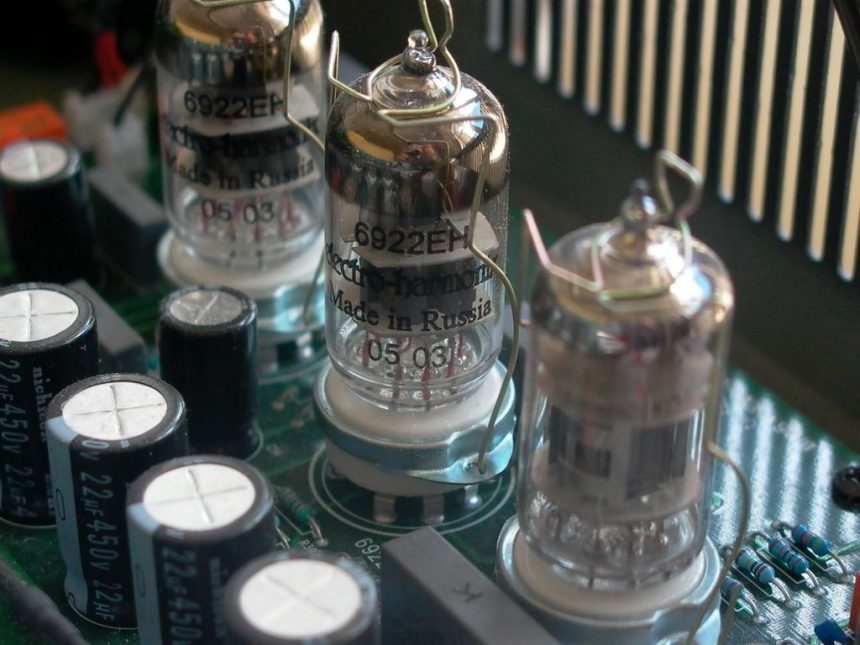
Come sempre dedico un piccolo spazio alla manifattura del prodotto senza però esagerare in una descrizione minuziosa di tutti i componenti. Non mi piace annoiare il lettore dando soltanto numeretti e sigle di quello che vedo all’interno della macchina, preferisco trasmettere le mie impressioni da “spettatore” sulla scelta della componentistica e sul percorso audio. Come ho già detto in precedenza, a primo impatto lo strumento si presenta ben curato in tutti i minimi particolari, lo chassis è costruito con le norme militari ed è forte e robusto. Quello che non mi piace sono i VU meter (Fig.9) (uguali li mettevo sul mio primo preamplificatore autocostruito della “Nuova Elettronica” a metà degli anni 80), avrei preferito un nuovo “design” (rigorosamente analogico). Svitando e sollevando il pannello superiore, si può guardare l’interno della macchina. Quello che vedo è una realizzazione molto curata, tutta ad elementi discreti e con accorgimenti da superaudio quali l’alimentazione totalmente isolata (schermata) in un suo dedicato alloggiamento (Fig.10), tutto questo per evitare campi magnetici spuri, ronzii ed altre impurità sonore (si lavora con tensioni bassissime). Anche l’alimentazione è totalmente costruita con elementi discreti. Le valvole sono bloccate con griglie metalliche per evitare movimenti (forse per attenuare anche le risonanze). Da un’occhiata più approfondita sembra che manchi un adeguato raffreddamento interno, da ignorante avrei aggiunto una ventolina “low noise”, in modo da convogliare opportunamente il calore delle valvole. Dopo però un’attenta documentazione sul mondo della circuiteria valvolare ho capito perché chi ha progettato lo strumento non ci abbia pensato: quando si lavora con bassissime tensioni come quelle microfoniche è fin troppo facile introdurre rumori spuri. Inoltre ho scoperto che le valvole di preamplificazione non hanno grossa necessità di dissipazione di calore. Di eccellente qualità sono addirittura “switch”, commutatori e valvole di uso Militare; pulizia interna ineccepibile, circuito stampato molto sintetico ed elevata qualità. Tutte le valvole sono selezionate (Fig.11), internamente noto due Sovteck:12at7 che sono equivalenti alle ecc81. Il suono prodotto è musicale, caldo e pulito, ricco d’armoniche e ottimamente bilanciato. A mio parere è stata una scelta ideale, infatti normalmente troviamo queste valvole nella sezione PRE di un Fender 75 combo ed altri Fender e solitamente vengono usate per la mandata del riverbero o l’inversione di fase. Internamente ci sono altre valvole (due per canale) che compongono l’armonia interna e la fattura del ADL600, le Sovtek 6922 che sono messe in cascata. A questo punto non mi resta che ringraziare i miei due amici Savio Aversano e Nunzio Infantozzi che mi hanno aiutato a comprendere il perché delle scelte della componentistica da parte dei progettisti dell’ADL 600 e consigliare a tutti voi lettori di ascoltare i “takes” preparati per voi. Buon ascolto a tutti!

INFORMAZIONI UTILI:
Produttore: Presonus
Modello: ADL 600
Website: www.presonus.com
Distributore: www.midimusic.it
Prezzo: 2.450 + IVA
You certainly experienced yearning for a hard-to-be-found new instrument, which you aren’t able to get or listen in any way; but what happens when, once you have it at hand, it turns out to behave in a completely different way from what you expected? This is more or less what happened to me with the new Presonus ADL 600; I’ve always been enchanted by this instrument, due to all the reviews on the web, so much that they have created a sort of mystic halo around it. Renowned names to advertise it, references, notions and recalls, but never a word about its sound grain or about its pros and its cons. Indeed this product, which have been designed by Anthony De Maria, could not be less than a professional instrument synonymous; Surely the signal path has been studied in each aspect, but why do they only talk about its high level component part? Is this preamplifier endowed with a sounding soul, or is it just a well designed shell with lots of bright valves to pull the wool over anybody’s eyes? Does the light of its valves warm up our heart and caress our ears? The price is high and the publicity around it is very generous. Are there all the necessary requirements to put the ADL 600 on the top-class products podium?
First impressions:
At first sight and touch the Presonus ADL 600 (Pic.1) shows a neat and elegant style. Much intuitively every switch, every linear and non-linear rotary cursor, has been placed properly and at the right distance on its generous front panel The upper panel is full of ventilation slits which let you see the six valves almost clearly, the big toroidal power transformer and anything else i’ll carefully describe later. The two INSTRUMENTS inputs are placed on the front panel and allow balanced or unbalanced ¼ inch guitar, bass guitar, Fender piano jacks etc., while for the keyboard, drum machine and other input signals the house has put up two XLR connectors (one on each side) on the back panel (Pic.2). Therefore we will need, in order to use those XLR signal inputs, some adapters or a suitable + male XLR. jack cable connector or a passive Direct Injection Box. Now let’s move on to testing it and give some set-up advice, trying to understand the potential of the Presonus ADL600 nominated for 2006 TEC AWARD.
Male Voice:
In order to test it, in this case we have a voice that moves between the baritone and tenor classical range, I placed an excellent NEUMANN U87AI about 30 cm apart from the mouth. Presonus set with 40 db preamplification, HP filter at 40 Hz and the impedance selector switch on 900 ohm. Lower-mid sounds in this performance are round and defined with clear and existent central mids, higher mids too are maintaining an extreme natural character. The great thing is that even with classical top notes the Presonus never went to overload problem on input signal, giving credit to its great headroom capacity; this is a very important feature for it allows every sound technician to concentrate completely on the output signal sent to the recording track, and believe me, it is a value added which only a few engines have got.
Female Voice:
The type of voice for this test is a young female singer’s one that moves between the contralto and mezzo-soprano range. The singer went through in different genre takes, performing a beautiful melody tune by Christina Aguilera, fertile field to test the ADL600 at its best. Listening to the voice in acoustic environment shows a strong sharpness, perhaps sometimes a bit too much, I mean the higher register notes in particular. At the time when the singer gently offered her collaboration in testing the preamplifier at issue, I had only 2 microphones in hand, the TLM 103 and the new AKG 414. After a few takes with both microphones I decided to go for the Neumann as the sourse was passing with much more softness than the 414 referring to the high range spectrum. In this particular case the Neumann microphone has proved to be the best compromise with the above mentioned voice’s features. Due to the heterogeneous dynamics, the track features some relatively low verses in comparison with the chorus part and to the special part, so I decided to go for a section recording (Pic.3), that is to say I chose to record verses first – setting ADL600 preamplification at about 55 db – and then the chorus, at about 40 db. By doing that I was able to capture both the first part’s warmth and the detail and the higher range high definition, without dealing with any overload risk. The only unpleasant aspect of this recording process is that it forces the singer to stop the take and jump from a part to another with inevitable emotional fragmentation. However the technical result is valuable. On the first lines the result is really exciting, airy, in full respect of hissing parts, so detailed that we could also hear the tongue pushing; However we didn’t achieve the same result on the chorus part, the ADL 600 didn’t improve at all the performer’s timbre dynamic gap. By the way, in order to achieve a more congenial result, I had the performance done twice, trying to find comfort by lowering impedance through the assigned knob. I went down from the initial 1500 ohm, on the first attempt, to 900 ohm, then to 300 ohm and finally I settled with the lower value provided by the engine: 150 ohm. After all these attempts, based on my experience and on my personal taste, I believe this last position to be the effective. From an acoustic point of view it considerably shows, proportional to the impedance decrease, a smoothing action about the higher part of the spectrum related with the preamplification loss. In this particular case I had to gain back 5 db ( via Gain section) getting that way a further warmth about the “s” sound, with a much more controlled and merged timbre. Obviously I had a loss in particulars and in linearity, but regarding to this type of voice, sometimes sharp and rough on the highermid register, this intervention has helped to reach a much more than acceptable.
Double Bass:
We’ve been using a AKG D112 microphone for this test, placed in front of the bridge (ponticello), and a NEUMANN U87 placed at about 50 cm e slightly higher than the other one, but both taking advantage of the channels provided by Presonus. The sound we reached by D112 is very definite about a usually dapple frequency domain, I particularly meaning the range between 150Hz and 400Hz, therefore the result has been widely satisfying. The punch area, the roundness and the attack seem to be the most distinctive features through this recording session. Thanks to the U87 condenser we were able to blend both direct sound and environment sound getting a very realistic result. The recorded sound and listened through PMC AML1 monitors was similar to the natural one we listened inside the recording booth a while earlier during the planning moments. The right mix between these two microphone signals can really provide a wide board of tone colours which are suitable to every production, mix or arrangement.
Acoustic guitar:
In order to record this instrument we relied on the NEUMANN TLM103 microphone (Pic.4). The guitar we used for the test is a fairly good no shoulder TAYLOR guitar. Also for this test I took advantage of a good friend of mine, the excellent guitarist Giuseppe Rapicano who, thanks to his musical versatility and to his wide guitar set, helps me understand better the Pre’s behaviour by the 6 and 12 string instrument. This time we will put the blues style aside to turn to country and pop. The Presonus immediately let us hear, or we’d better say “not hear”, its presence, meaning that its fidelity recording is much more disarming than any other valve engine; the given guitar sound is very similar to the original one so to reveal that the type of guitar we used is not one of the most expensive ones, the kind that makes you say “I won’t forgive you!”. With much dignity this test has reached a good result. Unfortunately only the high notes has shown awkward and thin, but it was due to the type of instrument and not ADL 600’s fault.
Electric bass:
The electric bass must be plugged in the “instrument” output placed on the frontal panel (Pic.5) as well as guitars and all the pickup instruments in general, including the Fender Rhodes piano and we could even use it as input for low gain pick-ups synthesizers. On this particular input the mother house set a 100KOhm impedance. The bass we are using is a 5-string bass with keys. The D.I. section showed excellent boost and fidelity, highlighting the peculiar electonics of the instrument involved. A good amount of energy, great definition in terms of notes during the phrasing, attacks and body had not been missing on the accompaniment and also it never went overload with the slap, neither with heavy preamplification.
Inputs/Outputs:
For this particular test I connected keyboards, synthesizers, drum machines and a cd player. Outputs on ADL600 are 2KOhm impedance XLR line in. In comparison to the microphonic recordings, line ins preamplifications have less responsibilities, that is to say that usually they deal with sources which are already strong enough and shaped; Nevertheless The Presonus was able not to soothe the lower sounds of a synthesizer so to keep the hideous 40Hz and some signals distinctive spectrum density. Even on the transient impulsive signals limiting an excellent job was done, such as the fast ones of the drum machine, the elaborate ones from the style section, full of keyboard arrangements, even in improving and refreshing old and new recordings from the cd player. Altogether done with professional signal management.
Acoustic piano:
This majestic instrument is one of my favourites for its physique allows to cover all the audible range, letting the performer to play with the notes and with the frequencies. However when I have to capture its sound it is when all the big trouble starts especially if its timbre is dark and solid. Usually in traditional recording studios you don’t find microphones and preamplifiers suitable to this purpose, you manage with what you’ve got somehow, sometimes you find a good compromise but finding the right microphone and the right PRE for all occasions is a hard thing to do. In this occasion I could find a selected couple of my favourite microphones: the DPA4011 ones. This way I went over the first step, but how will the ADL600 behave? Only two neutral types of PRE always truly satisfied me for this kind of recording sessions, so let’s see how much fidelity we will achieve from this test. Microphones have been placed by the XY coincident-pair stereophonic technique which is based on creating a 90 degree angle aiming one across the other (Pic.6). This image can provide a very good mono-compatibility. With the top of the piano wide open I positioned the two microphones in the middle and slightly apart from the piano hammers as if it was for a vibraphone recording, I placed the microphones in the middle and slightly behind the hammers line I really love achieving, especially with pop music, a powerful ,shaped and rich at the attack piano sound, in other words in the style of Danilo Rea. For a further test I used two typical U87, which usually form the standard set in every professional studio, placing them (after selecting recording omnidirectional polarity) on a horizontal rod at 50 cm distance between one another; in this stereo set-up, spaced A+B, where microphones are aimed to piano opening at about 1 meter apart from it, the result we got was the one we were expecting form this type of recording technique: a very definite preamplification, actually a strong timbre with a high frequency response, highlighted by the typical room sound grain (Pic.7). In comparison to the previous directional recording it shows a big loss of hammers fast attacks on the strings but on the other hand it creates a nice timbric-harmonic colour, soft and enveloping, quite suitable to a classical or jazz context, especially for piano solo. Still here the Presonus ADL600 lends itself to every recording choice with professional results. I could stop here but it does seem fair to also give an opinion about how ADL600 sounds with not-so-blazoned microphones but still of good fabric, also because our PRE features a natural versatility in experimenting many timbric-sound solutions. My choice was a selected couple of AKG 414 ULS microphones, well balanced for this type of recording, as they don’t overact on any range part and give evidence of a pleasant sound grain. I had different genres takes done as well in this case, from classical music, to jazz and even a pop one which can be full of harmony and harmonics; Obviously I kept all the setting I previously had with DPA, except for the Pre parameters. The result was pretty amazing in this case too, more than I could have expected; My only doubt was that combining ADL with 414ULS, the fastest piano passages would have been odd, in particular in the lower mid frequencies. Usually when I’m dealing with much coloured microphones, especially when combined to tube preamplifiers, I run into signal attack issues therefore with too much riddled sounds, perhaps a non audible event from a careless ear but clear to experts in the field. This ADL 600 test was excellent as well, showing its high fidelity capability in full respect of the sources.
Over Drums:
On the over drums, combining a AKG 414 couple of microphones, Presonus was easily able to read off both the legendary touch of brushes and the forcible beat of sticks, including plates and kettledrums, all with extreme thoroughness, clarity and ambience spaciality, fully respecting transient response. Being a very fast instrument, in particular on the metallic surfaces, Presonus never had trouble on the input phase, both on plates riding and toms or kettledrums depth. Even snare sound was developed with all its generous and spicy funk slap toward the mid frequencies, by those typical edge and leather beat. As well as the brushing on the sandy leather of the same snare. Still in this test the instrument showed its sensibility and reliability towards the complexity of the dynamics range and the frequency response by the drum which was recorded form above.
The Colour Detail:
When you are so lucky to have a professional engine set at your disposal, before giving an opinion on a particular product, I prefer straining it with different sound sources; Usually the first impression is always a little bit distorted by the circumstance and by the source we used. In this case even from the first moment I connected the usual Klotz microphone cable, fitted with a gold plated Neutrik connector, I immediately realized that I was in the presence of an amazing instrument in terms of accuracy, detail, neutrality, quietness and remarkable headroom. That made me think about how true is the saying “sometimes the clothes do not make the man”. To be honest, it’s important to say that the ADL 600 is not a tube engine that sounds like a transistor one but it is capable, if needed ,to provide a very accurate and clear sound as well as a solid state class A circuit. Obviously while gaining much on the input side we have the chance to provide further harmonic sounds to the signal, but not running into valve ring euphemisms as it could happen with engines like Universal Audio, VT Avalon, Tubetech etc. Surprisingly for me the ADL 600 is able, with voice and any other instruments, to reproduce any detail between 5000Hz and 10000Hz, consistently untouched towards the source; even the “s” consonants never got to be some sort of “f” or similar sounds, but kept loyal to their own “hissing” sound. Obviously we always wish we could deal with rather well trained performers! Awkward voices, as well as flat and undefined or non classy guitars, they would remain that way for sure. One or more solutions are open to improvement experimentation.; for example, we could use a warm U87 microphone for the voice instead of a NEUMANN TLM 103, or even go for a powerful valve microphone (pic.8); Same thing for the other brands, that is to say choosing some more coloured types instead of neutral ones, but classy ones as well. Another solution could be toning down, by the appropriate channel selector, the impedance value, especially if you are dealing with some faint and clean timbre female voices. With each click you can notice how the higher part of the spectrum will appreciably smooth consequently with a decibel loss in preamplification, a sacrifice that will cost a little considering that ADL 600 in terms of decibels has enough and to spare. I was struck a lot by the D.I. section as well as the inputs, truly of professional quality, suitable to every signal level, from the weakest to the strongest one; besides, don’t forget, in case you needed it, that we can count on an effective PAD that allows you to tone down 20dB. I’m suggesting this product to the ones who need a highly versatile and friendly PRE, with a soft temper suitable to any situation. I believe it to be one of the few engine to recommend as a main Pre in a professional studio set environment. Many readers could tell me at this point: “but is this the umpteenth first-class outboard, highlighted by a flawless review?”. Judging on how it sounds, this engine is a first-class one indeed, but being it an “accommodating” instrument, though of amazing timbre, doesn’t show the same aggression and the strong flavour as its associates; this is not by far an odd thing for it takes on a “master of the house” role, capable in hosting other preamplifiers that will act like experts in isolated and specific occasions. The only one slight defect is its price, toeing the party line with same kind products, actually a bit too much considering that the Presonus house has never been seen as the top class when it comes to ultra-professional studio recordings; Maybe It would have help a bigger Anthony De Maria inscription, very appreciated by the experts, and a smaller Presonus mark. Sometimes tiny marketing effects can really make an offer more charming and provoke much more curiosity and public interest.
A look into its internal structure:
As I always do in my reviews I’m dedicating a little space to the product manufacturing without going too far into an extremely detailed description of its parts. I don’t like bothering the reader giving him a series of numbers and acronyms of what I see inside the engine, but I prefer conveying my impressions as a “viewer” about the component part selection and the audio circuit. As said previously, at first sight the instrument looks very well-groomed down to the smallest details, the chassis is built in military standards and it is tough and solid. The things I don’t like are the VU meter (Pic.9) ( I used the same ones for my first “Nuova Elettronica” preamplifier that I made myself in the mid 80’s), I ‘d have liked a new design (strictly analogic): Unscrewing and lifting the upper panel, you can see the inner part of the engine. What I see is a very detailed construction, all with good elements and some superaudio solution as a totally isolated feeder (screened) inside a housing of its own (pic. 10), all this in order to avoid spurious magnetic fields, hums and other sound impurities (we are dealing with very low voltages): Also the power supply is entirely built with good elements. Valves are locked to a metal grid in order to avoid any movement (perhaps to ease resonances too). By a deeper look it seems to be lacking of an appropriate internal cooling system, knowing nothing about it I would have add a low noise fan, so to convey conveniently the valve heat. But after have been closely gathering information about the valve circuit system world I understood the reason why whoever designed this instrument didn’t think about it: when you are dealing with very low voltages like the microphones ones it is so mush easy letting any spurious noises. Moreover I discovered that the amplifier valve don’t require too much heat dissipation. Amazingly good are even switches, converters and military wear valves; Exemplary internal cleanliness, a very synthetic printed circuit board and top quality fabric.. All the valves are selected (Pic. 11), Internally I can notice two Sovteck:12at7 which are equivalent to ecc81. The resulting sound is musical, warm and clean, full of harmonics and brilliantly balanced. In my opinion it was the perfect choice, as a matter of fact we can find these valves in the PRE section of a Fender 75 combo and in other Fenders and usually they are being used for the reverb enter and phase inversion. Internally there are further valves (two for each channel) which built the internal harmony and the ADL600 fabric, the Sovtek 6922 which are connected in parallel. At this point all I can do is thank Savio Aversano and Nunzio Infantozzi who helped me understand the reasons behind the elements’ choice by the ADL600 designers and suggest all you readers to listen to the takes I prepared for you. Have a good listen everyone!
Translation by Umberto del Giudice


