



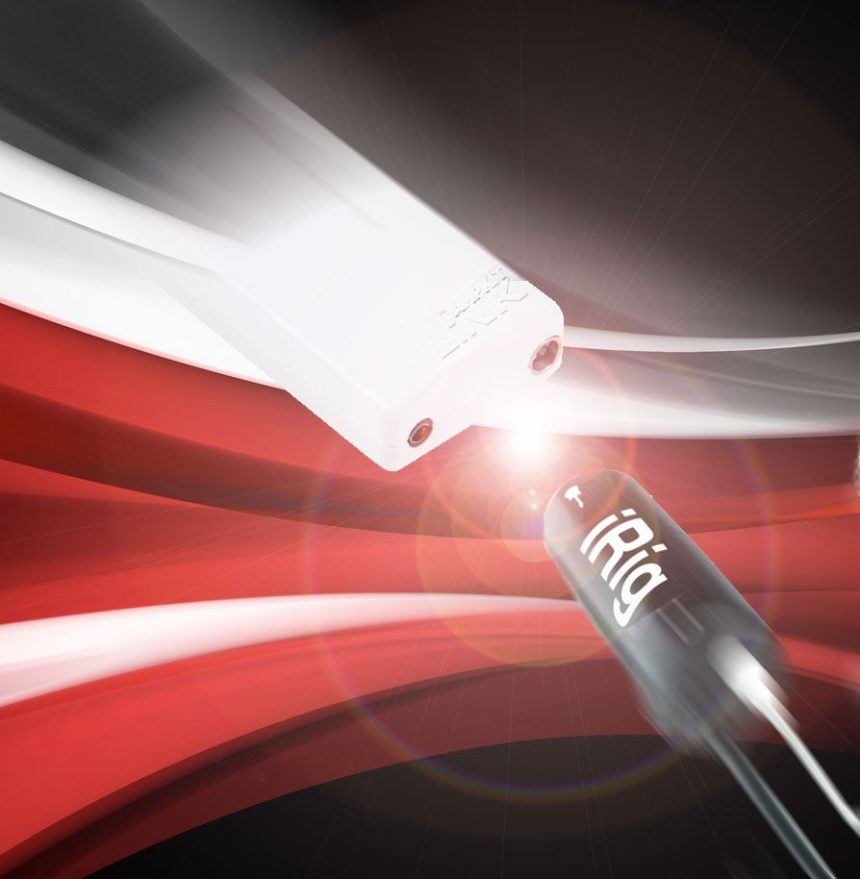
Trasformare un dispositivo mobile come iPhone o iPad in un multieffetto professionale è la sfida che si sono posti IK Multimedia e Peavy.
Vediamo come è andata.

Quando ho scaricato il software di iRig e successivamente quello di Ampkit ho subito notato la presenza di un denoiser/noise gate già nella versione gratuita. Ho pensato che fosse un’anomalia dato che non è esattamente il pedale più ambito dai chitarristi. Quando però ho acceso il sistema e messo una cuffia ho subito capito il perché!! Il noise non manca, il rumore di fondo è piuttosto alto!
Per chi utilizza la distorsione estrema ci può anche stare, in fondo è rumore che si aggiunge confondendosi al distorsore, ma per segnali che tendono al clean, a mio parere, il problema è invece abbastanza alto. * Attenzione se guardate i video su youtube “ufficiali” spesso il noise stranamente non si sente, ma vi garantisco che c’è anche senza chitarre collegate.
Abbiamo testato i sistemi con iPhone4 e iPad1-2, i risultati sono analoghi.
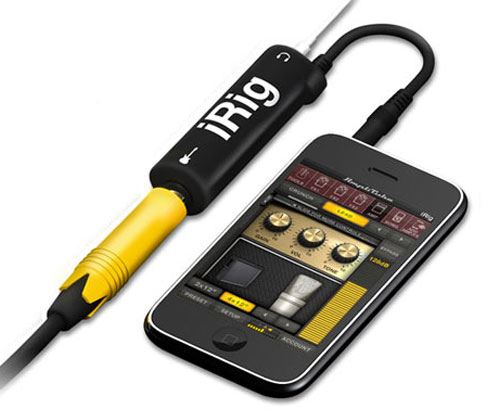
Ho atteso un po’ prima di esprimermi sui due prodotti, sono due realtà parallele che si assomigliano molto.
I software sono entrambi creati con grafica molto accattivante, la simulazione hardware dei pedali multieffetto è molto fedele.
Se dovessi scegliere uno o l’altro in base avrei qualche difficoltà ad esprimermi.
E’ possibile costruire catene di effetti, accendere e spegnere gli elementi, lavorare con tasti e potenziometri grazie al touch screen. Ovviamente in entrambi i casi dobbiamo usare le mani e questo per il chitarrista normodotato bi-mano risulta scomodo per il live!
Molto più ragionevole è invece utilizzare i prodotti per lo studio e proprio su questo credo che entrambi siano eccellenti.
Vediamo nel dettaglio i software nelle versioni di base.
AMPKIT FREE:
– Noise gate (threshold + decay)
– Elevenizer: una sorta di distorsore con controlli gain, tone e level
– Amplificatori: Peavy valve kit in versione 1×12” e 4×12”
– Microfoni: Workhorse 57 dinamico e German 57 condensatore
– Extra: metronomo, tuner, backing track player, loop recorder
AMPLITUBE FREE:
– Noise filter (unico controllo “depth”)
– Delay (delay, feedback, level e bmp sync)
– Distortion (Tone, character, gain, level)
– Amplificatore: 4×12”
– metronomo e tuner
– loop recorder
Per entrambi i prodotti è possibile acquistare una vasta libreria di effetti.
Hardware
La prima differenza che balza subito agli occhi è che Ampkit funziona a batterie mentre iRig è passivo.
Irig è dunque immediatamente ed eternamente utilizzabile mentre AMpkit richiede batterie ed un minimo di manutenzione aggiuntiva.
Entrambi i prodotti hanno un ingresso sbilanciato per lo strumento che si vuole collegare e un’uscita stereo per una eventuale cuffia. L’utilizzo è immediato e identico una volta acceso il software e collegati gli spinotti. iRig ha investito un po’ di più sull’estetica del prodotto che risulta essere più piccolo e meno home-made ma de gustibus..
Entrambi i prodotti sono plug & play.
Uscita cuffia/out per entrambi.

Dinamica
Questa caratteristica gioca un punto a favore di Ampkit per quanto riguarda la dinamica del suono, l’alimentazione a batterie che rende il circuito attivo fa la sua parte.
Noise
Nel circuito di amplificazione di Ampkit insieme al suono viene amplificato anche il rumore di fondo, quindi iRig risulta essere più silenzioso a parità di segnale di ingresso.
Tiriamo le somme
I prodotti sono entrambi validi, non li suggerisco per utilizzo professionale ma da tenere nella borsa per casi di emergenza o magari per studiare.
Personalmente, soprattutto per l’immediatezza di utilizzo senza preoccuparmi di batterie e simili, do una preferenza all’IRIG.
Credo che per motivi commerciali e per una sorta di entusiasmo collettivo siano state create troppe aspettative su questi prodotti. Restano ingressi per l’audio su Iphone/Ipad, non di può chiedere di più.

Note interessanti
Entrambi i prodotti possono essere utilizzati con altri software come Garage band e simili, ovviamente senza utilizzare i software proprietari ma solo come interfacce di ingresso.
E’ possibile registrare la chitarra con un loop, nelle versioni a pagamento è possibile aggiungere altre tracce.
INFORMAZIONI UTILI:
Produttori
IRIG Ik multimedia
Ampkit Peavey
Prezzi
Ampkit: 35,00
iRig 30,00
Bio:
Fabio PesceTo turn a mobile device as an iPhone or an iPad into a professional multi-effect one is the challenge which Ik Multimedia and Peavy have been posing to themselves. Let’s find out how it went.
When I downloaded the iRig software and later the Ampkit one I immediately noticed the presence of a denoiser/noise gate already in the free version. I thought it was some kind of mistake considering that it is not exactly the most desired pedal among guitarists. But once I turned on my system and put my headphones on I immediately understood the reason!! The noise is there, and the ground noise is rather high! For those who are into extreme distortion it can be acceptable, after all it is noise mixed with the distortion, but, as for signals which tend to be clean, in my opinion, it is instead a rather big problem. * Be careful: if you watch the “official” videos on youtube, strangely enough the noise is often not audible, but I can assure you that it’s there even without plugging in any guitar. We have been testing the systems with iPhone4 and iPad1-2, the results are analogous.
I have been waiting for a while before saying something about the two products, they are two parallel realities which resemble each other. The two programs have been both created with a very catchy graphics, the hardware simulation of the multi-effect pedals is really faithful. If I had to choose between one or the other I would be difficult for me to tell which one. It is possible to build chains of effects, turn on and off its elements, work keys and knobs thanks to the touch screen. Indeed, in both cases we need to use hands and this aspect happens to be uncomfortable for the two-handed able-bodied guitarist when it comes to a live setting! It is much more reasonable, instead, using these products in a studio and I think that’s where both of them are really amazing. Let’s check out the programs in detail for their free versions.
AMPKIT FREE:
– Noise gate (threshold + decay)
– Elevenizer: some sort of distorter with gain, tone and level control
– Amplifiers: 1×12” and 4×12” versions for Peavy valve kit in
– Microfoni: dynamic Workhorse 57 and condenser German 57
– Extras: metronome, tuner, backing track player, loop recorder
AMPLITUBE FREE:
– Noise filter (the only “depth” control)
– Delay (delay, feedback, level and bmp sync)
– Distortion (Tone, character, gain, level)
– Amplificatore: 4×12”
– metronome and tuner
– loop recorder
It is possible to buy a vast library of effects for both products.
Hardware
The first difference that jumps out is that Ampkit works on batteries while iRig is passive. Therefore iRig can be used straight away and eternally while Ampkit needs batteries and a little bit of additional maintenance. Both products have got an unbalanced input for the instrument we choose to plug in and a stereo output for the headphone. Its use is very immediate and always the same once you’ve started the software and plugged everything. iRig invested a little bit more on the appearance of the product which, in the end, turns out to be smaller and less home-made but de gustibus non disputandum est..(to each his own)
Both of them are plug & play products.
Headphone line out for both.
Dynamics
This characteristic works in Ampkit favour in terms of sound dynamics, the battery power which enables the circuit plays its part.
Noise
Within the Ampkit amplitude modulation circuit, together with the sound, the ground noise is amplified too, therefore iRig turns out to be more silent with signals being equal.
Let’s sum it up
Both products are efficient, I don’t feel like suggesting them for a professional use but rather keeping them in your bag for emergency cases or for studying. Personally, I’m giving preference to iRig especially for its quick use without worrying about any batteries or else. I believe that for commercial reasons and for some sort of a mass enthusiasm too many expectations have been built around these products.
Interesting notes
Both products can be used with other programs such as Garage band and the like, of course without using the proprietary software but only as interface. It is possible, for the free version, to record the guitar with a loop, while buying the full version, it is possible to add more tracks.
USEFUL INFORMATION:
Producers
IRIG Ik multimedia
Ampkit Peavey
Prices
Ampkit: 35,00 Euros
iRig 30,00 Euros
Italian to English translation: Umberto del Giudice


