
Our spotlights are always focused on the protagonists of the musical world: artists and instruments used. Yet, for a well-rounded magazine like ours, a focus on what is… instrumental to instruments cannot be missing! Hence the idea of launching a column on the “behind the scenes” of every artistic output: a technical analysis of those small and large indispensable or rather “necessary” accessories without which musical production would be essentially incomplete.
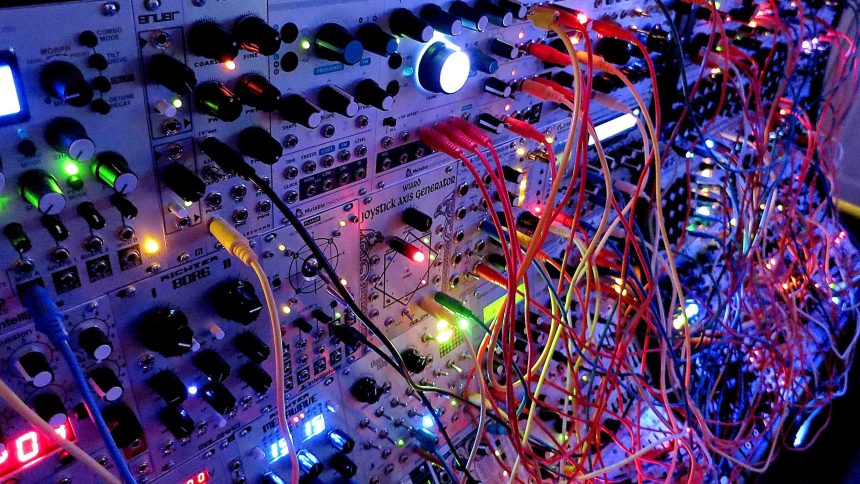
In an era dominated by bluetooth and wireless, let's go a little against the tide and start with the element perhaps most mistreated, invoked, hated and loved, but above all trampled on… Cables!
All our music "flows" through the cables that connect the electrical / electronic equipment used to produce or listen to music.
The cable can therefore be considered an audio component in all respects. In fact, it is crossed by the audio signal (electric current) and therefore can transfer it unaltered or degrade it during the passage.
Audio connection cables can be divided into different categories according to their use:
• on signal cable (microphone, for musical instruments, line)
• on power cable (connect the ending with the speakers)
• on digital cable (to interface digital equipment)
• on power cord (brings power from the network to the audio component).
For the sake of synthesis we will omit, in this first discussion, the mechanical and safety characteristics that the different cables must necessarily have in order to be usable for their use.
It is obvious that a cable, microphone or for guitar, must be particularly resistant to trampling, tearing, atmospheric variations and at the same time be flexible enough not to hinder the performer. All these characteristics will have less importance in the case of line cables used in fixed studio locations.
Rather, after a brief mention of the electrical characteristics that influence the passage of the audio signal, we will analyze some theories on the functioning of the cable.
Premise: the controversy on the quality of a cable between "listeners" (audiophiles who evaluate audio equipment mainly for how they sound, giving little importance to the bare technical characteristics ...) and "measurers" (audiophiles for which the technical characteristics detected at the laboratory measurement represent the absolute reference point for the evaluation of an audio component) today it is still very much on. Perhaps it is really true that “in medio stat virtus”, as modern physics is an indispensable condition but not totally sufficient to explain the “sound” of a cable.
questions: What goes through the cables to carry the audio information? I think everyone is responding right now: electric current, which is a flow of electrons. So let's see briefly how the electric cable, with its physical characteristics, can affect this step.
The materials - from an electrical point of view - have been classified into: insulators, conductors e semi-conductors. It is therefore obvious that a cable must be constructed with material that is an excellent conductor (thus trying to obstruct the passage of current as little as possible).
One of the physical parameters to consider when we talk about cables is the electrical resistance, which measures the tendency of a conductor to oppose the passage of an electric current when subjected to a voltage. This opposition depends on the material with which it is made, its size and its temperature.
La resistance R of a wire (cable) is directly proportional to its length and is inversely proportional to its section, i.e. it can be calculated through the Ohm's second law:

where:
l is the length of the wire, measured in meters
S is the section area, measured in millimeters
ρ (Greek letter: lowercase ro) is the electrical resistivity (also called specific electrical resistance or resistivity) of the material, measured in ohm • meter.
From all this it is clear that very long cables and thin section are not exactly the best in terms of resistance!
Generally, for a question of quality / price ratio, workability, etc., in the construction of cables the conductor most used is copper. However, there are also cables in silver and endings in .
Skin effect: effect that involves the conductors for the transport of signals at frequencies other than zero. The phenomenon manifests itself as an uneven distribution of the current density in the conductor section.
When the signal takes on a variable trend over time, that is, it becomes an alternating voltage such as an audio signal, the density of the current decreases in the center of the cable and all the charges tend to flow close to the surface. The phenomenon is accentuated as the frequency increases. The skin effect is greater the higher the signal frequency. Having an audio signal with a fairly wide frequency spectrum, the resistance of the cable will be different for each of the spectral components.
To further complicate the analysis of a cable there is a further variable: if a two-wire conductor it is used for carrying current, then it can be assimilated to a capacitor (two plates separated by a dielectric) and therefore will have its own capacitance, which will determine a resistance that decreases with increasing frequency.
The same cable can also be assimilated to ainductance, thus determining a resistance whose value will increase as the frequency of the signal increases.
From all this derives theimpedance of the conductor which is a vector physical quantity and represents the force of opposition of a bipole (cable) to the passage of an alternating electric current and is expressed in Ω.
As we said before, a coaxial cable (signal cable) is a long capacitor. In it therefore the capacitance represents the parameter with preponderant effects, with respect to the resistance (generally very short cables) and inductance. A capacitance placed in parallel between a source and an amplifier determines a low pass filter with a drop in high frequencies. This cut-off frequency is determined not only by the cable but by the coupled source-cable-receiving equipment. Given the constructive standardization of electronics and cables (output and input impedance), cuts generally occur at frequencies that go well beyond the audible limit and this should protect us from obvious sonic alterations.
As we said above, the main material used for the construction of the cables is Copper. The copper intended for the conduction of electric current is pure al 99,9 %.
In order to improve its purity, technology has been developed OFHC extension (oxygen free high conductivity). Copper is annealed in the presence of inert gases, to avoid possible oxidations due to the presence of oxygen.
The abbreviation OFC instead it represents a certification of the material. OFC copper is guaranteed to have a purity title of 99,99 %, thanks to the low presence of oxides. The oxides they are insulating substances: therefore, the lower their presence the better the current will flow.
The next step was the definition of the LC-OFC Linear CRistal OFC.
A question I often get asked is whether cables have a to, given the presence of crystal lattices and oxides sometimes having semiconductor properties. Current theories do not confirm this hypothesis: to date there is no experimental evidence that lamination actually generates a preferential direction in the conductors for the passage of electrical charges. Furthermore, in audio signals, the polarity reverses continuously (they are alternating and not continuous) and the same happens to the motion of the charges. If, for any reason, there was a preferential direction of motion, only the attenuation of a half wave of the signal would be obtained. However, a concrete definition of the theory has not yet come to fruition.
Particularly important for the correct transfer of the audio signal is also the connecting the cable to the connector and its quality.
Key features for a good connector are: to be a excellent conductor, have a good mechanical construction to cope with various stresses and ensure a perfect contact with the entrance. Furthermore, being freely exposed to air (oxygen), it must not oxidize easily, otherwise the transmission will deteriorate considerably.
Obviously the mechanical and management importance of one welding well done is fundamental and easy to understand (absolutely avoid cold welding, the development of air bubbles and the formation of oxide). When we weld with tin alloy, however, we put different metals into contact thus generating thethermocouple effect. Very simply we can say that putting two different metals into contact generates a very small difference in potential. In the case of a solder, we have joints of metals and alloys at will: tin, lead, copper, aluminum and silver.
The voltages produced by the thermocouple effect are very small, but they exist.
To overcome the problems of soldering, some technicians advocate the use of connectors withcrimping (the wire is screwed / tightened), but this opens the front to other problems (for example, oxidation of the terminal, not perfect contact between the surfaces ....)
Some of the effects seen so far may have particular importance for a type of cable, while very little for a cable with a different application.
Therefore, in a microphone cable that works with very low voltages, the shielding will be particularly important, while in a signal cable, a few centimeters long or a few meters long, the capacity will be more relevant than the resistance. The same parameters, however, will play a marginal - if not insignificant - role in a power cable that is many meters long and carries high voltages.
In light of the above, some questions arise spontaneously: how much do the analyzed parameters really affect the sound? What to prefer when choosing a cable? Are there general rules to follow? ... ..
To be continued…
See you on the next episode. Savio Aversano
Bibliography
Audio review no. 97 V. Curci: Let's see the signal cables closely.
Audio review no. 54 P. Nuti: Myth and reality of cables
Audio review no. 55 P. Nuti: More cables
Audio review no. 76 F. Maffioli: In search of the lost cable
tnt-audio-Lucio Cadeddu -How to choose cables
tnt-audio-Lucio Cadeddu - Monograph on biwiring, biamping, multi-amplification
Thorsten Loesch - The Naked Truth About Cables
Zanichelli - General electrical engineering