


With this tutorial we begin a series of articles dedicated to music notation. Here is the version of Finale just released by MakeMusic: Finale 25. Let's see the main news of this new release.
XML protocol
XML protocol has been implemented, and scanning has been removed. Documents can no longer be scanned due to a problem with Copyright but the protocol has been enhanced XML. A protocol that make music has been developing for some time now, as a universal protocol for the exchange of musical documents (notational and otherwise). (Fig.1)

Renewal of the sound sets
Sound libraries have been implemented and renewed. Garritan, the sound company behind the Finale software, added a few world instruments, some instruments derived from the personal orchestra 5 (the last orchestra produced by the company itself) and much more. The audio engine, aria player and playback have been rewritten (which also includes the rewire).
Rearrange the staves
Another interesting function has been included in the menu Musical staff.
Select the Musical Staff Instrument icon. In the music staff menu you will find the new Reorder staves function (Fig. 2): this window will allow you to easily move the order of your staves within the score, without necessarily going through the score management.

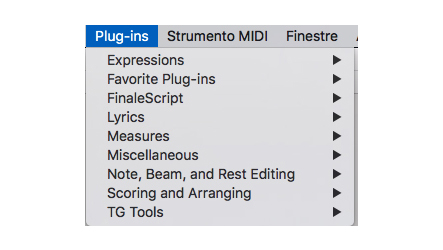
First we must point out that all the software has been rewritten to 64 bit. This change guarantees higher computing speed, higher audio quality and more precision in reading, loading data and using third-party vst. All the menu too plug-ins (Fig.3) has been rewritten in 64-bit, and this offers great guarantees of quality and stability.
New sentence ligature
A new dashed line has been introduced, i.e. a new dashed sentence ligature, expressly requested by the publishing industry. You can find it in the same palette of slurs (smart forms) as in Finale.
Graphic print interface
The graphic interface of the printout has also undergone changes (Fig. 4). Printing the individual parts and the score, especially by setting different quantities, will now be easier and faster.

Time signature graphics and tonality graphics
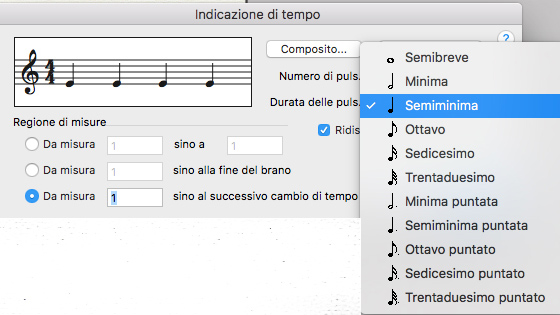
Changed the graphics of the time indications and the graphics of the keys (Fig. 5) (especially in the Mac version where, in this new version, the specific settings are much more practical and easier to apply).
Tempo indications in the score and in the parts
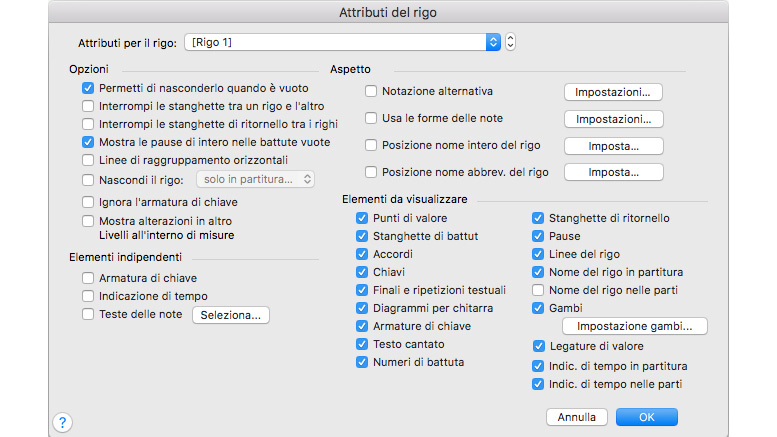
By selecting the music staff icon and opening the staff attributes menu, you can choose to view the time signature in the score separately or the time signature in the detached parts.
We can have both or decide to hide one of the two. They will always be managed separately, both as regards the attributes of the staff and as regards the panel of the staff styles (in fact, in this window too you will find the same two functions at the bottom right).
Rewire
The protocol has been entered Rewire (Fig. 6) and removed the video playback. This function allows you to interact with multiple software at the same time by synchronizing them with Finale.
So, for example, if we were to do a job of audio e video we may have simultaneously opened for video management Final cut or similar (in Rewire function), Finale for notation, and both sync them with Studio One regarding audio management.
When you are in mode Rewire sync Finale's audio playback is modified and will tell you which rewire sync mode is in progress.

Preferences menu
Also partially changes the Preferences menu. Some obsolete items located in the save - print panel have been omitted and the reset all preferences button has been inserted: that is, being able to restore the factory parameters of the software at any time.
Human playback
Also changed the Human playback options, rewritten to 64 bit and enhanced (now found in the Midi Instrument menu).
Final only
Finale no longer has a version number. The number, always linked to the year of production, has been definitively removed. Finale is no longer Finale 2014, 2012 etc .. but only Finale. Only inside, in the information menu about the specific version installed (Fig. 7), you will also find the number 25 which refers to the twenty-fifth year of existence of the software.

the next