


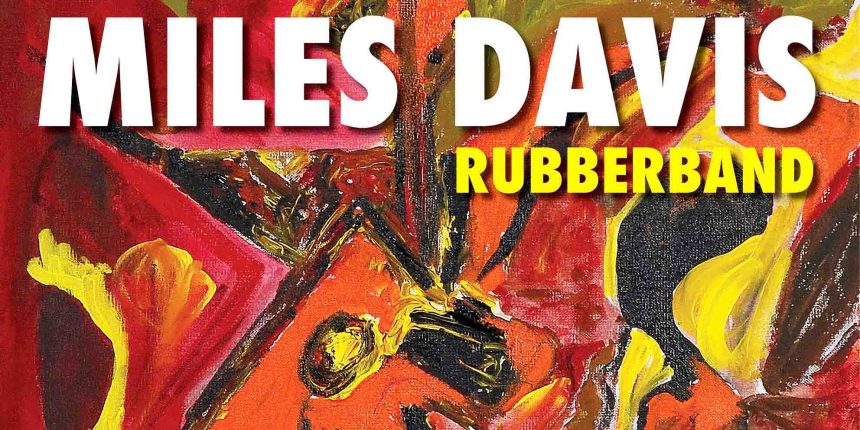
A couple of weeks ago “Rubberband” was released, the “lost” album by Miles Davis that has remained dormant for more than thirty years in the drawer and now resurrected thanks to the producers Randy Hall, Zane Giles, Vince Wilburn Jr. and with the participation of vocalists Lalah Hathaway and Ledisi.
“Lost” album so to speak. This is the story. The first recordings of the album date back to 1985 at the time when Miles was working on “Tutu”, the album produced in collaboration with Marcus Miller. "Rubberband" was set aside to make room for "Tutu", a record in which the electronic sounds typical of those years are contaminated and therefore one could venture that "Rubberband" is a kind of "spin-off."
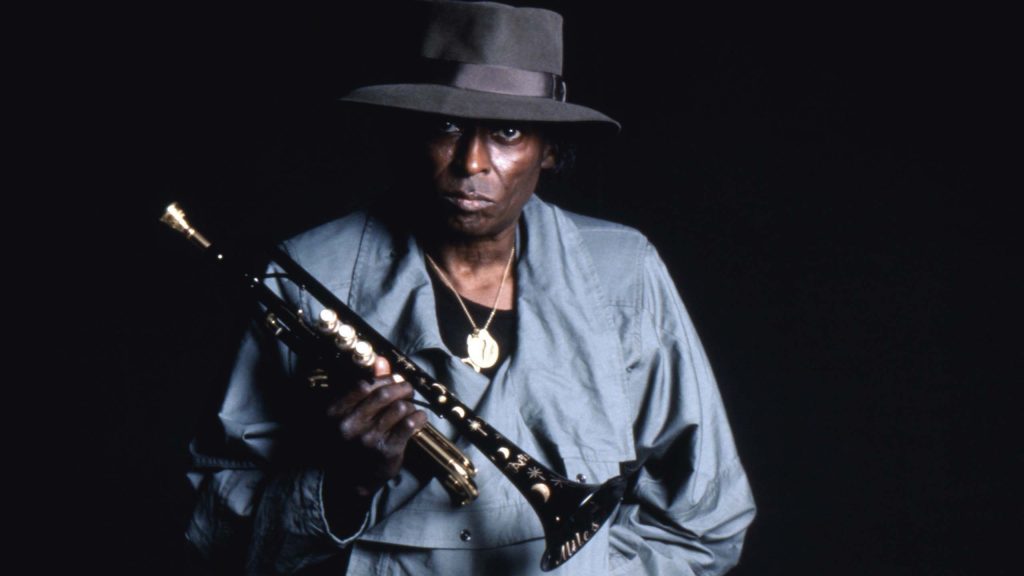
Of course this is a surgical operation of the surviving material, in the sense that the producers have elaborated it a lot starting from the original tracks but using contemporary sounds and therefore, from a philological point of view, the record may not be totally pleasing to the ears of purists. more uncompromising. In fact, someone even shouted at the "usual commercial operation", but so be it. Actually we are faced with a not new operation, in the wake of the tradition of posthumous records exhumed thanks to skilled arrangers and new digital technologies.
Similarly we have seen it with i Beatles, Prince, Jeff Buckley and company singer. Personally I do not turn up my nose in front of these operations when they are done with criteria, indeed I would like to listen to many posthumous albums by great artists that are often not published for the interests of the heirs, record companies or other. In this case we have the direct testimonies of the producers according to whom Miles Davis had given some indications about the musical direction of the project, in this regard I refer you to the link below with a short video interview with the producers. Summing up, then, can we say that we are dealing with an "authentic" Miles Davis?
Personally I would answer with a "yes and no". In some tracks the classic elements of his style are found, in others frankly it seems something else. But let's go in order.
The album opens with the captivating "Rubber band of life”Built on a massive hip-hop beat and an electric piano chord sequence. Davis's insertions punctuate the groove by dialoguing with the vocalizations of the singer Ledisi. The stylistic relationship with the 1992 album "Doo-bop" cannot fail to come to mind, in particular with the track "The Doo-bop song".
The second track "this is it”Instead brings us back to a more 80s sound thanks to the electronic drum sequences and the most typical synths of“ Tutu ”. After listening to the first two tracks, one breathes a sigh of relief and actually rediscovers two Davis goodies. But things change with the following tracks.
Listening to "Paradise”The question arises if by chance you accidentally pressed a button and changed the playlist. In fact it is a Latin pop piece complete with guitar and beach rhythm. It seems to feel something somewhere between Santana and a beach club reggaeton. Despite Davis' phrasing, vocalizations, flute and guitar solos, frankly one would think that this song was thrown in just to sell a captivating single.
Not to mention the track that follows "I know emotional”, An andante R&B good for a slow medium where Davis's interventions are placed just here and there to cover a few holes.
Fortunately, after "Give it up”Where we really find Davis's stylistic code on a high-level funky base that refers to 1985's“ You're under arrest ”.
The following tracks "Maze"and "Carnival time”However they still bring us back into the 80s, but at least we are back in the whirling world of lopsided rhythms and powerful brass shots.
The track that follows "I love what we do together”With Randy Hall on vocals frankly it's another piece that's packed to make some cash and honestly it feels out of place.
Fortunately, the ears are reconciled with "See I see”, An intriguing andante blues - funk and above all with “Echoes in Time / The Wrinkle” almost a suite that winds on a swirling funky beat.
The album ends with the track "Rubber tire"And again we return to the atmosphere of" Tutu "and" You're under arrest "with the drum machines and synth basses that the late lamented would love Prince.
What can I say, would our Miles have appreciated the record? Obviously, it is not possible to give the answer, but we can make some hypotheses. We know that Davis was a musical omnivore, always attentive to new languages and his latest albums clearly show his interest in musical languages that would soon explode. Davis would probably even have followed the trap today and maybe even played with it. Therefore "Rubberband" is certainly a commendable operation, apart from those few songs I mentioned above which have almost nothing to do with the spirit of the album.
Info:
The CD is available on: