
I get the synth high, I take my trusty AKG headphones and the guy from the shop connects it to the Synth, the synth plays very low in volume, the first thing I do is enter the menu system and increase the output to +12 db.
It's a little better, well I think ... I hope something is not right, the effects are closed, small ... ..
After 30 minutes of tweaking (the synth sounded decent but it didn't strike me at all), I see behind where the guy's headphone was connected, it was in the line / left output (so I listen to low level and above all mono !!!)…. . I unplug it (with a dirty look at the guy) and connect it to the right output, the headphone output… ..after 3ms I was already trying to figure out what to sell to get back 2.000 euros….
—– END OF ANECDOTE —-

One thing can be said with certainty, the Roland synthesizer has caused a lot of discussion since the appearance of the first images (which is happening more and more frequently) and the various social networks in this field help a lot, it would be necessary to write a separate article. We are now discussing few topics but the most frequent are: analog vs digital, mini keys, aesthetics. Aesthetically, the JDXA has an ultra modern design, according to many plasticky and unwatchable, I honestly liked it immediately, even before knowing its characteristics. What's in this synth? Let's see in detail some of its main features.
Control panel structure
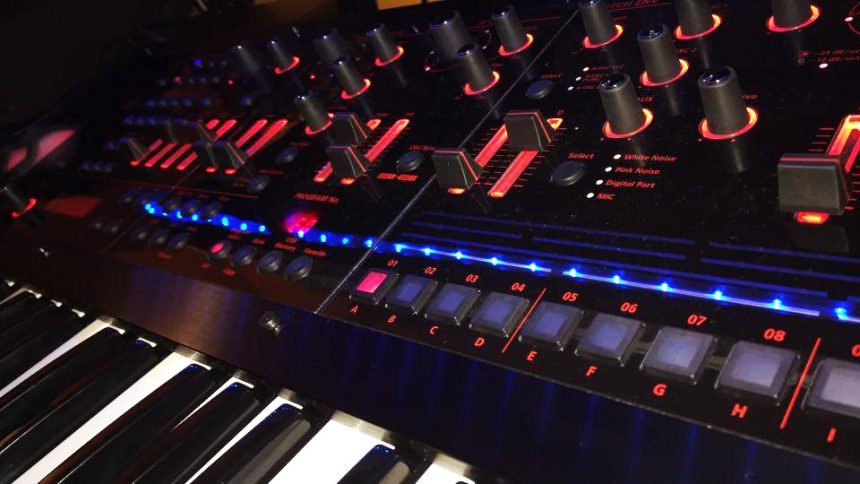
All the controls of the JDXA are well positioned and of quality, they are all over-travel potentiometers except those for the selection of the wave form and smart filters. Aesthetically very beautiful they remotely remind those of the V-SynthHowever, here they are illuminated in the outline which gives the whole surface a very hi-tech appearance, it must be said that - in the general settings - all or even one by one can be switched off. The various buttons for selecting and activating the layers are concentrated on the left side, once you have entered the synthesis structure they are easy to manage, it is also possible to assign the layers to keyboard zones simply by pressing the layer button and then playing the lowest and highest key on the keyboard. I will reiterate it also in the final, pay close attention to the part you are editing and playing because it could happen that you hear the sound of one layer while editing another!

HOW THE JDXA WORKS
In the JDXA there are 8 independent synths / parts, which can also be played by pressing a single key, so in a kind of mega layer. 4 of these parts are analog 2 oscillators and 4 are digital derived from the series Integra SuperNATURAL Synth and therefore compatible with sound libraries AXIAL (ok I'm not VA but what good would a VA synth that also has 4 voices RA real-analog inside?).
Each of the 4 digital synths is therefore composed of 3 partials (which in fact are 3 synth independent a 1 oscillator and can take advantage of the usual analog type waveforms and another 450 sampled). The accounts are soon done, under a single finger we have analog (4 parts X 2 oscillators) + digital (4 parts x 3 partial) oscillators available (total 8 + 12 = 20), 20 independent oscillators (I say twenty) the total polyphony of the digital part is however of 64 entries which, with these premises, will not take long to run out!
However, it must be said, and this also applies to my advice in general, that it is not advisable to overlap too many parts of a single synth to avoid being no longer able to distinguish the various layers, better take advantage of the possibility of splitting the sounds especially in live use.
Each of the 8 parts has at its disposal an independent effects unit with algorithms that range widely, some even with 2 effects at the same time (unfortunately there is no reverb between the effects on each side but there is a send towards the global reverb), the total is made by another 2 units multi FX (here is the reverb) and by a delay and another global revelation.
The digital parts can be sent and filtered by the corresponding analog parts. The whole can be managed as independently as possible, the 8 analog / digital parts are assignable to 8 zone of keyboard resulting in an impressive multitude of splits and layers! There is also one on board step sequencers which can play the 8 internal parts plus 8 external midi parts, the sequences (limited to 4 beats) are stored in the single patch and cannot be chained to create a song, however I found it very useful as a notebook to store a good idea when creating a sound, notable the possibility of recording - in addition to the notes played - also the movements of the controls of the whole panel both in real-time that for single step!
They can be stored in the synth 256 patch callable in 16 banks da 16 sounds, you can store these sounds as a favorite so you can quickly recall them while playing. There is also a usb port so you can save other patches. The patch change takes place instantly but the previous sound is truncated (which would have been impossible to avoid having the synth also an analog part that physically engages 4 entries hardware)
Filters
The filters sound good and are well matched. There are a lot of digital waveforms (including my favorite supersaw), just scroll through them and listen to them individually to understand that there is a lot of material to work on, you can immediately create sounds that evoke the past times of the glorious JD800 e JD990, the assortment is very good, there are also samples of acoustic instruments which, however, have absolutely no claim to go to replace the originals, since the JD-XA is not a workstation, but still represent an added value to the already devastating sonic potential of the synth.
Conclusions
I like the synth how it sounds, well defined, powerful, with more than enough effects to refine the sound. Certainly it is not possible to cry out for a miracle - you will agree that for some time you have not seen / heard miracle machines in my opinion, also because 'with subtractive synthesis you can' go up to a certain point - to really go beyond it is necessary to change the synthesis method. The basic thing is that with just one very compact and light synth it is possible to get rid of various machines and expanders. Obviously no one is obliged to do this, but sometimes the inspiration starts right from turning off one synth and turning on another.
What didn't I like?
the evident lack of a control / encoder / dial to modify the parameters not assigned to a panel control, those editable from the display (and there are many) modifiable with 2 buttons + e (which, however, does not inhibit my desire to desire this synth).
The synth editing method (but given the complexity only Clavia could have done better, however, by having 3 synths come out with the various features of the JDXA mixed and never all together), you must always keep in mind what you are editing, which part and which tone or partial is selected or active, let's say that a nice graphic display it would have benefited the whole (but not the price).
For me promoted
Roberto Miele Audio Demo
Save A Prayer (intro)
New Wave
Dark wave
Analogog 1
For all the loyal readers of the site Age of Audio, the Neapolitan keyboard player Lello Caliendo, he has prepared 16 new patches inspired by vintage synthesizers, these are sounds in which almost all the layers made available by the JDXA extension, in which it is possible to appreciate the fusion between the component analog is that digital of the car. Inside the zipped file you will also find instructions on how to load the sounds.
Roland JD-XA Patch Lello_Caliendo_Signature_JDXA_Vol7
Roland JD-XA Patch Lello Caliendo Signature JDXA Vol.10 AgeofAudio
Have fun and good music to everyone.
Robert HoneyUnpack the synth, turn on my AKG earphone and the shop assistant connects it to the synth, as the volume of the synth is very low, the first thing I need to do is access the system menu and increase the volume to +12 dB.
It sounds a little better, I suppose... but there is something that doesn't suit me, the effects are small, small...
After 30 minutes of adjustments (the synth sounded good but I wasn't impressed at all), I'll see where the guy connected the earphones and found out that they were on the right/left line (so they were listening to low level and especially mono!!!) …. I unplug the earphones (see the type) and plug them in the correct way, the earphone socket... ...after 3ms you were trying to find out what to sell to get back 2.000 euros...
—– END OF THE ANECDOTE —-
Roland JDXA
One thing can be said with certainty, the Roland synth has sparked a lot of debate since the appearance of its first images (something that is happening more often than not), helped by the different social groups in this field, it would be necessary to write another article to delve into the topic in depth. However, currently there are few topics that spark discussion, but the most common ones are: analog vs. digital, miniteclados, estética. Aesthetically, the JDXA comes with an ultra-modern design, which many consider very plastic and hideous, which I really liked immediately, even before knowing its features. What does this synth have? Let's see in detail, some of its main characteristics.
Control panel structure
All JDXA controls are well positioned, they are all of high quality and are also limited rotation power meters, except those for the selection of waveform and filters. Aesthetically they are very beautiful, although not much reminiscent of the V-Synth, these have illuminated contours that give the surface a hi-tech appearance, it must be decided - that in general configurations - it is possible to pay them all or even one by one. On the right side the distinct buttons for selecting and activating the caps are concentrated, once inside the optical structure of the synth you will find out that they are easy to use, also you can assign caps to zones of the key by simply pressing the button on the cap and place touching the lower and upper plate of the plate. I will want to emphasize it at the end, so that you pay a lot of attention to the part that you are editing and playing, because it might happen that the sound of one song is heard while you are editing another.
Roland JDXA
HOW DOES JDXA WORK?
In JDXA there are 8 independent synths/parts, which can be played by pressing a single button, in a mega-layer type. Of these parts, 4 are analog with 2 oscillators and 4 derive from the IntegraSuperNATURAL digital synthesizer series and, therefore, they are compatible with the AXIAL sound libraries (we are clear, they are not VA however, as they would be with a VA synthesizer that also includes 4 RA voices real-analog?).
Each of the 4 digital synthesizers consists of 3 partials (which are 3 independent synths with 1 oscillator and which can exploit the usual analog waveforms and another 450 included in the list). The sequence is followed, in a combination of analog (4 parts voices that, with these rewards, will not delay in reaching!
That is what I say, and it is also true as I generally advise, that you should not superpose several parts of a single synth so as not to lose the ability to distinguish the different sounds, better to prove the possibility of dividing the sounds especially when they are used live.
Each of the 8 parts has at its disposal an independent unit of effects with algorithms that can be extended widely, some even with 2 effects simultaneously (unfortunately, the reverberation between the effects per part is not included, but if sent for global reverberation), the total effect is Create another 2 multi FX units (here you can find the reverb) and also create a delay and another global reverb.
The digital parts can be sent and filtered by the analogue parts. All of this can be operated as independently as possible, the 8 analogue/digital parts can be assigned to 8 zones of the temperature, showing an impressive multitude of splits and layers! Inside we also find a step sequencer that can play back 8 internal parts as well as 8 external MIDI parts, the sequences (limited to 4 lines) are stored in a single patch and cannot be linked to create a song, however, personally I found it very useful as a notepad to memorize a good song idea during the creation of a sound, noteworthy is the possibility of grabbing – as well as the notes that are being touched – the movements of control across the panel in real time and in a single step!
In the synthesizer, 256 patches can be stored that are located in 16 banks of 16 sounds, which can be stored among the favorites to be able to quickly retrieve them when they are used. You also have a USB port to be able to watch other patches. The patch change occurs instantly but the front sound will be cut off (which is impossible to avoid by keeping the synth an analog part that physically engages 4 hardware inputs)
Filters
The filters are well worn and well worn. The digital waveforms are many (including my favorite Supersaw), just unfold them and listen to them individually to understand that there is a lot of material to work with, they can be created immediately sounds that evoke the past years of the glorious JD800 and JD990, the variety is very good, also including music shows Acoustic instruments that do not pretend to replace the originals. The JD-XA is not a worstation, but still represents an additional value to the sonic potential of the synth.
Conclusions
I like the sound of the synth, well defined, powerful, with effects more than enough to finish the sound. For example, it is not possible to call it milagro – you will be aware that from now on for a long time no milagro machines are found in my opinion, because “with the sustractive synthesis you can link up to a certain point – to really do it again you need to change the method of The basic thing is that with just a very compact and lightweight synthesizer it is possible to deshacer various machines and expanders.
What didn't I like?
The obvious option of a control/encoder/dial to modify the parameters not assigned in a control panel, those that can be edited using the display (and there are many) can be modified with 2 keys + y – (which, however, does not affect my desire to have this synth).
The method of editing the synth (but keeping in mind the completeness of the Clavia alone could be made even better by creating 3 synths with the different characteristics of the JDXA mix and never again), must always be kept in mind what is being edited, this part and which tone or partial is selected or activated, let's say that a good graphic display is totally beneficial (less the price).
Para mí aprobado.
Roberto Miele Audio Demo
Save A Prayer (intro)
New Wave
Dark wave
Analogog 1
For all lovers of the Age of Audio site, the Neapolitan technologist Lello Caliendo has prepared 16 new patches inspired by vintage synthesizers, they are sounds that are used for all cases of the caps available in JDXA, where you can appreciate the fusion between the analogue and digital components of the machine. Inside the compressed archive we will also find instructions on how to load the sounds.
Roland JD-XA Patch Lello Caliendo Signature JDXA Vol.10 AgeofAudio