

There was a time when the musical world was dominated by analog dinosaurs, in most cases large, not very intelligent, but extremely performing and integrated into the environment.
Then came the age of the digital, with superior intelligence and less conspicuous appearance than the ancestors. The appearance of the digital ones marked the near extinction of the analogs, which were relegated to "reserves". They dominated unchallenged for about 20 years, until the first VSTi appeared, which emulated digital and extended their capabilities, with all due respect to the latter, who followed the fate of analogs, who in the meantime saw a new age of glory.
In fact, the VSTi of the early 2000s could not satisfactorily emulate the simple but unpredictable mental processes of analogs, which were so "rediscovered" and began to tread the most famous stages and studios again, while they had never lost luster at the various collectors and connoisseurs in the world.
Technology, as we know, is making great strides and, coming to our days (year more, year less) a lively one French company named Arthur, takes it into his head to emulate everything, absolutely everything of the old analog dinosaurs ...
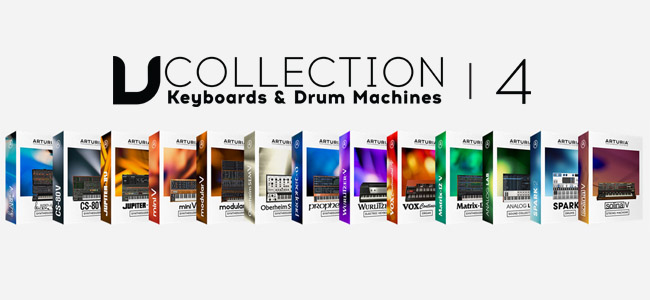
The V Collection 4 is a suite of plugins (VST / AU / AAX / standalone) which obviously has as its basis the instruments of version 3, the update of the Spark Drum Machine to version 2, the new version of Analog Lab and three goodies nothing bad: Matrix 12V, Solina V and Vox Continental V; in this article the focus will be on these three products, to understand if each of them can honor the name of the corresponding "real" instrument
The test was carried out with a Windows 7 DAW PC with Intl Core i7 CPU, 16GB RAM and a 256GB SSD disk.
MATRIX 12
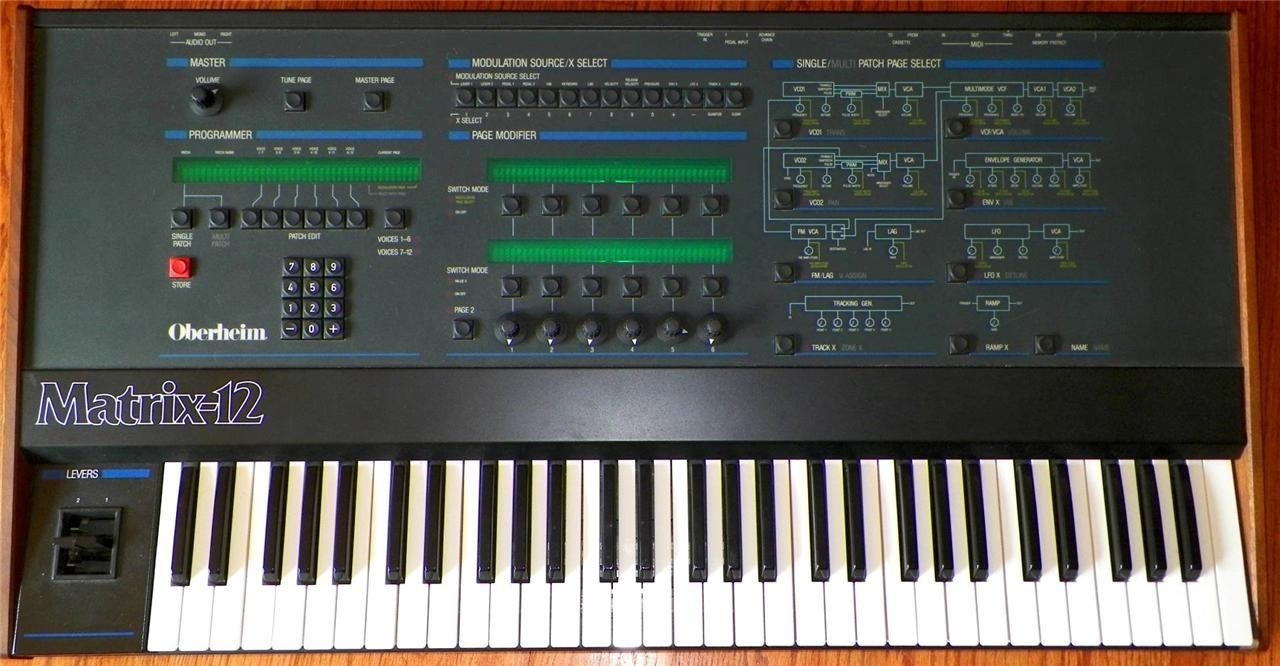
Fig. 1 - Original Matrix 12
The Matrix 12 by Oberheim (Fig. 1) is undoubtedly one of the best analog synthesizers in history, as well as one of the most fascinating and impressive among the non-modular. For those unfamiliar with it, it is a machine capable of producing every type of sound, from powerful bass to soft and rich pads (one of the "trademarks" of Oberheim), passing through powerful leads with square waveforms, sawtooth and triangular, not forgetting the powerful modulation matrix (from which the name obviously derives), the 5 LFOs per voice, the 5 ADSR stages and the multimode filter: in short, a great classic of the 80s.
Arturia, in his Matrix-12 V (Fig. 2), has faithfully reproduced all the technical characteristics of the ancestor, adding two effect processors and a very large library, in which we find many patches derived directly from the original machine and without algorithms effect, respecting the original “feel” of those timbres. Just listening to the factory presets and, if you are lucky enough to be able to do so, comparing them with the originals, it is possible to appreciate the quality and attention to detail by Arturia.
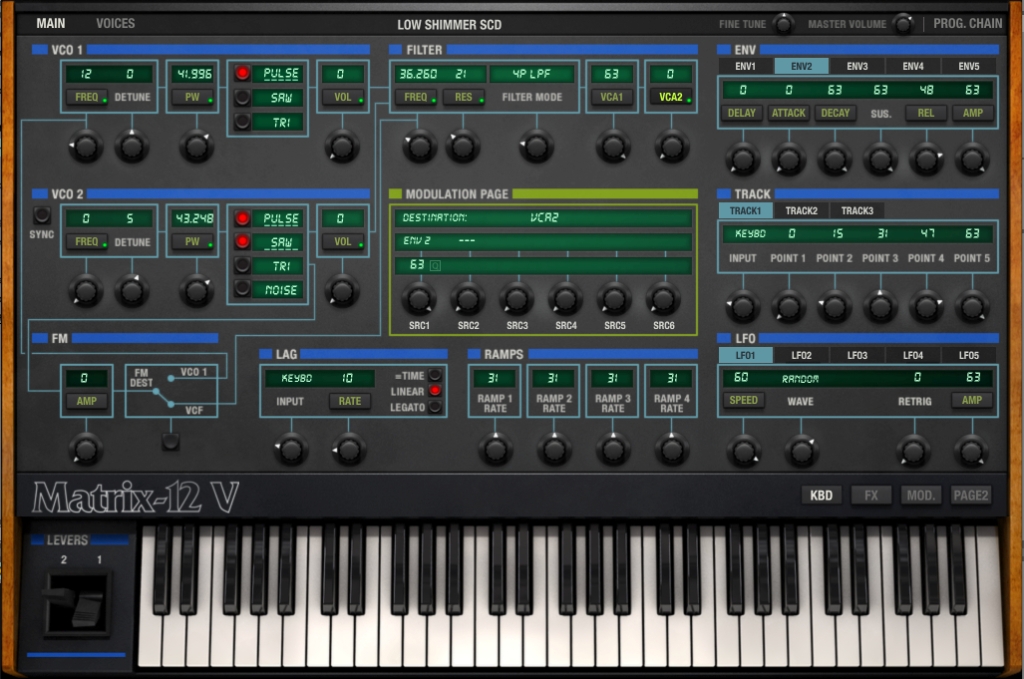
Certainly the brutal dynamics of the Matrix 12 is something that cannot be fully emulated virtually, but the Matrix 12 V does very well, especially on pads and textures.
Unfortunately it is not possible to use the effects of the 12 V Matrix in the effect send or insert on channels and I hope this functionality will be implemented in the next updates.
Solina MKI
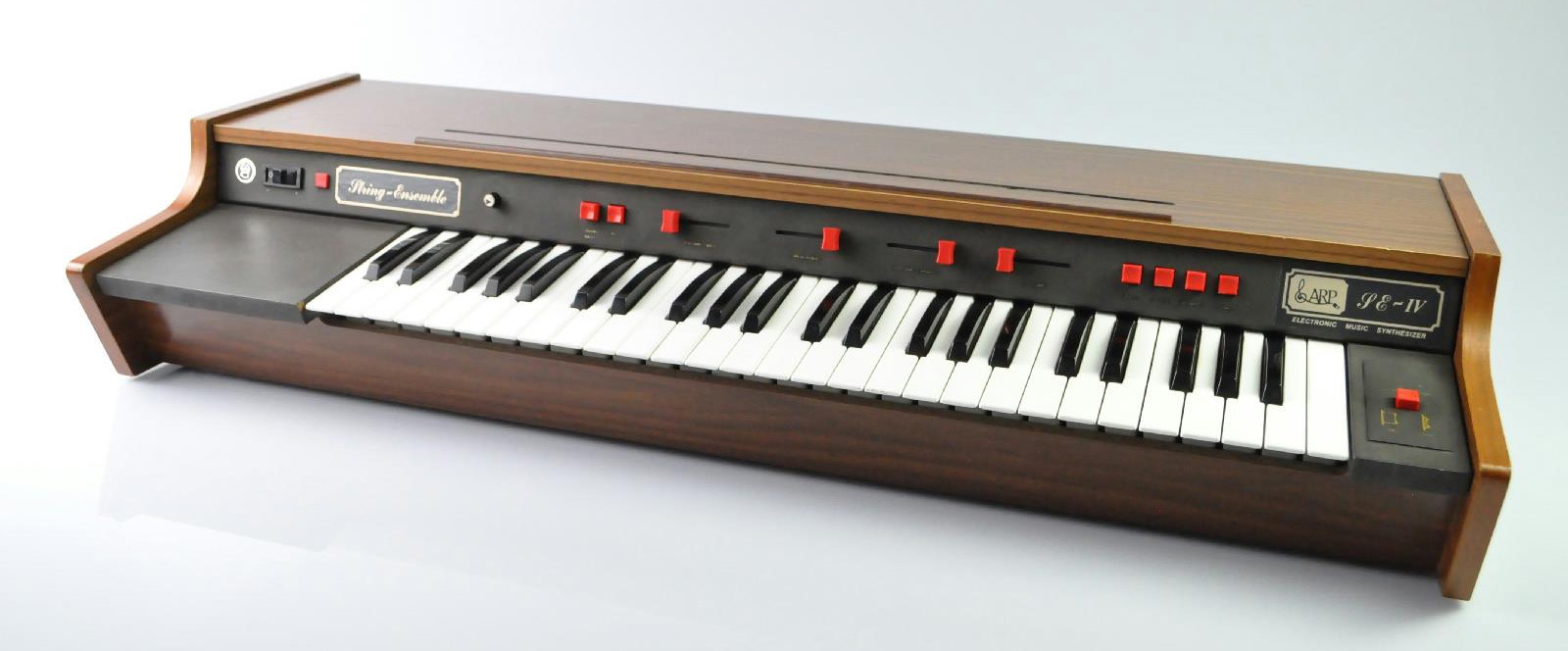
The Solina MKI from ARP (Fig. 3) was the portable version of theEminent Theater 310 and among the String Machines it soon became a great classic, also thanks to the use they made of it Richard Wright e Jean Michelle Jarre.
The most striking aspect of the Solina V (Fig.4) is the considerable amount of parameters available for the “Bass” and “Upper” sections. Furthermore we find an arpeggiator and an effects processor with Chorus, Digital Delay and a convolution reverb algorithm derived directly from the excellent Roland RSP-550, an early 90's processor, which certainly did not have the success it deserved.
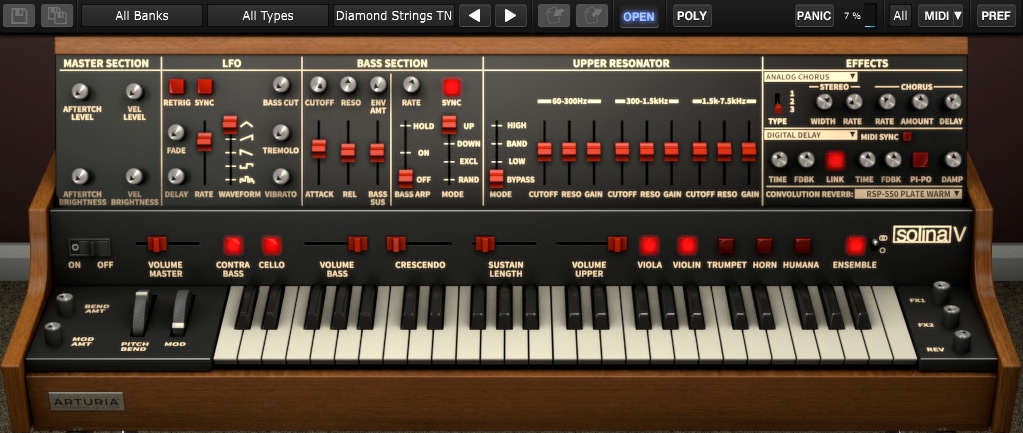
How does the Solina V sound? It gets along really well, in a mix you can't notice any difference from the original, even if the peculiarity of this VSTi is the remarkable versatility compared to the antiquated hardware version, in addition to the "Humana" preset supplied directly from the polymoog.
Vox Continental V
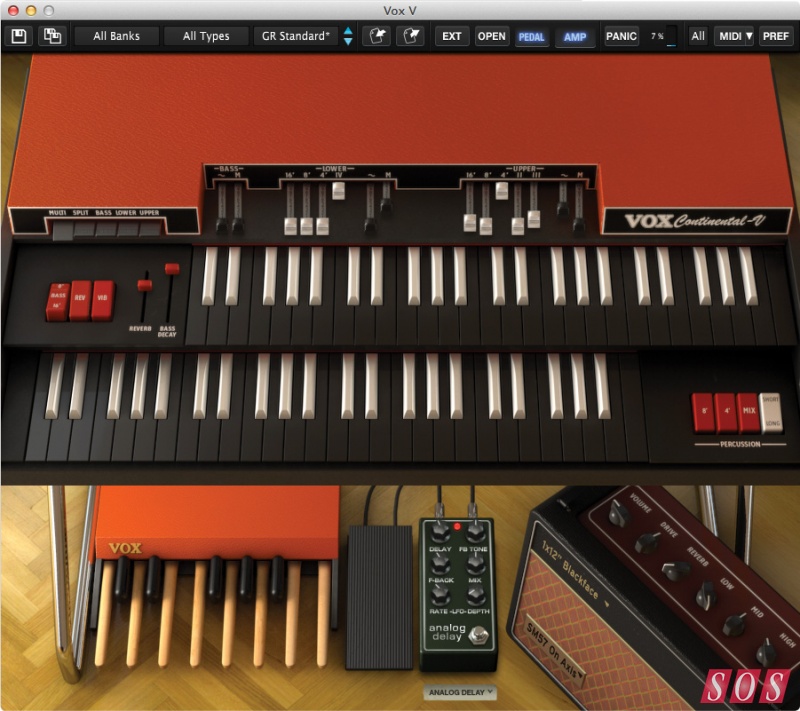
Vox Continental V (Fig. 5) is the other pleasant surprise in the V Collection 4: it has two manual stops of four octaves each and a pedal stop of one octave.
At the timbral level this is, among the three new virtual instruments, probably the most faithful to the original, of which it even manages to reproduce the most visceral and raw timbral nuances. Extremely simple to program, it is really pleasant to play and “comes out” in the mix without any problem.
Spark 2
Spark 2 is a truly creative drum machine; in fact, in addition to having a very respectable set of vintage batteries, it has been improved, with the version 2.0, integration with the hardware controller. However, its real strength is the possibility of being able to create truly unusual rhythms and effects thanks to the multiple modulation capabilities.
Below is the complete list of synths present in the Collection: mini V, Modular V, CS-80V, ARP-2600V, Prophet V, Prophet VS, Jupiter 8-V, Oberheim SEM V, Wurlitzer V and the most recent additions, Vox Continental V, Solina v, Oberheim Matrix 12Vin addition to Arturia Analog Lab, and Spark 2.0.
La TAE technology (Tstreet Aaddiction Emulation) uses the physical modeling (apart from the Spark 2, for which the use of samples is also foreseen), a technology that allows a very faithful reproduction of oscillators, smart filters e noises typical of Analog VCOs, realizing them in real time and not with the use of samples. All of this results in realistic tonal nuances, better in some synths than others. For example, the CS-80 and Jupiter 8 (citing a couple of synths also featured in the previous V Collection) sound great.
Obviously the TAE requires a lot of processing from the processor and therefore a rather "robust" DAW is highly recommended, especially with regard to the CPU cores.
The recent Arturia update has almost completely solved the stability aspect, which can now be defined as satisfactory.
Last note: the perfect combination is represented by the V Collection and a line controller Keylab (available with 25, 49, 61 and 88 keys), thanks to the presence of the Analog Lab and the perfect mapping of the Keylab controls with the synths of the Collection itself.
... summing up
It was not easy to improve the V Collection 3, but Arturia has again won the challenge, adding three rather different virtual ones, even if they share the emulation of analog machines.
Considering the cost and the difficult availability of most of the hardware synths proposed in emulation by Arturia and above all the quality of the virtual ones proposed, the V Collection 4 is undoubtedly one of the best investments in the soft-synth field of recent years.
Main features
- 4 new instruments compared to version 3: Matrix 12 V, Solina V, Vox Continental V and Spark 2
- New software protection and registration system Arturia Software Center (ASC) - up to 5 authorizations for each license
- Updated versions of all instruments
- In total 13 virtual instruments with approximately 6000 sounds of keyboard e 170 drum machines.
- Each virtual instrument can be used stand-alone or as a plug-in within your favorite DAW
- All plug-in parameters can be controlled from your external MIDI keyboard in just a few clicks, thanks to the new MIDI assignment menu.
- Polyphony from 2 to 32 voices, with the possibility of unison
- For each of the available software tools are present 400 preset of the highest quality
- With the possibility of working in 64 bit/96kHz you can benefit from unprecedented audio quality while maintaining the highest level of performance.
- All the features of the original instruments have been recreated and new additional features have been implemented to take your sound to the highest level, including:
- Modulation matrices
- New types of filters
- Step sequencers
- Voice programmer
- Keyboard follow
- Split and layer modes
- Soundmap preset navigation
- Installer on Arturia USB key
And much more
Audio demo:
Then you can listen to 4 audio demos, created by the composer Stephen DeSiena, with the Arcturia V Collection IV.
Audio demo by Stefano De Siena Angel
Synth Matrix - 12 V,
In the first piece, Il was used Funkbass PS for the bass track, the pad is the Thermosphire pad with pan procession from left to right in some points, the opening of the synth occurs through the function EPS.
The second synth is the V AngeliCS PS (cue for the name of the song), which has been left default, the only modification given is on the delay function obviously in sync with the bpm of the song.
Finally the additional Arturia sounds used are the Melancholia by Wurlitzer V electronic piano and the percussive part Spark 2.
Audio demo by Stefano De Siena Fly Away
Solina MKI synth
In the second passage, Il was used Soft bass RL for the bass track, as the pad theAir String 3RL and the stereo procession was emphasized by manipulating the stereo and chorus aperture rate of the synth through the EFFECTS function.
The second synth is it Sparkles 1 RL slightly modified in some places using the sustain and the crescendo.
The first synth "solo", used in the first part of the song, is the Lead RL Kit , the only parameter manipulated is the delay, always in sync with the bpm of the song.
The second synth "solo", used in the second part of the song, is the Mountain Flutes TN, the latter left by default.
Finally, between the two parts of "solo" synth, the Soft Brass RI with a small modulation of sound in the opening.
The additional Arturia sounds used are the percussive part Spark 2.
Audio demo by Stefano De Siena red groove
Vox Continental V
In the third piece, Il was used GTD Jazz 01 with closed tone and slightly open drive to give more incisiveness to the groove, the preset LT Farandole it was inserted as a groove pad with more drives and delays than the default preset, the drive and delay were managed by the output amp functions.
On the bass riff was used SS Insane Bass, with a more closed sound and less bass for less resonance than the default preset.
The additional Arturia sounds used are the percussive part Spark 2.
Audio demo by Stefano De Siena Evolution Funk
Spark 2
In the fourth track several samples of the Spark 2 synth were used, in particular for the kick drum the Berlin Faxen BD and BD pass 2, for the snare drum the SD Pass1 e CP pass, for the CH sounds the defaults have been chosen as they are very acoustic, for the Tom section the i has been chosen funk drums with different Cutoff adjustment and stereo pan according to the left and right logic and finally the cymbals Funk Drums china 1 and 2.
The additional Arturia sounds used are the Matrix-12V for the bass sound, the Dronebass with a small adjustment on the bass, the Continental Vox for the organ sound or Il GTD Jazz 01 with the drive open, this sound is ideal for clean, clear solos.
Finally the Wurlitzer synth with the standard Wurli 2 as a preset, with a slight more vibrato than the default preset.
Audio Setup:
Sequencer Cubase Pro 8.5, audio card RME Fireface 400, monitors Adam A7x e Yamaha Ns-10. Optimization of audio files by Giovanni Roma.
USEFUL INFORMATION
Producer: Arthur
Distributor: Midiware
Model: V Collection 4
Price: € 398,00
Until next time and good music!
Alessandro Pescetelli