


14.00 pm, appointment at a bar in the historic center of Naples, the ideal setting to meet the artistic producer Gianni Tamburelli and the singer Elena Imperatore.
After the various preambles, between a coffee and a dessert, let's break the classic initial embarrassment and start with the interview, addressed primarily to Elena.
Antonio Campeglia: In your CV I noticed that you are both a singer and an actress. How does the union between these 2 activities happen?
Elena Emperor: My encounter with music took place in childhood. I played the piano as a self-taught until I was twelve, after which I decided to start studying the classical piano. The meeting with the theater took place in high school, I was about seventeen. Besides, I've always sang. Since then I have always pursued both things, although in recent years my energies have focused on my songwriting project.
AC: I see you participated in the excellent film “Passione”: what was it like working with a director like John Turturro in this rich artistic cast?
EI: It was a beautiful and intense experience. On the set there was a cheerful and serene atmosphere. Being directed by Turturro, being acting with two sacred monsters like Massimo Ranieri and Lina Sastri, at the beginning created a bit of embarrassment. But then, with a conversational and informal spirit as only grown-ups can do, John was able to explain the scene to me in a clear and simple way, allowing me to immerse myself completely in context and character.

AC What is your career as a singer?
EI: From an early age my father taught me the classics of the Neapolitan song. Once I got older, I joined a polyphonic choir. I also had the chance to be introduced to the study of opera singing, but I was not interested in it, as I have always loved rock music. In fact, I played in various rock'n'roll groups and I studied vocal technique with different teachers.
AC Do you continue to study singing?
EI: Of course yes. Art cannot be separated from technique: to get things out it is very important to have the right tools and to master them well.
AC: Can you play any instruments?
EI: The piano. I studied it for ten years and was also preparing for the entrance exam to the Conservatory. I play the guitar very badly because I haven't studied, even if I manage to accompany myself.
AC: How did the idea for this album come about?
EI: From the intent to make my pieces known. This seemed like the best way. I am very proud of the sounds that have come out.
AC: Is the choice of genre studied, is it the result of a desk study or is it based more on your vocal timbre?
EI: The choice of genre comes from the music I like and is influenced by my type of voice and my type of writing.
AC: Didn't you have trouble concentrating, in such a short time, on the interpretation of the entire album?
EI: Let's say that time is never enough, but luckily we had been coming from a year or more of pre-production where we wrote and recorded about twenty songs, then dropped to six, and then brought three to the studio.
AC: What is the inspiration for the album?
EI: My bitter laughter, sprung from the many blows I received along my path in life and from all the times I hit rock bottom. Rock'n'roll, a genre I've always loved. My anger. Melancholy.
AC Are you satisfied with the work done?
EI: Very very much.
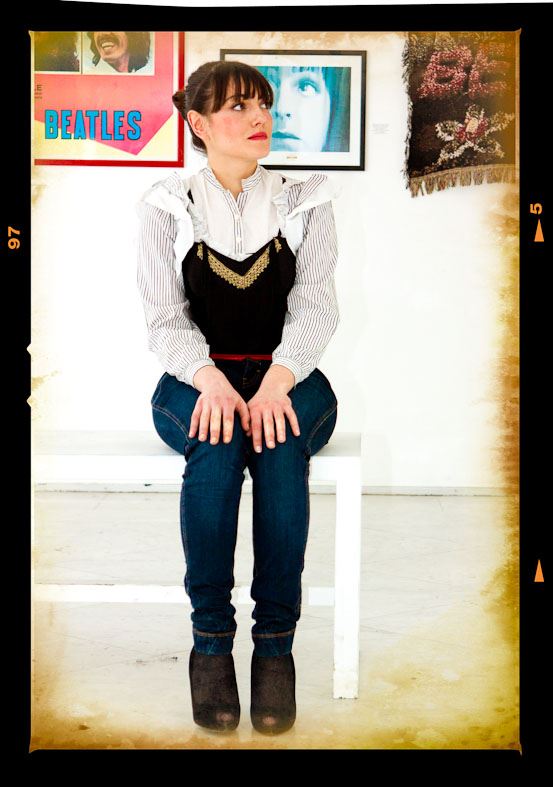
We then move on to the second part of the interview, directed to Gianni.
AC: In the album you produced you can immediately notice the great refinement in giving the listener a product that is well-finished both from an aesthetic and sound point of view. Why did you think of proposing a “demo” product already recorded in the studio with musicians?
GT: Basically I wanted to make a finished product, giving a clear idea of which path to take for a possible recording investment.
AC: Doesn't that seem like an exaggeration, given what today's technology can offer us? Now you can make good demos even at home.
GT: Let's say at home you can do good demos, make great dance music, great remixes etc. but for an "old school" product, ie completely played, the sound of the band is necessary. So a “played” production is a must.
AC: From the two pieces I heard, you can clearly perceive that everything is played and little space was left for the keyboards and the Vsti, even the drums I think are quite old ...
GT: Mmm… maybe by "old" you mean "vintage"; yes, that's right, everything was played, there are no loops on the record and I even played claps and tambourines. All keyboards have been designed and played to be faithfully reproduced live without the addition of "bases"
AC: How did the choice of the studio come about? Was it dictated by the budget? From the existing outboards? From the sound engineer?
GT:After post-production, I went shopping for studios, heard various theaters etc. until arriving at the Trail Music Lab, where I found some fundamental things to define the 60's sound I wanted: a shooting room that sounded great and the legendary console Amek Angela 36 CH analog.
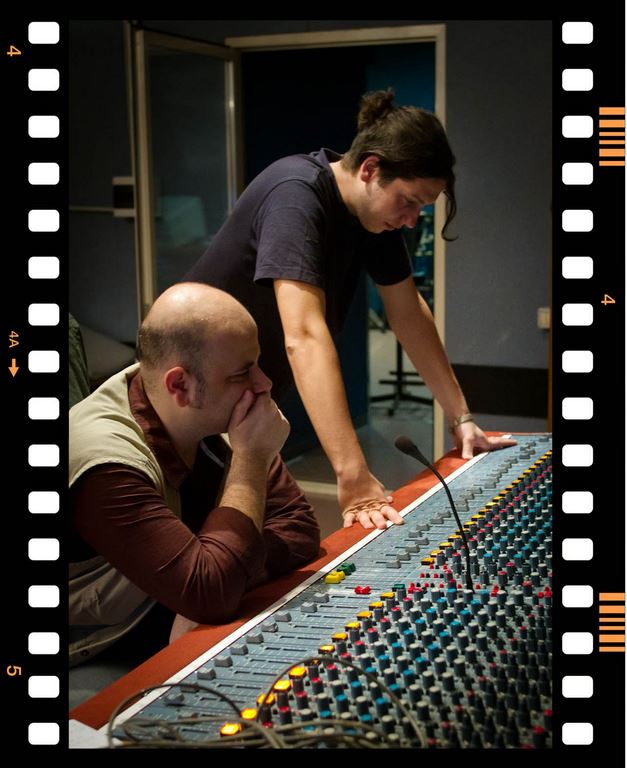
AC: Where was the studio work focused more: on recording, on mixing or on interpretation?
GT: Well, the recording of the instruments was fundamental, not to mention the emphasis on the voices, but what mainly characterized the whole thing was the mixing, where the hall was left to play a lot with its natural reverb, working only on compressors and leaving the rest on the bench.
AC: What did you find in Elena that prompted you to produce it?
GT: We met Elena a couple of years ago. I was looking for an actress-singer for a story I had written about a female band. I wanted to make a complete product, with original songs. We began to collaborate and, along the way, the record product prevailed over the film project.
AC: What did you find in her that you haven't seen in other singers or bands you meet every day for work?
GT:In her I found a melancholy passion that you hardly find around. Elena is a complete artist, she writes the lyrics, plays the piano and also knows how to sing, managing to do all three things in a fresh, convincing and, believe me, a true purebred singer-songwriter.
AC Did I read that your work was mastered at Abbey Road in London? Why not in Italy, since we have excellent mastering studios here too?
GT: It is useless to remind readers that to have that “Vintage” 60's sound, Abbey Road is the top of the Studios, where that music was born. I had the opportunity to burn them and I did!
AC: How do you intend to sponsor the product?
We will start making various Showcases for Italy, then we shoot the video and then resume with concerts. And then there will be some promotional surprises.
AC: Which market do you plan to target?
GT: Purely Italian record market, advertising and cinema! Elena Imperatore is an Italian singer-songwriter who writes and sings in Italian, then who knows ...
AC: What advice do you give to our readers who intend to make their musical products known?
GT: Use all possible promotional means. Facebook, Twitter, YouTube etc. are now fundamental. I'm not convinced they can get you a record deal, but they certainly manage to get you to know as much as possible.

The meeting ends with the delivery of the disc, a curious and linear package that recalls that of the old ones 45 rpm on vinyl 60s, containing two tracks. Not saying a few words about it would lead to an article that is certainly incomplete ...
Generally, when it comes to listening to songs, the first thing one goes to perceive is the voice, everything revolves around it, melody, harmony, arrangement .. Too many times I have heard beautiful voices, penalized by inappropriate "atmospheres", worse again, to float indefinitely in a bad audio context, or, vice versa, exceptional voices like that of someone who left us too soon, who even managed to give strength and polish to less worthy songs, definitely characterizing the song thanks to that timbre vocal, intelligible, rich and defined.
There is no doubt that here we are faced with a particular stamp. The voice of Elena Emperor it has a lively and “acrid” approach, enhanced by the evident absence of electronic alterations on the recording. An almost “rough” emission, to put it to Antonella Ruggiero when she commented on Battisti's voice.
The two songs, "Go away"and "Forget”Portray an author's pop-rock with a vintage sound, in line with the Italian tradition but without forgetting the Anglo-Saxon sounds. Choruses to hum that stick to your head, with texts that portray a sense of daily restlessness common to all.
www.facebook.com/pages/Elena-Imperatore/141396815918924
2 PM meeting at a bar in the historic center of Naples, an ideal setting to meet the artistic producer Gianni Tamburelli and singer Elena Imperatore.
After various preliminaries, including a coffee and a sweet, we break the classic initial embarrassment and we start with the interview, aimed primarily at Elena.
Antonio Campeglia: In your CV, I noticed that you're both a singer and actress. How is the union of these two activities?
Elena Emperor: My encounter with music occurred during childhood. Up to when I was twelve years old, I played the piano by myself, then I decided to start studying classical piano. The meeting with the theater took place in high school, I was about seventeen. Also, I have always sung. Since then I have always pursued both, although recent years have focused my energies on my songwriting project.
AC: I see you have participated in the excellent film “The Passion”: How was working with a director like John Turturro in this rich artistic cast?
EI: It 'was a beautiful and intense. On the set there was a happy and peaceful atmosphere. Being directed by Turturro, acting with two big names like Massimo Ranieri and Lina Sastri, in the beginning created a little 'embarrassment. But then, in a spirit of colloquial and informal, such as only the great can do, John was able to explain the scene to shoot in a clear and simple way, allowing me to put myself completely in the context and character.
AC: What is your path as a singer?
EI: Even as a child my father taught me the classic Neapolitan songs. Once grown up, I joined a choir. I also had the opportunity to be initiated to study opera singing, but I was not interested in that, since I have always loved rock music. I played in different rock'n'roll bands and I studied vocal technique with different teachers.
AC Do you continue to study singing?
EI: Of course. Art can not be made without studying: to pull out things to say, it is very important to have the tools and master them well.
AC: Can you play any instruments?
EI: The piano. I studied for ten years and was also preparing for admission to the Conservatory. I play the guitar very badly because I have not studied it, but I can pull out a couple of things out of it.
AC: How did the idea for this album come out?
EI: Manley to let everyone listen to my tunes. This seemed the best way. I'm very proud of the sounds that have come out.
AC: The choice of this kind of sound is studied, or is it more based on your tone of voice?
EI: The choice of this kind of sound comes from the music I like and is influenced by the type of my voice and my writing style.
AC: Have you had problems to concentrate, in such a short time for the interpretation of the album?
EI: Let's say that time is never enough, but luckily we came from a year or more of pre-production where we wrote and recorded more than 20 tunes, then cut down to six, and then recorded three in the studio.
AC: What is the inspiration behind the album?
EI: From my bitter laughters, which result from the many beatings I received in my life and all the times I've hit rock bottom. From Rock and roll, a genre that I have always loved. From my anger. From my melancholy.
AC: Are you satisfied with the work done?
EI: Very much.
We move on to the second part of the interview, with Gianni Tamburelli.
AC: In the album we immediately notice the great product refinement that gives the listener a cured product both aesthetically and acoustically. Why did you decide to offer a product demo already recorded in the studio with the musicians?
GT: Basically I wanted to make a finished product, giving a clear idea of which path to take for a possible Record Company investment.
AC: Does it seem like an exaggeration, seeing what we can offer the technology of today? Now you can make good demo even at home.
GT: Let's say that at home you can make good demos, make great dance music, great remixes etc.. but for an “old school” product, that is completely played, the band's sound is needed. So a production “sound” is a must.
AC: From the two tunes I've heard you can feel good that everything is played and has little room left for the keyboards and VSTi, but also the drums seem old enough …
GT: Hmmm … maybe for “old” you mean “vintage”, it is true, everything was played, there are no loops on the record and I even played claps and tambourine. All keypads are designed to be accurately reproduced and played live without the addition of “bases”
AC: How did the choice the recording studio? Was it dictated by the budget? Or from the Outboard that was there? Or From the sound tech?
GT: After post-production, I went around shopping for studies, etc. I have heard several rooms. up to Trail Music Lab, where I found a few basics to define the 60's sound I wanted: a recording room that was “playing” very well and the legendary console Amek Angela 36 CH analog.
AC: Where was the focus of most of the work in the studio, during the recordings, on the mix or the interpretation?
GT: Well, the recordings of instruments was essential, not to mention the emphasis on vocals, but mostly what characterized the whole thing was the mix, where it we have very much left the room “playing” with her natural reverb, working only with compressors and leaving the rest to the console.
AC: What did you find in Elena that made you produce it?
GT: With Elena we met a couple of years ago. I was looking for an actress-singer for a film subject that I wrote about an all female rock band. I wanted to make a complete product, with original songs. We began to work together and, along the way, the record production has prevailed over film project.
AC: What have you found that you haven't seen in other singers or groups that meet every day at work?
GT: In her I found a melancholic passion difficult to find around these days. Elena is a complete artist, writes lyrics, plays the piano and knows how to sing, being able to do all three things in a fresh, compelling, and, believe me, a true-bred singer-songwriter way.
AC: I read that your work was mastered at Abbey Road in London? Why not in Italy, since we also have here some good mastering studio?
GT: It's useless to remind readers that to get that 60's “Vintage” sound, the Abbey Road Studios are on top of where the music was born. I had the opportunity to do it there and I took it!
AC: How do you intend to sponsor the product?
GT: We will begin to make several showcases around Italy, then shoot a video, and after that go on tour. And then there will be a surprise promotional thing to do.
AC:To what kind of market are you aiming for?
GT: Recording industry, advertising, and film industry!
AC: What advice can you give our readers who wish to promote their music products?
GT: Use all means of promotion possible. Facebook, Twitter, YouTube etc. are now essential. I'm not convinced they can make you get a record deal, but surely they can let you be seen around as much as possible.
The meeting ends with the delivery of the disc, a curious and linear package reminiscent of that of old 45 rpm vinyl of the 60 ', containing two tracks. Not spending a few words on the subject would surely stump …
Typically, when it comes to listening to songs, the first thing you hear is the voice, everything revolves around it, melody, harmony, arrangement .. Too many times I've heard beautiful voices, suffer from inappropriate “atmospheres”, even worse, float indefinitely in a bad context.
There is no doubt that here we are dealing with a particular, unique sound. The voice of Elena Emperatore lively approach and “sour”, enhanced by the obvious lack of alterations on the electronic registration. The Emission is almost “rough”.
The two songs, “Vattene via” and “Dimenticare” portrays a vey good pop-rock writing with a vintage sound, in line with the tradition of Italian music but without forgetting the English sounds. She sings choruses that stick in the head without mercy, with words that portray a sense of everyday concern common to all.
www.facebook.com/pages/Elena-Imperatore/141396815918924
In recent years, although the traditional record market has undergone an irreversible crisis and the major labels tend to reverse themselves more and more into new talents and seek alternative distribution and diffusion markets, they are producing a new generation of producers. This piece is related to a traditional sound, which is not influenced by the strong desire of the "avant-garde". Our review will not focus, as is customary, on the analysis of musical pieces, but will focus on the way in which a product is constructed and marketed, especially in the absence of the media of a major label.
They are the 2. The name is in a bar in the historic center of Naples, an ideal place to meet the artistic producer Gianni Tamburelli and the singer Elena Imperatore. After various preambles, between a coffee and a dessert, if the sky breaks and the classic initial artistic vergüenza and fills the conversation, direct it all to Elena.
Antonio Campeglia: In your CV I tell you that you were a singer and an actress. How is the union achieved between the two activities?
Elena Emperor: I am immersed in the music that occurred in my childhood. After 12 years I played the piano self-taught, and then I decided to start studying the classical piano. The meeting with the theater took place during my bachillerato years. Tenia cases 17 years. Ademas, ya cantaba. From that moment on, these two things continued, even though in the last few years my energies had concentrated on my singer-songwriter project.
AC: Also tell me about how you participated in the very good film “Passion”: How did you work with a director like John Turturro in an artistic cast?
EI: It was a unique and intense experience. The set had a happy and peaceful atmosphere. Being directed by Turturro, and working with two sacred “monsters” like Massimo Ranieri and Lina Sastri, it created me a little inconvenience. Then, with a familiar and informal spirit, like only the greats of cinema, John was able to explain to me the scene he wanted to interpret in a simple and clear way, making me understand the context and the character.
AC: What is your journey as a singer?
EI: From my father, I learned the classics of the Neapolitan song. From there he entered a polyphonic choir. I also had the opportunity to study opera singing, but I wasn't interested in it, because I've always loved rock music. He played, therefore, in different rock'n'roll groups and studied vocal technique with various teachers.
AC: ¿Continúas studying singing?
EI: Obviously yes. The art cannot be limited to the technique: to know the things outside it is very important to keep and master the suitable instruments.
AC: Can you play any instrument?
EI: El piano. He studied for 10 years and was also preparing for admission to the Conservatory. I'll touch the guitar, though
but because he didn't study it, even if he accompanied him.
AC: How did the idea for this album come about?
EI: From the intention of knowing my pieces. This seemed to be the best way. I am very satisfied with the sounds that have emerged.
AC: Is the choice of style the fruit of a particular study or is it concentrated on your tone of voice?
EI: The choice of style comes from the music that I like and is influenced by my type of voice and writing.
AC: Do you have any problems concentrating, in such a short time, on the interpretation of the entire album?
EI: Good, time is not enough, but fortunately we have a pre-production of a year which allows us to write and capture twenty songs and then we end up with six, and in the end we are ready to study three recordings.
AC: What is the source of inspiration for the album?
EI: My bitter smiles, for all the blows I received in the path of my life, and for all the times I touched the bottom. The rock'n roll, the son-in-law I always loved. He angers me. It made me melancholy.
AC: Are you satisfied with this job?
EI: Very much
Now let's move on to the second part of the interview, directed to Gianni Tamburelli.
AC: In the album you produced you can see the great refinement to give the player a refined product from the aesthetic point of view of the sound. Why did you think of proposing a demo product that you received in the studio with the musicians?
GT: Basically this is to make a finished product giving a clear idea of the path we want to take for a probable discographic reversal.
AC: Didn't this seem like an exaggeration to you, considering what technology can offer us today? Stay at home and you can make many good demos.
GT: Good, at home you can make some good demos, some good dance music or remixes but for an “old school” product,
to say it all, the sound of the band is necessary. Total production is mandatory.
AC: Of the two pieces that you can find out, you can see that everything is gone and that little space has been left for the batteries and yours, also I think the battery is quite “old”…
GT: Mmm… it may be that by “old” people you want to say “vintage”, yes, it's true, everything is done, there are no loops and until the claps and the tambourines are done. All the pieces are thought to be reproduced live without the "bases".
AC: How did I elect the recording studio? Was it for the budget? For the existing outboards? By the sound engineer?
GT: After post-production, I went to different places to make purchases, so different recording studios had to be done
Go to the Trail Music Lab, where you will find some fundamental things to define the sound of the songs you want to reproduce: a recording study where it works very well and the legendary Amek Angela 36 CH analogue console.
AC: In the recording studio, where was the work concentrated: more on the recording, on the mix or on the interpretation?
GT: Good, the grasping of the instruments was fundamental, so as not to mention the emphasis on the voices, but what mainly characterized the whole was me, where it was necessary to focus on the study of grasping with its natural reverb, working only with the comprehenders and giving space to the whole
demás.
AC: What did you encounter in Elena who forced you to produce it?
GT: I met Elena for 2 years. I was looking for an actress and singer for a SUBJECT who had written for a female musical group. Look for a complete product, with original songs. We began to collaborate and little by little the recording product prevailed over the cinematographic project.
AC: What do you encounter in her that you don't see in other singers or groups that come every day in your work?
GT: In her she encountered a melancholic passion that is very difficult to encounter today. Elena is a complete artist who writes lyrics, plays the piano and sings, everything in a clear and convincing way, and she is truly a true singer-songwriter.
AC: I think your work was mastered on Abbey Road in London. Why aren't we here in Italy, considering that we have excellent mastering studios?
GT: It is useless to point out to readers that to achieve the loss-free “vintage” sound, Abbey Road are the best: that is where this type of music was born. Here's the opportunity to do it and, well, that's it!
AC: How do you think about sponsoring the product?
GT: We will start doing various showcases in Italy, and then we will shoot the video to do new concerts. Ademas,
There are promotional surprises.
AC: What type of market do you go to?
GT: The purely Italian record, advertising and cinema market! Elena Imperatore is an Italian singer who writes songs in Italian, and here we ask you …
AC: What advice do you want for readers who intend to get to know your musical products?
GT: Use all possible promotional media. Facebook, Twitter, YouTube etc. they are fundamental. I'm not sure that you can find out about a recording contract, but you can certainly find out as much as possible. The scene ends with the signature of the record, a curious and linear piece that recalls the memory of the old "45 rpm" vinyls of the last six years, with two signals. No decir no meritorious word could leave the article incomplete. In general, when it comes to listening to a song, the first thing we are going to hear is the voice, everything revolves around it: the melody, the harmony and the elements... Many times I listen to wonderful voices, penalized by inappropriate "atmospheres", sometimes even fluctuating in an indefinite way in a poor audio context, or, vice versa, exceptional voices such as the one we heard very quickly, which even risked giving strength and color to less dignified songs, characterizing the song thanks to that timbre of voice, intelligible, rich and defined. Don't doubt that I stand for a particular timbre, unique in its style. The voice of Elena Emperor It has a lively and “harsh” plan, enhanced by the evident absence of electronic devices in its storage. A desperate song to quote Antonella Ruggiero when the two songs, “Go away"And"Forget"They describe an authored pop-rock with a vintage sound, in line with the Italian tradition but without forgetting the Anglo-Saxon sounds. Songs that sing and stand on the head without foot, with lyrics that portray a feeling of everyday restlessness common to many.