

The icon indie par excellence is back after three years with a highly anticipated new album that immediately jumped to the top of the sales charts.
In these years Brunori he managed to emerge from the underground niche and conquer a transversal audience that includes both young twenties and graying forties perhaps more nostalgic for songwriting. It must be said, today songwriters seem almost a dying breed considering the current landscape dominated almost exclusively by trappers. One of Brunori's merits, therefore, was precisely that of having re-evaluated the figure of the pure singer-songwriter. I immediately start by saying that the record is very enjoyable and, in the sea magnum of record releases, it certainly has its own distinctive identity. I also hazard the idea that it is a record in which the lyrics are in some ways more interesting than the music.

Frankly, you can't take any more of those texts Indie where you get to sing the drug leaflet because it's cool and not because you don't know what to tell. With Brunori, however, we are at another level. The themes are always the same and there is no escape: love, relationships, precariousness, time that passes but the acumen with which they are treated makes the difference and Brunori does it in a mature and never predictable way. He manages to grasp the bewilderments of a liquid society with great irony and penetration. He sews small everyday stories of the province in which many can recognize themselves. After all, it is enough to see him in the many interviews where one immediately appreciates his acute self-irony and the ability to never take himself too seriously, a virtue so little practiced in the age of digital narcissism.
I listened to the record as it used to be, all in one piece as if it were vinyl. And I must say that the first quality lies precisely in the fact that it “flows” well as if the tracks were sewn together seamlessly. Three luminaries of the Italian song that inspired Brunori immediately come to mind: Lucio Dalla, Francesco De Gregori e Rino Gaetano. Their stylistic presence is felt here and there in all the songs, undeniably in my opinion.
As in "The song you wrote"Which in its musical incipit, in the groove and in the melodic line of the cantato immediately brings us back to" How deep is the sea. " Same thing for "The world looks beautiful"Which recalls both the degregorian"Looking for another EgyptThan the typical singing style of Rino Gaetano with his "screamed" and crescendo stanzas. Of course, with this I don't want to accuse Brunori, God forbid. After all, in art it has always worked a bit like in Lavoisier's law: nothing is created, but everything is transformed. Yet a grizzled forty-year-old like me did not miss the artistic kinship, perhaps less so to a twenty-year-old who has probably lost ear to the repertoire of the 70s songwriting.
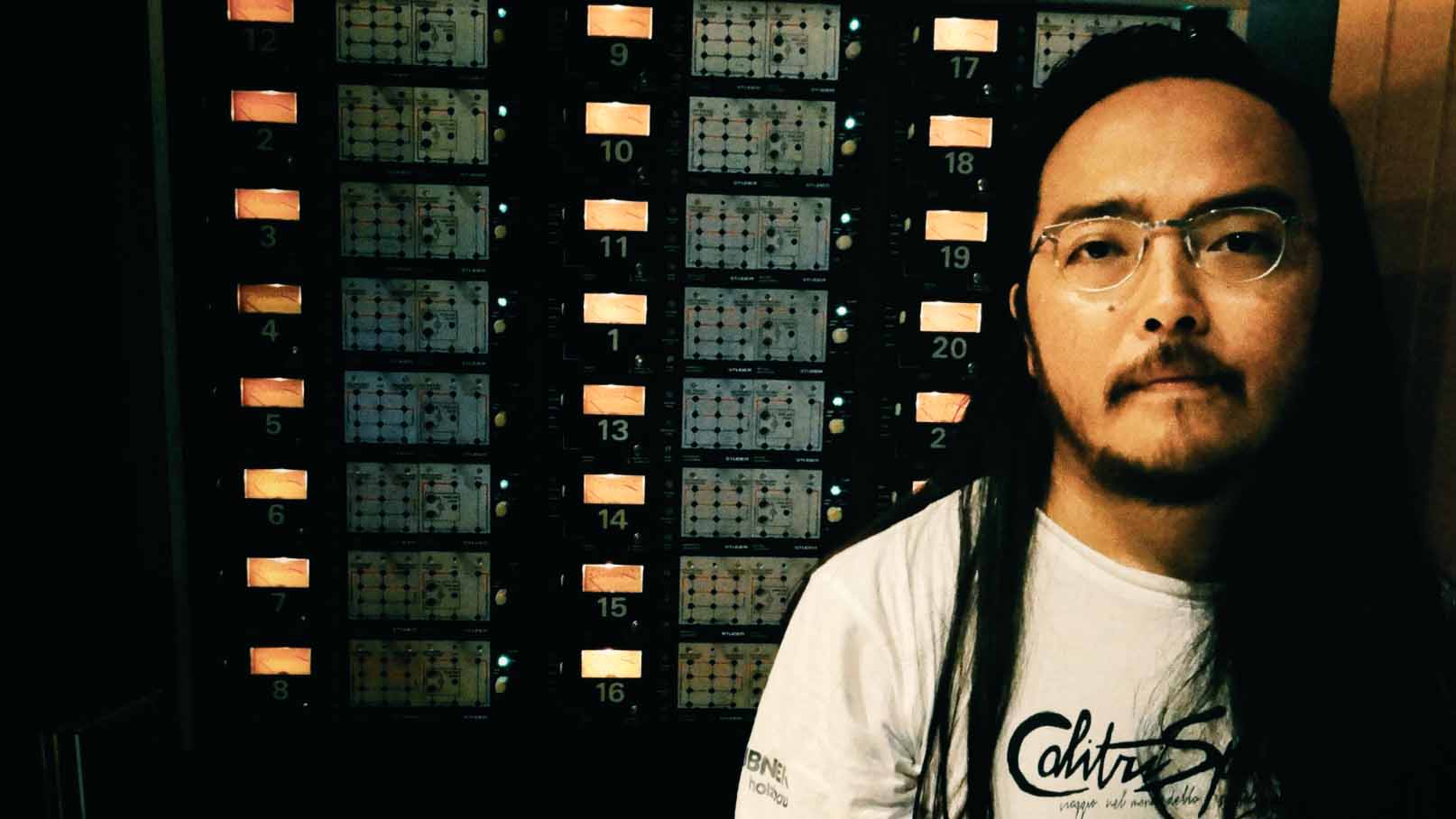
In any case, the production and the arrangements are first-rate being entrusted to a tested Taketo Gohara, a producer who over the years has been noted for his expertise with artists such as Capossela e Negroamaro.
The piano reigns supreme in almost all tracks, but the arrangements do not disdain the use of strings, choirs and synthesizers dosed with great taste and never overabundant. The most successful songs, for me, are two. "For two who like us", Which became almost a generational hymn about the meaning of long-lasting relationships and"Those who will arrive”, A“ tear-jerking ”story seen from the naive eyes of a child.
A disc definitely of a refined pop, with songs that enter the head for their lightness and pleasantness. It won't be a musically memorable record, but it stands considerably high in lyricism and personality, which is very rare in the age of endless streaming.
The cd is available on: