
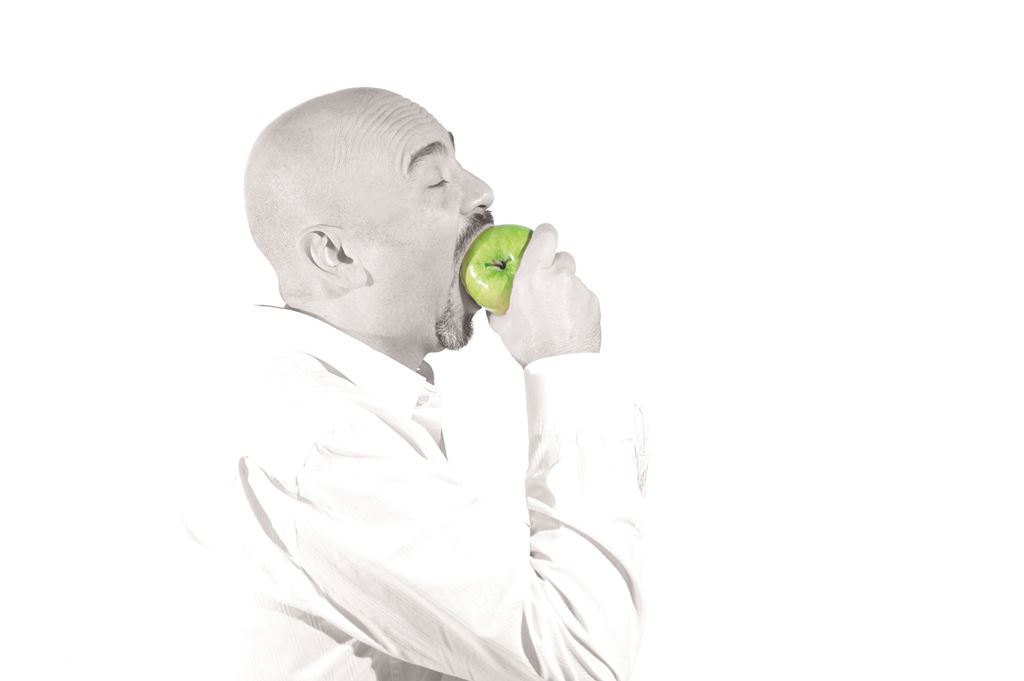
I spent a childhood stealing the Beatles notes from my older cousins' turntables. I still remember today the emotions of those songs of which I did not understand a single word but which married elegant melodic lines and fantastic harmonization of voices, with the rhythms and the rough sound of rock.
The Beatles were a crossroads, after them contemporary music has absolutely changed. And that is why I greet this work by Carlo Lomanto with gratitude and admiration. A courageous production, in an era in which I don't know if the game is worth producing. But discographic considerations aside, the reality of an extremely interesting Beatles cover album (let me re-say this word!) Remains, where the Neapolitan vocalist-guitarist instills his training background with extreme simplicity and humility. Lomanto plays the acoustic guitar, sings, harmonizes, uses loopstations and harmonizers; "Sings" the electric bass and drum parts. A one-man-band in a modern key that, in this work, directs the passion for jazz and technologies to the arrangement of some of the most beautiful songs written - now over forty years ago - by four guys from Liverpool.
Day Tripper
The opening track of the album is dedicated to the masterpiece written in 1965 by the duo Lennon / McCartney and the legendary introductory riff played by the Rickenbackers of the "Fabulous" is excellently replaced by Carlo's voices harmonized digitally, in a sort of ostinato with an almost hypnotic.
Here follows the verse that here takes on a particular flavor, seasoned with different influences: From the funky rhythms of elegant guitars that do not shy away from 11a chords, to the percussive minimalism of a simple snap of the fingers. From the ethnic evocations of an electric bass completely replaced by Lomanto's voice, to electronic music to which the massive use of the “voice harmonizer” brings us back. Without neglecting the jazz vein that stands out in the solo voice and in the harmonies at the end of the piece.
From Me To You
Icon of what will become the typical "beat sound" of the 60s, "From Me To You" arrives in this work to an unplugged dimension, exposed by a very dry, direct and no frills acoustic guitar. And it is again Lomanto who "sings" the bass parts and takes care of the complex vocal harmonizations which, in evoking with sincere originality the surprising contrapuntal vocation of the Beatles, completely replaces structures usually referred to polyphonic instruments such as guitars and keyboards. All with a nod to melodic solutions and vocalizations so dear to a certain Bob Mcferrin of whom Lomanto declares himself a great admirer.

Get Back
With “Get Back” we arrive at the “seventies” phase of the Beatles, characterized by the introduction of both the guitar and behavioral distortions of the “Her Majesty's baronets”. But Lomanto's jazz skill immediately leads him to territories far from the harsh crunch sounds of the Vox AC30 that inaugurated the history of rock'n roll. Once again the “rough” dominant seventh chords of rock-blues are enriched by elevenths and are supported by a rhythmically minimalist structure, always performed with the hands and voice.
In this "Get Back", the black solism of Bobby McFerrin is joined by the white and polychrome flavors in the Manhattan Transfer style. This song features a voice solo sung by Gege Telesforo, a true national icon of vocalism / scat jazz. The intervention of Telesforo, as expected, gives a remarkable rhythmic freshness to the context of the piece.
Something
This marvel written by Gorge Harrison is interpreted by Carlo Lomanto with great intensity. Mixing and post-production emphasize a “ballade” atmosphere, with a more generous use of reverbs and smoother sounds which, in reality, hide the identical orchestral context which is basically made up of acoustic guitar and Lomanto's voices. Overdub and digital harmonizers make up the harmonic and percussive texture of the piece which, among other things, hosts a solo by Antonio Onorato on the “breth guitar”.
This "Something" is very beautiful and breaks - with great simplicity - a certain uniformity of timbre and "ensemble" that characterizes the songs that precede it.
Come Together
Confronting this piece is a difficult undertaking, both because of its extremely simple structure and the awareness of being in front of one of the most played pieces in the world. The "hard" context of the piece is effectively emphasized by the use of the distorted electric guitar played by Gennaro Porcelli who skilfully recurs - in riffs and solos - to the use of the bottle neck, giving the piece a very pleasant traditional rock / blues flavor. American than British.
On the other hand, Lomanto, in turn a guitarist, made use of some of the best guitarists of the current Neapolitan scene in this work.
Can't Buy Me Love
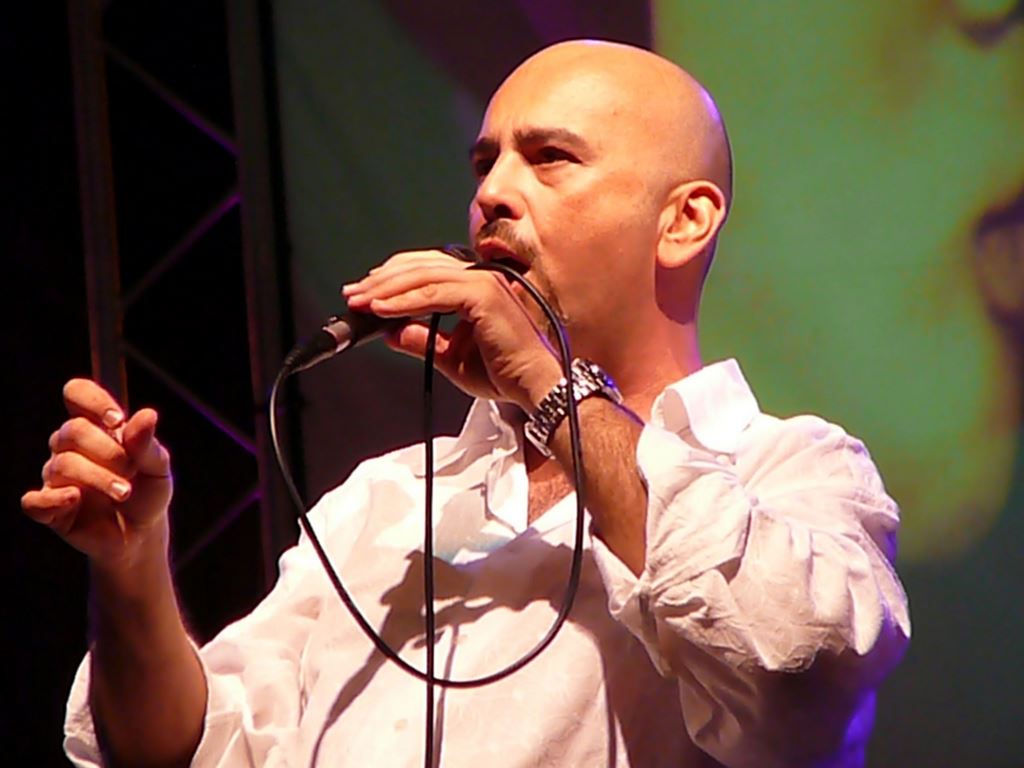
The unplugged dimension (guitar / voice) and the contexts of simplicity enhance the voice and the “jazzy” style of Lomanto. This “Can't Buy Me Love” is definitely the song that I liked the most, along with the following “I Will”.
The acoustics played in finger style, give the piece a decidedly blues stylistic dimension and the choice of Lomanto for the frequent harmonizations of IV in the overdub choirs, differentiate it from the choices of most of the performers and give its voicing a more complex character. sometimes oriental, which captures and intrigues the listener.
Very good at the guitar - while resorting to conventional revolutions - he rearranges a classic of pop music with great personality and energy. Which requires not only a certain technique but, in addition, a certain dose of class.
I will
The same applies to “Can't Buy Me Love”, but here we add Pietro Condorelli's beautiful guitar complete with jazz and “walking bass” revolutions.
In this "I Will" all the voices "played" by Lomanto carry a piece of English pop from the 60s in the full American jazz tradition of the 50s. An example of personality and artistic determination. Condorelli's guitar is splendid.
Ob-La-Di Ob-La-Da
The Beatles dirge becomes even more dirge in this work, in the sense of becoming an opportunity to play. Carlo gives it a fluctuating trend - in two - seasoned with a distinctly Caribbean flavor.
The Long And Winding Road
Written by Mc Cartney and published in 1970 on the album “Let It Be”, this song represents one of the most beautiful creations of the entire Beatles production, as well as one of the most intense and evocative lyrics of modern music.
The original orchestral version has been revisited in this “The Beatles Album” in a totally unplugged version, guitar and vocals. The intimate intention is underlined by the absence of vocal harmonizations and by the simple and faithful singing line to the original.
Nothing to complain from a guitarist point of view, always balanced and elegant, but we would have liked something more dared with the voice, in terms of expression or even melodic substitutions. The singing line remains faithful to the original in a context that, although romantic, leaves a taste of static compared to the other reinterpretations of this record.
Within You Without You
Closing track of the album, this version of “Within You Without You”, marries the Beatlesian soul of pop suggestions filled with dreamlike and synthetic visions, with the artistic formation of Lomanto. And here on an electronic pad reminiscent of the sitar used by the Beatles in their new role as "synthetic travelers", Lomanto celebrates its myths: From the laryngeal-modulations of Demetrio Stratos to the percussive licks -funk and upbeat- of McFerrin and Al Jareau.
This arrangement is very beautiful and takes its cue from a "trip" of the ex-baronets who, now abandoned bobbed hair, ties and jackets with pistagna, abandoned themselves to musical research and creations stimulated by the use of synthetic drugs.
Within You Without You, in the version of this album, embodies the whole musical spirit of Lomanto, essentially aimed at a journey into the human voice and its emotional and evocative abilities.
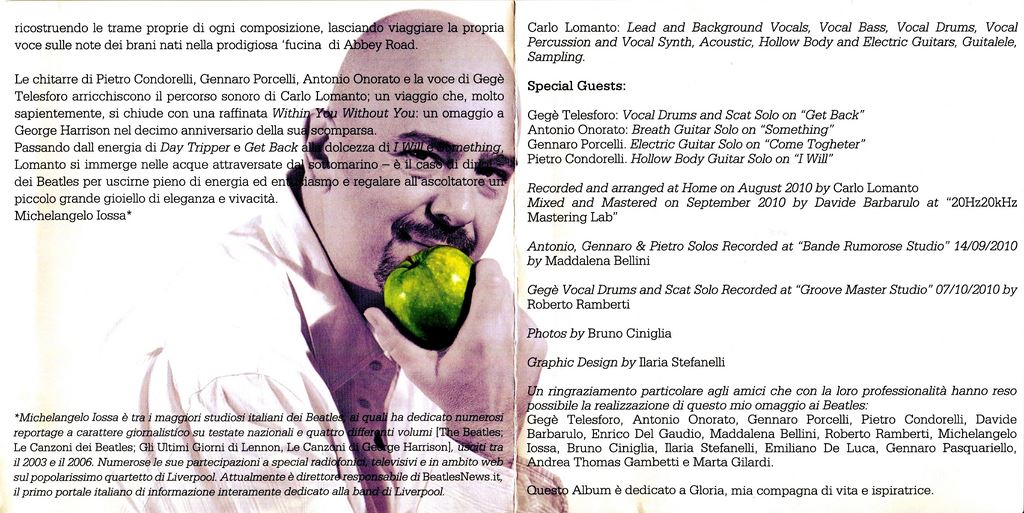
This work offers the opportunity to reflect on the objective difficulty of a recording project which, facing the most classic and well-known repertoire of "The Beatles", wanted to maintain a rigorous stylistic sobriety and a deliberate "poverty" of production, entrusting all the weight of the result to some beautiful guitar but above all to the human voice, in its always surprising rhythmic, melodic and harmonic dimension.
Charles Lomanto: "The Beatles Album"
Prelude - 2011
the next Bruno Mazzei...