


There are discussions that cyclically come up in every studio, on every forum, during every coffee break among sound engineers: hardware or software? Analog or digital? Real machines or plugins?
- Physical control is not nostalgia: it is symbiosis
- Analogue does not automatically mean better
- Preamps and Compressors: The Real Difference Isn't Where You Think
- The real bottleneck is often not the plugin
- In a serious study, at least one important PRE section is needed
- The myth of “vintage sound”: it wasn't just the cars
- Plugins have democratized creativity
- The recall: the true superpower of digital
- First of all: the environment
- My position today
- The real question to ask today
- I open the discussion
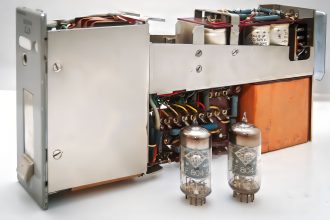
I've been fortunate enough to work on both sides of this river, experiencing firsthand the transition from one world to the other. I've spent years in front of major hardware, with the sound of relays clicking and the heat of tubes filling the room. And today I work daily with digital systems, advanced plugins, and instant recalls. The truth? The question "what sounds better?" is perhaps the least interesting of all. The real question is: What really allows you to create?
Physical control is not nostalgia: it is symbiosis
One of the most profound differences between hardware and software is not the sound, but the physical relationship with the instrument. When you work with a hardware machine, a PRE, an compressor, an EQ, you enter a sort of symbiosis. It's not just a matter of turning a knob: it's muscle memory, gestures, real time. It's the fact that you can adjust multiple parameters simultaneously, without thinking, without looking at a screen. With a mouse, or even with some controllers, this changes. It's not absolutely worse, but it's different.
For a good engineer, that physical symbiosis often translates into real-time sonic creativity. You're not adjusting parameters: you're sculpting the sound as it happens. And for those who have been working with audio for years, this still makes a huge difference.
Analogue does not automatically mean betterre
There's a misconception I hear all too often: "It's analog, therefore it sounds better." That's not true! Whether a machine is analog or tube-based, in and of itself, means nothing. Today, there are software programs that can reproduce emulations in truly astonishing ways. Some plugins can reproduce dynamic behaviors and colorations that seemed impossible until a few years ago. When I speak of "analog" in the strong sense, I'm talking about important machines, complex electronic designs, circuits with a precise personality. These are the machines that have made history and that, even today, are not so easy to recreate 100% credibly. Not because digital is inferior. But because certain physical complexities are difficult to fully model.
Preamps and Compressors: The Real Difference Isn't Where You Think
Another thing I've learned over time is this: When you use preamps and compressors without “pushing” them, they are more similar than you might think. The real difference emerges when you start pushing. That's where saturation comes in. The harmonics. The way the machine reacts when pushed to the limit. Some hardware delivers a three-dimensionality and harmonic response that are still difficult to replicate perfectly today. Not impossible to emulate, but not always identical. And often, the difference isn't immediately noticeable. It's perceived in the final mix, in the way the elements coexist.

The real bottleneck is often not the plugin
Many software programs aren't appreciated for what they could actually do. Why?
Inexpensive converters and sound cards. This is an often overlooked point. You can have extraordinary plugins, but if the AD/DA conversion is mediocre, if the monitoring is inaccurate, if the signal is degraded at both input and output... the final result will never express the system's full potential. It's not just a question of plugins or hardware. It's a question of the entire audio chain. Over the years, I've often walked into studios filled with high-end outboard gear, important synthesizers, racks that on paper would be the envy of anyone... and then realized that the weak link wasn't the hardware.
° They were the monitor speakers.
° Or the conversion.
° Or the environment.
I've seen extraordinary machines working in conditions that made it impossible to truly perceive what they were doing. And this is a reflection that, in my opinion, we should all make: There's little point in investing thousands of euros in outboards or high-end instruments if we can't actually hear their nuances. Because if the environment doesn't respond correctly, if the converter introduces limitations, if monitoring isn't transparent... what we're hearing is no longer the actual sound of the machine. It's an altered version.
In a serious study, at least one important PRE section is needed
If I have to say one thing I truly believe in, it's this: A professional studio should have at least one significant preamp section. Whether it's tube or solid-state, what really matters is the quality of the electronic design, the circuit choices behind that machine, and, above all, the type of sound we're looking for. A good preamp section is a real investment, not a whim. It's the first point where the sound takes shape, and it's often what determines the quality of the material you'll work with for the rest of your production. If the foundation is good, everything becomes easier.
The myth of “vintage sound”: it wasn't just the cars
I'm often asked for a certain type of sound, one associated with vintage gear. In recent years, I've also designed workflows for recording studios where the brief was very clear: to achieve a vintage sound, with warm, recognizable timbres. But almost always, behind this brief lurked the idea that choosing the right gear was all that was needed. The reality is more complex.
That sound also came from:
° Less stable power supplies
° Components that were aging
° Capacitors that changed behavior over time
° Repairs made over the years
° Recordings not always perfect
Above all, something we often forget, it came from the musicians and the way they played. Listening to old songs, you can sometimes hear slightly out-of-tune guitars, imperfect timing, irregular dynamics. But right there, there was a soul. Vintage sound isn't just technology. It's human context.
Plugins have democratized creativity
Then there's a hard-to-ignore truth: Plugins are much cheaper than professional hardware. And not only that: they're also incredibly creative. They allow anyone to experiment with complex loops, try out machines that would cost tens of thousands of euros, and create new sounds without physical limitations. This democratization has changed the way music is produced. For better or worse. But it has certainly opened doors that were previously closed.
The recall: the true superpower of digital
We live in a world where a song can change even a few hours before it's released. And this is where the plugin becomes unbeatable. instant recall It's not just convenience: it's an operational necessity.
Reopening a mix exactly as it was, making quick edits, saving multiple versions—all of this is now an integral part of the modern workflow. With pure hardware, all of this takes time.
And time, today, is often the most critical factor.
First of all: the environment
If I had to name the biggest mistake I see people making, it's this: thinking about hardware or software before considering the environment. A respectable studio should, first and foremost, be a place where monitor speakers can work properly.
Acoustics, positioning, room response.
You can have the most expensive equipment in the world or the most advanced plugins, but if what you're listening to isn't reliable, every decision you make will potentially be flawed. And this applies to both large studios and home studios. One thing I feel strongly about is this: I've seen more differences between two listening rooms than between two high-end compressors. And it's a phrase that, for those who actually work with audio, has very real weight. Personally, if I were to build a studio from scratch today, the first part of the budget would go towards:
° Reliable monitors
° A solid conversion
° An acoustically controlled environment
Only then would I start thinking about the rest. Because it's pointless to have excellent tools if we can't perceive what they're actually doing.
My position today
After years of racks full of gear and endless digital sessions, my idea has become very simple: it's not a war. It's a balance. Hardware and software are not adversaries.
They are different tools, with different strengths.
Hardware gives you physicality, reaction, character.
Software gives you speed, flexibility, and memory. True value today isn't in choosing a side.
It's about knowing when to use what.
The real question to ask today
It's not: hardware or software? But rather: How much do you really know about the tools you use?
How well does your environment allow you to hear?
How much does your workflow foster creativity, rather than slow it down? And above all: are we chasing sound... or are we chasing machines?
I open the discussion
This isn't meant to be an absolute truth. It's simply my experience, gained between racks full of metal and endless digital sessions. I'm curious to know your thoughts. How important is hardware still in your workflow? Do you feel limited by software... or liberated? And above all: If you had to build a studio from scratch today, would you start with a plugin, a hardware preamp… or the room acoustics?
I believe the answer to this question says much more than any technical comparison.




A very understandable article: today, the real distinction is no longer between hardware and software, but between those who know how to use the tools and those who don't. Quality is now achievable in both worlds; what makes the difference is the workflow, the experience, and the sonic vision. As a "boomer," I have a predilection for hardware not for sound quality reasons but for the pleasure of tinkering, adjusting, and manipulating real things.
Anyway, excellent food for thought.
I agree with the correct reflection made by the previous comment. Today the difficult thing is to fully understand what you are using. Not everyone does it, also because the result is what speaks for itself. That said, an excellent starting point for having our say on this page. Well done.
Excellent food for thought.
The first thing I took care of for my studio was the acoustics: an investment undoubtedly necessary for a "healthy" environment.
Hardware or software? Each one certainly has its own pros and cons, but there is certainly a common denominator: the skill, taste, and ear of those who manage them.
A truly enlightening and necessary article for anyone working in the audio production world today.
The great merit of this reflection is that it finally shifts the focus from the sterile technical debate of "analog vs. digital" to a much more pragmatic and artistic vision: workflow optimization. The point about "physical symbiosis" with hardware is extremely interesting: the idea that touching a knob isn't just a nostalgic gesture, but a creative act that allows you to "sculpt" sound in real time without the visual mediation of a screen, is a concept that often escapes newcomers.
I also really appreciated the intellectual honesty in pointing out that the real bottleneck is almost never the plugin itself, but often overlooked elements like room acoustics or monitoring quality. It's a reminder of the fundamental truth that helps us avoid falling into the trap of "the next magic purchase."
Ultimately, the article reminds us that the instrument (be it a chip or a tube) must serve creativity, not vice versa. Kudos to the author for raising the right question: are we chasing sound or just collecting machines?
Highly recommended reading for every sound engineer and producer who wants to make a qualitative leap in their professional awareness.
I agree with almost everything in the article, especially the point about environment and monitoring: that's where the real game is played, much more than in the usual hardware vs. software comparison.
The rest is often more ideological than practical.
After years of navigating analog and digital, I've come to the same conclusion: it's not a war, it's knowing how to choose. And above all, knowing why.
Regarding PREs, I'll add something concrete: having at least one "characterful" pair and one extremely neutral one is not a luxury, it's a necessity in tracking.
In a professional studio, this is the very basis.
In my case, among the various PREs, the ones that really end up in the session are always the same: the Rupert Neve Designs 5025 Dual Shelford Mic Pre when you need color, depth and three-dimensionality, and the SPL Crescendo DUO, with 120 volt technology, when everything needs to remain clean, fast and intact.
I also have SSL, APIs, and more, but these are the two real “Swiss Army knives.”
We can argue endlessly about hardware and plugins, but if you don't really feel what you're doing, you're just making random decisions.
And at that point, hardware or software, absolutely nothing changes.
I completely agree with the thoughts expressed in this article. I too often see colleagues filling their studio with mid-range outboard gear, yet neglecting the room's acoustics. Personally, I've chosen to give absolute priority to acoustic treatment and monitors, investing in the rest only later.
My approach is clear: between a mediocre outboard and a plugin, I vastly prefer software, if only for the advantage of total recall. From my perspective, hardware only makes sense when it comes to gear with high-quality circuitry; otherwise, it's better to stick with the box.
For this reason, as a preamp, I chose the transparency of the SPL Crescendo (8 channels) for my Yamaha Stage Custom acoustic drum kit and Yamaha C7 grand piano. I also often use them on vocals: when a singer has a distinctive timbre, too many harmonics added by a "colored" preamp risk muddying the naturalness of the performance. If I'm looking for character, however, I rely on my hand-wired Heritage Audio DMA 73s: it's a shame they're discontinued, because they are spectacular.
It's a careful reflection on a world that's constantly contrasted, when the technical differences are at times imperceptible. One important factor is often overlooked: the room. It seems to have no effect, but it creates a huge gap in the work. For me, coming from the live scene, a church sounds much more reverberant than a theater, which is the preferred venue for that type of event.
In the studio, the important things are both the room and proper monitoring, whether headphones or speakers. What really makes the difference is neither hardware nor software, but the human element; often, relying on graphics or "visual material" makes us lose focus on what we're doing. Maybe it's because lately I've been working with high-level musicians and artists, so whatever arrives in my DAW or the console I use live is already "processed" and ready to be inserted into the mix.
Given the duality of my work fields, I don't have a preference between hardware and software, as I've overlapped them in some areas; however, for operations that require serialization, digital beats analog and outboard equipment 10 to 0.
Dear Antonio, the question you pose in the title of this article could lead us to discuss not only musical issues but, more generally, aspects that have changed and continue to change our lives in general.
In my opinion, the added value is being able to understand what you want (i.e. what result you want to achieve) based on the specific situation.
This is why I agree with you when you write about the real question to ask.
Of course, you also have to consider your own tastes, which could be influenced by marketing, favorite brands, urban legends, and more.
The flexibility introduced by software and new technologies is undeniable. The size of the equipment and the costs of managing it have radically decreased compared to before, making it possible to respond to different recording and/or stage needs in no time.
In short, in my opinion, what is essential in a professional field is knowing how to optimally use the tools and environments in which one operates, having a clear idea of the specific objective to be achieved each time, and having a set of analog/digital hardware/software useful for the purposes.
See you soon!!