


Lights take on great importance in the musical field: in the theater, during a concert, in a disco and even in a small pub they help to make an evening magical.

With this article, a series of appointments and considerations relating to the complex but fascinating world of lights begins. We will see together how to set up, program and choose the right type of devices for your event, your venue, your concert.
You are ready? Let's start with the basic information.
The main tool used by the light jay it is certainly the control unit (light mixer) (Fig.1): peripheral similar to an audio mixer and equipped with sliders and buttons through which spotlights, projectors, moving heads and other lighting devices communicate digitally.

The communication protocol of the control units and lighting systems passes through a cable very similar to the microphone one (equipped at the end with male and female xlr connectors) and called Digital Multiplex, or DMX (Fig. 2).

DMX is a digital communication standard, it provides 3-pole (for cheaper situations) or 5-pole connectors. The connection between devices takes place in a “cascade”: each luminous device is equipped with a DMX input and output;
So here's how: from the output of the control unit (dmx out) connect to the DMX IN input of the first device, then from the output of the first fixture enter the second and so on.
Each DMX cable can control up to 512 devices (DMX512)! The real limit of connection between devices will however be given by the type of your control unit (carefully read the instructions given in the manual to know the maximum number of lights managed by you).
The spread of the DMX512 protocol is largely due to its robustness and certainly, as you have seen, to its simplicity of connection: the cables can be "gently mistreated" without generating obvious communication problems (however I remind you that proper cable management will certainly allow you to maintain a longer and more effective maintenance of your system).
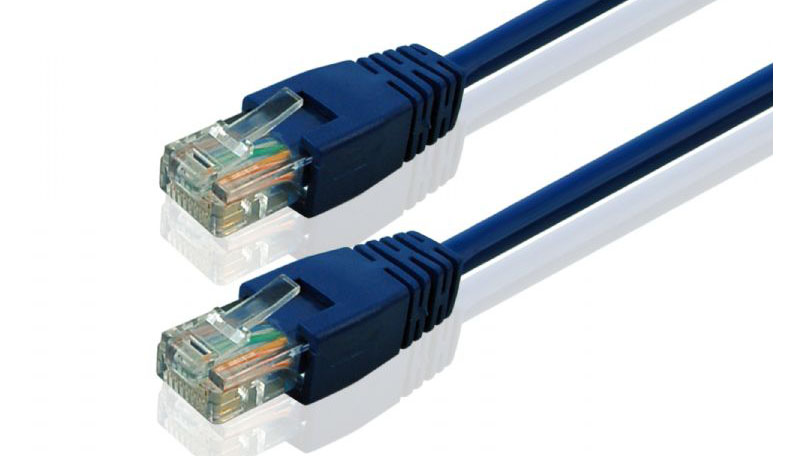
Among the connections that you will sometimes find in a lighting mixer there is also the RJ-45 connection (o ethernet cable) (Fig.3): communication through this interface requires a fairly solid basic knowledge. Therefore we will see how to make the most of this connection in the next episodes.
Once the connections have been completed, let's now dedicate ourselves to the real setup between control unit and headlights: each device must digitally “talk” with the control unit through a unique address: correctly addressing the headlights will be essential so that each element can work independently.
In standard control units, the distribution of addresses occurs as in midi protocol. Every 16 channels it will be possible to assign a new spotlight thus leaving 16 free addresses for each light source, useful for setting games, actions or functions such as intensity, color, strobo etc .. (Subsequently these functions will be easily recalled through a simple movement of the faders of your control unit).
So, for example
at the lighthouse n. 1 assign channel 1
at the lighthouse n. 2 assign channel 17
at the lighthouse n. 3 assign channel 33
and so on…
I remind you that the address must be set in each single luminous device (the assignment will take place through selectors or displays according to the type of lighthouse itself).
The world of lights is immense to say the least. Dozens and dozens of types of light control units connect to as many light devices. Numerous firms produce more or less expensive and more or less complex elements. In the next articles we will begin to set up our first stage starting from a small but professional lighting system (at low cost).
National
For cascade connections of dozens of fixtures it is advisable to insert a “terminator” in the output of the last fixture; a resistor that will have the function of absorbing the destructive reflections of the signal. (We will address this sensitive topic in detail in the next articles).
We stay connected… digitally
Mattia Bern


